Auto Body Shop Advertising: 6 Channels That Fill Your Bays with Collision Work
slug: auto-body-shop-advertising-collision-repair-marketing · status: draft · score: 75% · 1 versions
Not yet published.
Validation
| Rule | Detail | |
|---|---|---|
| pass | No banned competitors | No banned competitors |
| fail | No emdashes | Found 2 emdash(es). Use commas, parentheses, or separate sentences. |
| pass | Avoid AI telltale words | No AI telltale words |
| pass | Primary keyword in title | No primary keyword to check |
| pass | Use contractions | Contractions used |
| fail | Minimum internal links | Internal links not in sitemap: /resources/how-to-optimize-your-google-business-profile-for-more-calls, /resources/best-local-advertising-channels, /how-it-works, /industries/automotive/auto-repair/tv-advertising-auto-repair-shops, /resources/why-customers-trust-tv-brands, /resources/how-to-measure-advertising-effectiveness, /resources/how-to-attract-local-customers |
| pass | FAQ section required | FAQ section present |
| fail | Author assigned | No author assigned (never use 'Adwave Team' for new content) |
| pass | Industry pages need taxonomy | Not an Industry page |
| warn | Title length 50-60 | Title length 78 (aim 50-60 chars) |
| pass | Minimum 4 images | 4 images |
| warn | SEO description under 160 | Missing seoDescription |
| pass | Adwave mention cadence | 2 Adwave mentions |
| warn | Short description present | Missing shortDescription |
| pass | Word count by type | Word count 3464 (no target for type) |
| pass | Year-dated title for evergreen types | Type not year-dated |
| pass | No manual table of contents | No manual TOC |
Images (4)
Content
Auto Body Shop Advertising: 6 Channels That Fill Your Bays with Collision Work
Slug: auto-body-shop-advertising-collision-repair-marketing Title: Auto Body Shop Advertising: 6 Channels Compared (2026) SEO Description: Compare the best advertising channels for auto body shops. From Google Ads and Meta to TV and Yelp, here's how to fill your bays with more collision repair jobs. Short Description: A practical guide to advertising your auto body shop across 6 channels, with budget recommendations and a comparison table to help you decide where to spend first. Resource Type: Insights Author: David Martin (COO) Primary Keyword: auto body shop advertising Secondary Keywords: collision repair advertising, auto body shop marketing, how to advertise auto body shop
Auto body shops face a different advertising challenge than most service businesses. Your customers don't choose you in advance. They're in an accident, their car is damaged, and they need help fast. By the time they're searching for a collision repair shop, the decision window is narrow and the emotional stakes are high.
That reality shapes everything about how you should advertise. Some channels are about reaching people at the moment of need. Others are about planting your name in people's heads months before anything goes wrong. The shops that do both are the ones with full bays and short waitlists.
This guide walks through six advertising channels that work for auto body shops, how each one fits into your overall strategy, and how to budget across them.
Google Ads: Capturing Customers Who Need You Right Now
When someone's bumper just got crumpled in a parking lot, they're not going to ask friends for recommendations. They're pulling out their phone and searching "auto body shop near me." Google Ads puts your shop at the top of that results page at exactly the moment someone needs you.
That's the core value proposition of search advertising for collision repair: reach people with high intent at high urgency.
How to set up Google Ads for an auto body shop
Start with a tight geographic area. Collision repair customers don't drive 45 minutes for body work. Target a radius that reflects where your customers realistically come from, usually 10-20 miles depending on whether you're in a city or rural area.
Your most important keywords are:
- "auto body shop near me"
- "collision repair [city name]"
- "auto body shop [city name]"
- "car body repair near me"
- "fender repair" or "bumper repair" with your city
Use exact match and phrase match keywords to avoid wasting budget on irrelevant clicks. Broad match can bleed your budget on searches that don't convert.
Landing pages matter more than most shop owners realize. Don't send Google Ads traffic to your homepage. Build a dedicated landing page that immediately answers: where are you located, what do you specialize in, how do I get a quote, and why should I trust you? Include photos of finished work, any certifications (I-CAR, ASE), and a simple contact form or click-to-call button.
What to budget. CPCs for auto body and collision repair keywords typically run $4-12 depending on your market's competition level. In a metro area, budget at least $800-1,500 per month to generate meaningful volume. In smaller markets, you can see solid results for $400-700 per month.
Google Ads works best for immediate conversions. If someone clicks your ad and fills out a quote form or calls your shop, that's a trackable, measurable result. This channel gives you the clearest ROI signal of any advertising you'll do.
One important note: Google Ads only works when someone is actively searching. It doesn't build brand recognition for people who haven't been in an accident yet. That's where the other channels come in.
Meta and Instagram Ads: Reaching Your Community Before They Need You
Facebook and Instagram advertising works differently than Google. You're not responding to a search query. You're putting your shop in front of local vehicle owners while they're scrolling, before they're in a collision. The goal is familiarity, so when something does happen, your shop comes to mind first.
Meta's targeting tools are particularly useful for auto body shops because you can target by location with serious precision.
Targeting strategies that work for collision repair
Geographic targeting is the foundation. Layer that with demographic signals like age (25-65 tends to be the sweet spot for vehicle owners) and household income for shops targeting premium or luxury repair work.
Interest-based targeting lets you reach people who follow automotive content, are car enthusiasts, or have shown purchase intent around vehicles. Custom audiences let you retarget people who visited your website, so if someone checked out your shop online but didn't call, you can follow them with a reminder ad.
Lookalike audiences take your best customers (upload a list of emails from past jobs) and find people on Facebook who share similar characteristics. This is one of the most powerful targeting options available on the platform.
What to put in your ads
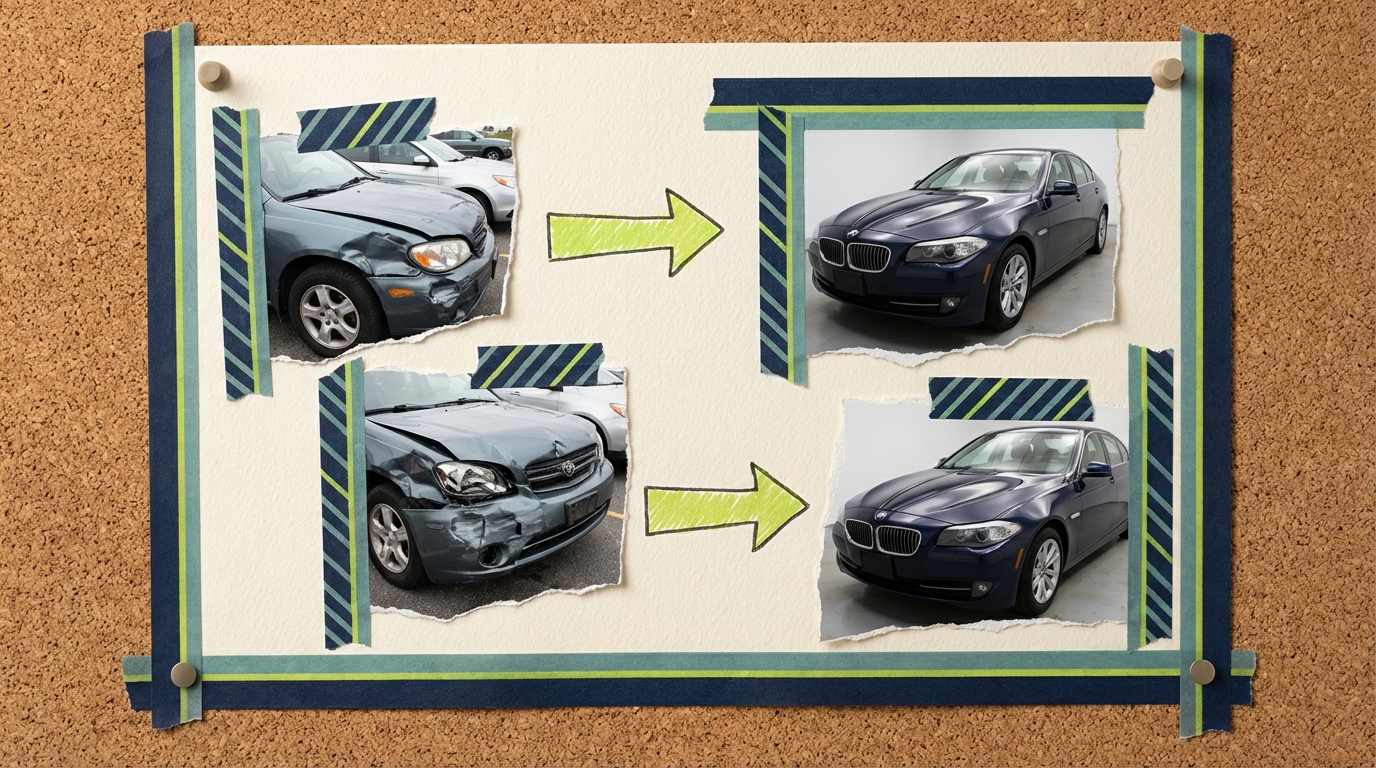
Before-and-after photos are the single most effective creative format for auto body shops. A dented quarter panel transformed into a flawless finish is the clearest possible demonstration of your skill. Short video walkthroughs of finished jobs also perform well.
Social proof matters here. Five-star review counts, certifications, and years in business all help. Customer testimonial clips, even quick 15-second phone videos, outperform polished but impersonal creative.
Budget guidance. Meta campaigns for local service businesses typically require $500-1,000 per month to build meaningful reach in a metro market. Smaller markets can see results at $300-600 per month. Run campaigns consistently rather than in bursts; the platform rewards consistent spend with better audience learning.
The combination of Google Ads and Meta covers both sides of the demand equation. Google catches people at the moment of need; Meta builds the familiarity that makes your shop the obvious choice when that moment arrives.
Local SEO and Google Business Profile: Your Free 24/7 Salesperson
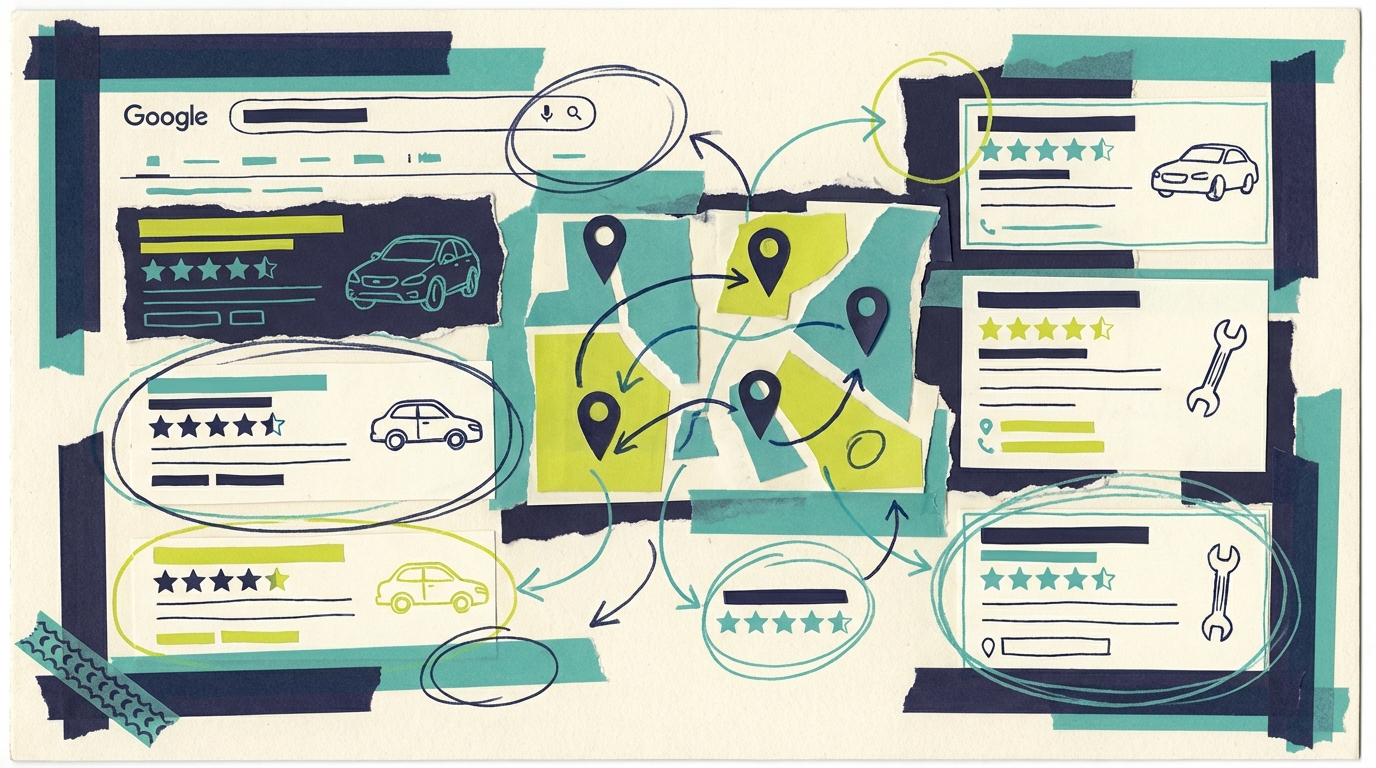
Your Google Business Profile is one of the highest-return assets in your advertising toolkit, and it's free. When someone searches for collision repair in your area, the map pack (those three highlighted businesses at the top of Google results) is often the first thing they see. Getting your shop into that pack costs nothing except time and attention.
Optimizing your Google Business Profile
Start with the basics that too many shops neglect. Make sure your profile is completely filled out: business name, address, phone number, hours, website URL, and every relevant service category. "Auto body shop" and "collision repair shop" should both be listed under your categories.
Photos are critical. Google rewards profiles with lots of recent, high-quality photos, and customers trust shops whose work they can see. Upload photos of your facility, your equipment, finished repair jobs (before-and-after sets are gold), and your team. Aim for at least 20 photos and keep adding new ones regularly.
Reviews are the most important ranking factor for local SEO. Google's local algorithm heavily weights both review quantity and recency. Build a simple system for asking happy customers to leave reviews. The easiest method: send a text or email after job completion with a direct link to your Google review page. Most people won't do it unprompted, but a direct ask with a one-tap link converts at a much higher rate.
Responding to every review, positive and negative, signals to Google that your business is actively managed. When you respond to a negative review professionally and explain how you resolved the issue, it actually builds trust with prospective customers reading it.
On-page SEO for your website
If you have a website (and you should), local SEO extends beyond your Google Business Profile. A few high-value tactics:
Create a dedicated page for each major service: paintless dent repair, collision repair, frame straightening, windshield replacement, etc. Each page should target the search terms real customers use.
Include your city name and neighborhood throughout your content naturally. "Our auto body shop serves the [City] area" is more valuable than you might think.
Get listed on automotive directories like RepairPal, AutoMD, and the NAPA AutoCare locator if you have a certification. These links back to your site help your overall search visibility.
For a deeper look at local optimization, getting your Google Business Profile fully dialed in can be the single highest-return activity for a local shop in the first 60 days.
Yelp and Automotive Directories: Reaching High-Intent Comparison Shoppers
Not everyone picks the first Google result. A meaningful slice of customers searching for collision repair will check Yelp, CarGurus, RepairPal, or other directories before making a call. Being visible and well-reviewed on these platforms captures customers you'd otherwise miss.
Yelp for auto body shops
Yelp drives a real share of local service searches, particularly among customers who skew toward research-heavy purchase decisions. These aren't impulsive choosers; they're comparing shops carefully before committing their vehicle.
Claim your Yelp business page if you haven't already. Fill it out completely, upload quality photos, and actively manage your reviews. The same principles from Google Business Profile apply here: review volume matters, recency matters, and thoughtful responses to negative reviews matter.
Yelp's paid advertising (promoted listings and Yelp Ads) puts your shop in front of customers searching for competitors. It's worth testing with a modest budget of $200-400 per month to see if the platform drives conversions in your market. Results vary significantly by location.
Specialty automotive directories
RepairPal: If you're a RepairPal Certified shop, the directory listing alone drives inbound inquiries. RepairPal users are often comparing estimates and looking for trustworthy shops, so certification carries weight.
NAPA AutoCare and AAA Approved Auto Repair: Both programs come with directory listings that drive customer inquiries. If you meet their standards, the listing is a low-effort lead source.
AutoMD and CarMD: Smaller directories but worth claiming your free listing. The cumulative effect of appearing across multiple directories reinforces your legitimacy and improves your search visibility through backlinks.
Budget and expectations. Free directory listings cost nothing but time. Paid Yelp advertising runs $200-600 per month for a local shop. Don't expect massive volume from any single directory, but the combination builds a more complete web presence that serves you across Google, Yelp, Apple Maps, and more.
Direct Mail and Local Print: Reaching the Neighbors Most Likely to Need You
Before a digital channel existed, auto body shops built their businesses on postcards, door hangers, and local newspaper ads. Those channels still work, especially for reaching homeowners in specific ZIP codes where you want to grow market share.
Direct mail for collision repair shops
Direct mail lets you target households by geography with precision. You can pick specific ZIP codes, neighborhoods, or carrier routes (smaller geographic segments within a ZIP). For auto body shops, this means you can target the residential areas within a reasonable driving distance of your shop.
The most effective direct mail formats for body shops:
Postcards with before-and-after photos tend to get attention and don't require someone to open an envelope. A striking transformation image on a postcard has genuine stopping power.
New mover mailers reach homeowners who just moved into your target area. New movers haven't established relationships with local service providers yet, making them higher-conversion targets for any local service business.
Seasonal campaigns tied to relevant events (winter weather damage season, spring hail season in certain markets) can improve response rates by connecting with timely needs.
Local print and community advertising
Community newspapers, neighborhood association newsletters, and local magazines still reach a meaningful audience in many markets. Sports sponsorships (local youth leagues, high school sports programs) put your name in front of parents and families in your target area.
The ROI on print is harder to measure precisely, but the brand-building effect is real. Being the auto body shop that sponsors the local Little League team is memorable in a way that a banner ad never will be.
Budget guidance. A direct mail campaign targeting 5,000 households (design, print, and postage) typically runs $1,500-3,000 for a single mailing. Plan for at least 3-4 touches per year to the same audience for meaningful brand building. Local print advertising varies widely, from $200/month for a community paper to $1,500+ for a regional magazine.
If you want to dig deeper into all the channels available for local businesses, comparing the best local advertising channels gives a broader overview of what works across different business types.
TV and CTV Advertising: Building the Trust That Converts Premium Work
TV advertising does something none of the channels above can match: it builds genuine credibility and trust at scale. There's a reason customers trust businesses they've seen on TV. The perception of "I've seen them advertised" signals stability, professionalism, and success, and that perception converts directly into willingness to pay for quality work.
For auto body shops, trust is the purchase driver. Customers handing over a $4,000 collision repair job aren't just buying sheet metal work; they're trusting you with their property and their insurance claim. TV advertising builds the kind of pre-established credibility that makes that trust easier to give.
Why streaming TV works for collision repair shops
Connected TV (CTV) brings streaming platform advertising within reach of independent shops at budgets starting at $50. Your 30-second commercial can run on Hulu, Peacock, Tubi, and 100+ other premium channels, targeted to households within your specific service area.
Adwave creates your commercial automatically from your shop's website, generates a broadcast-quality 30-second ad in about two minutes, and puts it live on premium streaming inventory. The result looks like what national chains spend tens of thousands to produce, without the production cost.
For a deep dive into using TV specifically for collision and auto repair advertising, see the TV advertising for auto repair shops guide.
Budget: Start at $50-$200/month to test, scale to $500-$1,500 as you confirm results. TV advertising works best as a brand-building complement to your high-intent channels (Google Ads, SEO). The combination of TV visibility plus paid search presence reinforces your shop's credibility at every stage of the customer journey.
One useful read on why TV builds trust in ways digital ads can't: why customers trust brands they've seen on TV.
Channel Comparison
Recommended Budget Allocation by Shop Size
You don't have to do all six channels at once. Start where the immediate ROI is clearest and layer in brand-building channels as your budget grows.
Small shops ($500-$1,000/month total advertising budget)
Put 60-70% into Google Ads to capture immediate demand. Invest time (not money) into your Google Business Profile. Claim free directory listings. Run a modest Meta campaign for retargeting people who've visited your website.
Mid-size shops ($1,500-$3,000/month)
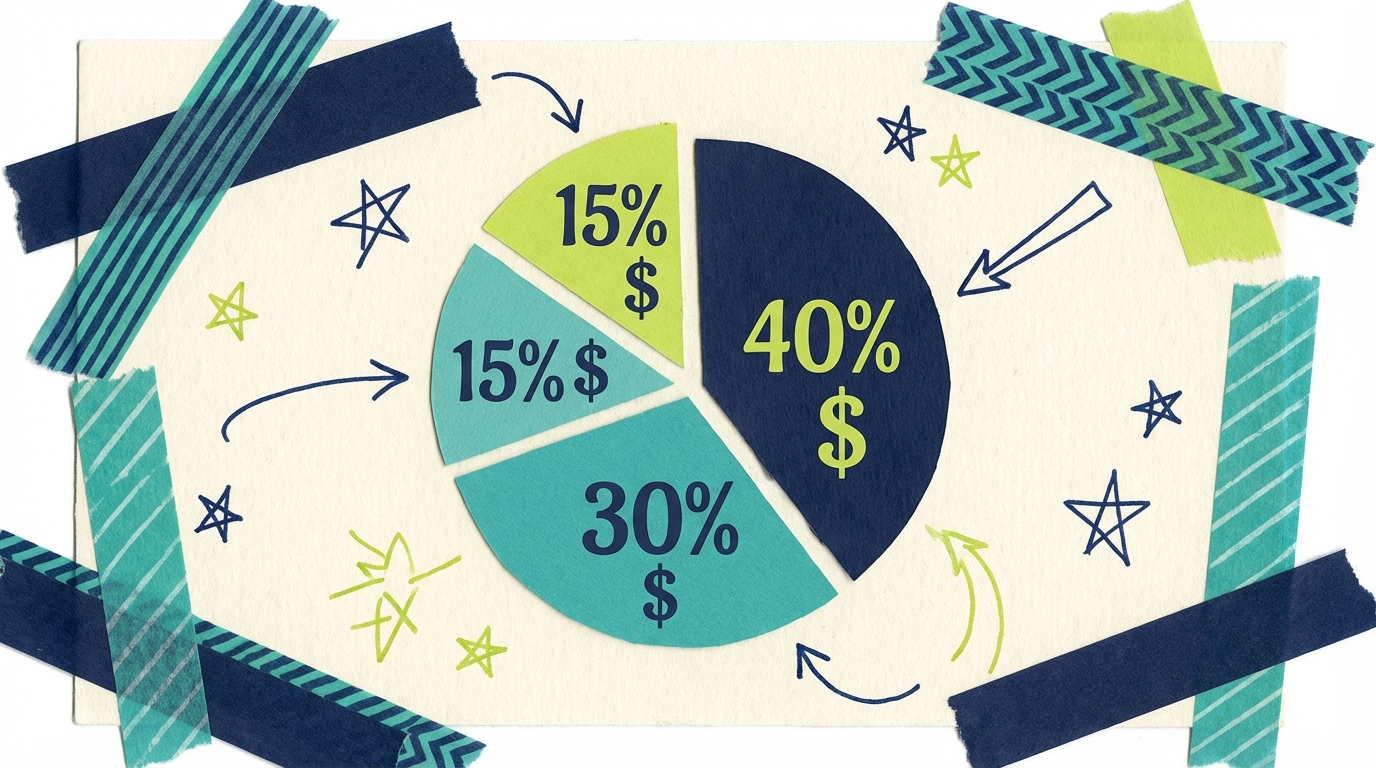
Google Ads (35%), Meta Ads (20%), Local SEO management (15%), one or two directory advertising programs (15%), and TV/CTV for brand building (15%). This mix covers the full funnel from awareness to immediate conversions.
Established shops with growth goals ($3,000+/month)
All six channels active. Google and Meta as the demand-capture core. TV/CTV running consistently to build long-term brand equity. Direct mail campaigns targeting new developments or high-value ZIP codes. Consider dedicating 10-15% of budget to brand building that doesn't have immediate measurable ROI; it compounds over time.
The key principle: don't be so focused on trackable channels that you ignore brand building. Customers who call you because they "just knew your name" came from somewhere, and TV and direct mail are usually part of that equation.
For more detail on how to assess what's working across your channels, measuring advertising effectiveness walks through the metrics and frameworks that matter.
Common Questions Answered
How much should an auto body shop spend on advertising?
Industry benchmarks for auto body and collision repair shops typically run 3-6% of gross revenue on marketing. A shop doing $800,000 in annual revenue would be in the right range spending $24,000-$48,000 per year on advertising, or $2,000-$4,000 per month. Newer shops or those in competitive markets should lean toward the higher end while building their customer base.
Is Google Ads worth it for a local auto body shop?
For most shops, yes. Collision repair has high average job values (often $1,500-$6,000+ per job), which means the math works even if your close rate on leads is modest. A $1,000/month Google Ads budget that generates 15-20 qualified inquiries with even a 30% conversion rate produces 4-6 new jobs. At average collision repair revenue, that's a strong return.
How do I get more reviews for my auto body shop?
The most effective approach is a direct ask at job pickup. When the customer comes in and sees their finished car, that's the highest-satisfaction moment in the relationship. Have your service advisor say something like "If you're happy with the work, we'd really appreciate a Google review. Here's a card with a direct link." A follow-up text an hour after they leave with a one-tap link to your review page also converts well.
Should I advertise on Yelp?
It depends on your market. Yelp's influence varies significantly by region and demographic. The best approach is to claim your free listing and optimize it regardless of whether you pay. If you're in a market where Yelp drives a visible share of service searches, test a small paid campaign ($200-$300/month) for 90 days and track whether your Yelp page calls or messages increased.
Does TV advertising work for auto body shops?
TV advertising works particularly well for collision repair because trust is the primary purchase driver in your category. Being seen on TV signals credibility and stability before customers ever call you. Streaming TV (CTV) makes this accessible for shops with smaller budgets, starting at $50 with platforms like Adwave. Think of TV as a brand-building layer that improves the performance of all your other channels over time.
What's the most important advertising channel for a new auto body shop?
Start with your Google Business Profile, which is free and drives immediate local visibility. Then add Google Ads to capture the high-intent searches where you don't yet have organic ranking. These two channels together cover the "someone needs me right now" demand. Once you're generating consistent new customer volume, layer in Meta Ads and TV to build long-term brand recognition. You can attract local customers through multiple channels, and how to attract local customers gives a useful overview of the options.
The Bottom Line
Auto body shop advertising works best as a multi-channel approach because your customers come to you through different paths. Some search for you the moment they need you. Others remember you from a TV commercial when something happens weeks later. Some choose you because of your reviews. Others because your postcard was sitting on their counter when they backed into a pole.
Don't try to be everywhere at once. Start with Google Ads and your Google Business Profile to capture immediate demand. Add Meta and TV for brand building as your budget grows. Layer in directories and direct mail to reach every corner of your market.
The shops with consistently full bays are the ones that show up for customers at every stage, from the first TV impression to the Google search to the Yelp review that seals the deal.
---
Sources
- Google Ads CPC benchmarks for auto body/collision: WordStream automotive benchmarks 2025
- Auto body repair average job values: CCC Intelligent Solutions Crash Course Industry Report 2025
- Local advertising review impact: BrightLocal Local Consumer Review Survey 2025
- Direct mail CPM benchmarks: Data & Marketing Association (DMA) Response Rate Report
Internal Links Used
- https://adwave.com/industries/automotive/auto-repair/tv-advertising-auto-repair-shops
- https://adwave.com/how-it-works
- https://adwave.com/resources/how-to-measure-advertising-effectiveness
- https://adwave.com/resources/why-customers-trust-tv-brands
- https://adwave.com/resources/how-to-attract-local-customers
- https://adwave.com/resources/how-to-optimize-your-google-business-profile-for-more-calls
- https://adwave.com/resources/best-local-advertising-channels
Supporting Data
- Primary keyword: "auto body shop advertising" — Volume: 90, KD: 16, CPC: $13.43
- Secondary keyword: "collision repair advertising" — Volume: 0, KD: 9
- Phase 4 article; auto body differentiator from Phase 3 (TV-specific): tv-advertising-auto-repair-shops
- Content type: Insights
- Target word count: 2,500-3,500 words
Version history
| Version | When | Summary |
|---|---|---|
| v1 | 6/20/2026, 3:11:54 AM | migration import |