Best Advertising for Small Business in 2026
slug: best-advertising-small-business-2026 · status: draft · score: 85% · 1 versions
View published version → · Contentful entry: 26l2PyzRVSLVjZzO1pcGn7
Validation
| Rule | Detail | |
|---|---|---|
| pass | No banned competitors | No banned competitors |
| pass | No emdashes | No emdashes |
| warn | Avoid AI telltale words | AI telltale words found: landscape |
| pass | Primary keyword in title | No primary keyword to check |
| pass | Use contractions | Contractions used |
| fail | Minimum internal links | Internal links not in sitemap: /resources/google-ads-vs-facebook-ads-vs-tv, /resources/ctv-vs-meta-ads-comparison, /resources/what-is-connected-tv-advertising, /how-it-works, /resources/average-ctv-cpm, /resources/tv-advertising-for-small-business, /resources/how-to-attract-local-customers, /resources/why-customers-trust-tv-brands, /resources/ctv-measurement-attribution-guide, /resources/what-is-connected-tv-advertising, /try-free |
| pass | FAQ section required | FAQ section present |
| fail | Author assigned | No author assigned (never use 'Adwave Team' for new content) |
| pass | Title length 50-60 | Title length 43 |
| pass | Minimum 4 images | 4 images |
| pass | SEO description under 160 | seoDescription 159 chars |
| pass | Adwave mention cadence | 3 Adwave mentions |
| pass | Short description present | shortDescription 157 chars |
| pass | Word count by type | Word count 3116 within target |
| pass | Year-dated title for evergreen types | Title carries year 2026 |
| pass | No manual table of contents | No manual TOC |
Images (4)
Content
Best Advertising for Small Business in 2026
You're running a small business, which means you're already handling operations, customer service, finances, and a dozen other responsibilities. The last thing you need is to waste money on advertising that doesn't bring in customers.
The challenge is that there are more advertising options than ever before. Google wants you to buy search ads. Meta says you need Instagram Reels. LinkedIn is pitching sponsored content. Local newspapers are calling about print ads. And you've probably never even considered TV because you assumed it was only for big brands with massive budgets.
Here's the reality: no single advertising channel works best for every small business. The right choice depends on your industry, budget, timeline, and goals. But some channels consistently deliver better results for small businesses than others, and 2026 has brought new options that weren't accessible even a few years ago.
This guide compares the most effective advertising channels for small businesses, with honest assessments of costs, effort required, and what kinds of businesses benefit most from each.
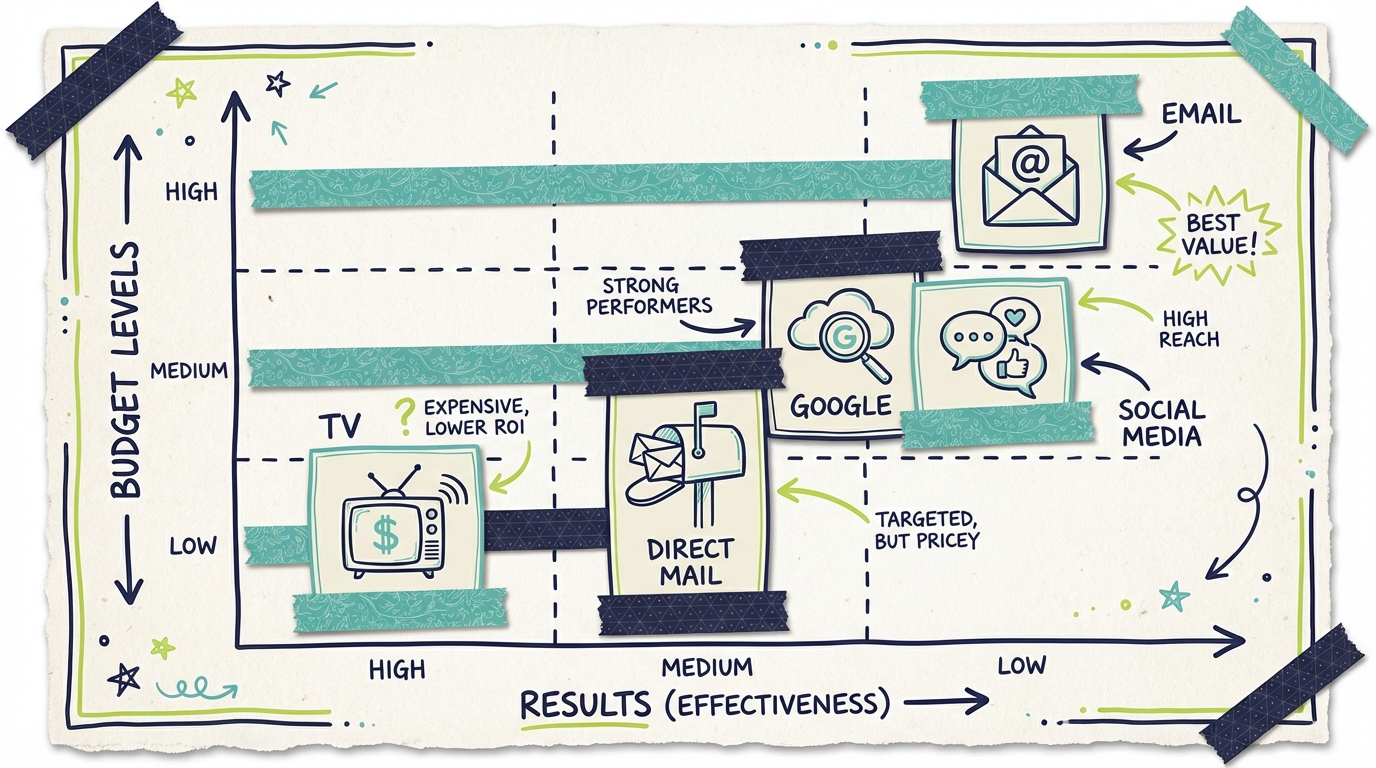
Quick Comparison: Small Business Advertising Channels
Before diving into each channel, here's how the major options stack up:
Google Ads captures active searchers at $500-3,000+ monthly, delivering results in days with excellent targeting.
Meta (Facebook/Instagram) builds brand awareness and local reach at $300-1,500+ monthly, taking weeks to optimize but offering good targeting.
Streaming TV (CTV) builds trust and local awareness starting at just $50-500+ monthly, with low effort and good geographic targeting.
Local SEO provides long-term visibility for $0-500 monthly, though results take months. Targeting is excellent for local searches.
Email Marketing drives repeat business at $50-300 monthly with results in days. You control your audience completely.
Direct Mail targets specific neighborhoods at $500-2,000+ monthly, requiring low effort but offering medium targeting precision.
Yelp and Review Sites convert people actively researching your category at $300-1,000+ monthly, delivering results in days.
LinkedIn reaches B2B decision-makers at $500-2,000+ monthly, requiring high effort but offering excellent professional targeting.
Radio builds drive-time awareness at $500-2,000+ monthly with limited targeting options.
Print and Local News reaches older demographics at $300-1,500+ monthly with limited targeting.
Now let's break down each option so you can make the right choice for your business.
1. Google Ads: Best for Capturing Ready-to-Buy Customers
Google Ads puts your business in front of people actively searching for what you offer. When someone types "plumber near me" or "best Italian restaurant downtown," they're ready to make a decision. Appearing at the top of those search results can drive immediate business.
How it works: You bid on keywords related to your business. When someone searches those terms, your ad appears above the organic results. You pay only when someone clicks.
Typical costs: Most small businesses spend $500-3,000 monthly on Google Ads. Cost per click varies dramatically by industry, from $2-5 for some local services to $50+ for competitive categories like legal or insurance.
Pros:
- Reaches people with immediate intent to purchase
- Highly measurable with clear ROI tracking
- Control over budget and targeting
- Results can start within days
Cons:
- Can get expensive quickly in competitive markets
- Requires ongoing optimization to maintain performance
- Click fraud can waste budget
- Doesn't build long-term brand awareness
Best for: Service businesses where customers actively search (plumbers, dentists, lawyers, restaurants), e-commerce, and any business where people research before buying.
Not ideal for: Businesses with very long sales cycles, brand-new product categories people don't search for, or extremely local businesses in small markets with limited search volume.
Learn more about comparing advertising channels
2. Meta Advertising (Facebook and Instagram): Best for Visual Businesses and Events
Meta's platforms reach billions of users and offer sophisticated targeting based on interests, behaviors, and demographics. For businesses with visual appeal or those promoting events and offers, Meta can be highly effective.
How it works: You create ads (images, videos, or carousels) and target them to specific audiences based on location, age, interests, behaviors, and more. You can pay per impression or per click.
Typical costs: Small businesses typically spend $300-1,500 monthly. Cost per thousand impressions (CPM) ranges from $5-15 depending on targeting and competition.
Pros:
- Massive reach across demographics
- Excellent visual ad formats
- Strong targeting options
- Good for events and time-sensitive offers
Cons:
- Organic reach has declined significantly
- Ad fatigue requires constant creative refresh
- iOS privacy changes reduced targeting effectiveness
- Cluttered feeds mean ads compete for attention
Best for: Restaurants, retail stores, events, fitness studios, beauty businesses, and any business with visually appealing products or services.
Not ideal for: B2B services, businesses targeting older demographics less active on social media, or those without resources for ongoing creative production.
See how CTV compares to Meta advertising
3. Streaming TV (CTV): Best for Building Trust and Local Awareness
Streaming TV advertising, also called connected TV or CTV, has emerged as one of the most effective channels for small businesses in 2026. Your ads appear on streaming platforms like Hulu, Peacock, and Tubi, reaching viewers on their TV screens during premium content.
How it works: Your video ad runs during streaming content, just like traditional TV commercials. The difference is precise geographic targeting (down to ZIP code), much lower minimum budgets, and measurable results. Platforms like Adwave use AI to create professional commercials from your existing content, eliminating traditional production costs.
Typical costs: Starting at $50 with some platforms. Most small businesses spend $200-500 monthly for meaningful local reach. CPMs typically range from $15-35.
Pros:
- Premium, non-skippable ad placement
- Strong trust-building effect (TV carries credibility)
- Precise local targeting
- Low minimum budgets compared to traditional TV
- No production costs with AI-generated ads
Cons:
- Not clickable (brand awareness vs. direct response)
- Results measured in lift rather than direct conversions
- Requires video content (though AI can create it)
- Less immediate than search advertising
Best for: Local service businesses, restaurants, healthcare practices, real estate agents, auto dealers, and any business where trust matters. Particularly effective for businesses that benefit from appearing "established" and credible.
Not ideal for: Businesses needing immediate, trackable conversions from every dollar spent, or those in extremely niche B2B categories.
Explore how small businesses use TV advertising
4. Local SEO: Best for Long-Term Visibility
Local SEO focuses on making your business appear in Google's local results, Google Maps, and the "local pack" that shows for location-based searches. Unlike paid advertising, strong local SEO provides ongoing visibility without per-click costs.
How it works: You optimize your Google Business Profile, build local citations, gather reviews, and ensure your website is optimized for local search terms. Over time, these efforts improve your visibility in local search results.
Typical costs: $0 if you do it yourself, or $200-500 monthly for professional help. One-time optimization projects might cost $500-2,000.
Pros:
- No ongoing advertising costs once established
- Builds long-term visibility
- Reviews provide social proof
- Captures high-intent local searches
Cons:
- Takes months to see significant results
- Requires ongoing maintenance
- Algorithm changes can impact rankings
- Competitive in popular categories
Best for: Any local business, particularly those in service industries where customers search for providers (restaurants, medical practices, home services, professional services).
Not ideal for: Businesses needing immediate results, online-only businesses, or those in markets with limited local search volume.
Learn about attracting local customers
5. Email Marketing: Best for Repeat Business
Email marketing remains one of the highest-ROI channels for small businesses because you're reaching people who already know you. For businesses with repeat customers or considered purchases, email nurtures relationships and drives return visits.
How it works: You build an email list through your website, in-store signups, or purchases. Then you send regular communications with offers, updates, and valuable content that keeps your business top of mind.
Typical costs: Email platforms cost $20-300 monthly depending on list size. The time investment for creating content is the primary cost.
Pros:
- Extremely high ROI (often 30-40x)
- You own your list (no algorithm changes)
- Highly measurable
- Automates customer relationship building
Cons:
- Requires building an audience first
- Doesn't acquire new customers directly
- Email fatigue is real
- Requires consistent content creation
Best for: Retail businesses, restaurants, service businesses with repeat customers, professional services with long consideration periods.
Not ideal for: Businesses with one-time purchases, those without a way to collect emails, or businesses in categories where email feels inappropriate.
6. Direct Mail: Best for Neighborhood Targeting
Direct mail has experienced a resurgence as digital channels become more crowded. Physical mail now stands out in ways it didn't when mailboxes were overflowing. For hyper-local businesses, direct mail can be highly effective.
How it works: You create postcards, letters, or flyers and mail them to specific neighborhoods, ZIP codes, or mailing lists. Many services offer turnkey solutions including design, printing, and mailing.
Typical costs: $500-2,000+ monthly depending on volume and frequency. Cost per piece ranges from $0.30-1.00 including postage.
Pros:
- Tangible, physical presence
- Less competition than digital
- Excellent geographic targeting
- High visibility (people check their mail)
Cons:
- No real-time tracking
- Higher cost per impression than digital
- Environmental concerns for some customers
- Requires strong offer to drive action
Best for: Home services, real estate, local retail, restaurants, healthcare practices, and any business serving specific neighborhoods.
Not ideal for: Online businesses, those targeting younger demographics, or businesses needing precise performance tracking.
7. Review Site Advertising (Yelp, Angi, etc.): Best for Converting Researchers
Platforms like Yelp, Angi (formerly Angie's List), Thumbtack, and industry-specific review sites reach people actively researching businesses in your category. Advertising on these platforms puts you in front of high-intent prospects.
How it works: You pay for enhanced listings, sponsored placements, or leads from people searching for businesses in your category. Models vary from monthly subscriptions to per-lead pricing.
Typical costs: $300-1,000+ monthly depending on category and market. Some platforms charge per lead ($20-100+).
Pros:
- Reaches people actively researching your category
- Reviews provide built-in social proof
- High purchase intent
- Less competition than Google for some categories
Cons:
- Costs can escalate quickly
- Some platforms have aggressive sales tactics
- Dependent on maintaining strong reviews
- Limited control over your presence
Best for: Home services, restaurants, healthcare, professional services, and any category where people read reviews before choosing.
Not ideal for: B2B businesses, new businesses without reviews, or categories not well-represented on review platforms.
8. LinkedIn Advertising: Best for B2B Services
For businesses selling to other businesses, LinkedIn offers targeting based on job title, company size, industry, and professional attributes that no other platform can match.
How it works: You create ads (sponsored content, message ads, or display ads) and target them to professionals based on their work attributes. Pricing is typically CPM or CPC.
Typical costs: $500-2,000+ monthly. LinkedIn has higher CPMs than other platforms, typically $30-80, reflecting the B2B audience value.
Pros:
- Unmatched B2B targeting
- Professional context for business messaging
- Effective for recruiting as well as sales
- Strong for thought leadership content
Cons:
- Expensive compared to other platforms
- Limited reach outside professional contexts
- Ad formats less engaging than visual platforms
- Requires strong content strategy
Best for: B2B services, professional services, recruiting, SaaS companies, and consultants targeting business decision-makers.
Not ideal for: B2C businesses, local retail, restaurants, or any business selling to consumers rather than professionals.
9. Radio Advertising: Best for Drive-Time Awareness
Radio reaches commuters during their daily drives, providing repeated exposure to local audiences. While less targetable than digital options, radio can be effective for building awareness in specific markets.
How it works: You produce a radio spot (typically 15, 30, or 60 seconds) and buy airtime during specific dayparts. Drive time (morning and evening commutes) commands premium pricing.
Typical costs: $500-2,000+ monthly for meaningful frequency in a local market. Production costs add $200-1,000 for professional spots.
Pros:
- Reaches captive commuter audience
- Repeated exposure builds recognition
- Local station personalities provide credibility
- Can be combined with station events/promotions
Cons:
- Limited targeting (everyone listening hears your ad)
- No visual element
- Difficult to track performance
- Declining listenership, especially younger demographics
Best for: Auto dealers, local retail, service businesses, and any business wanting broad local awareness. Works well for promotional events and sales.
Not ideal for: Businesses needing precise targeting, those with limited budgets, or those serving niche demographics.
10. Print and Local News Advertising: Best for Older Demographics
Print advertising in local newspapers, magazines, and community publications reaches audiences that may be less active online. While declining overall, print remains relevant for certain demographics and communities.
How it works: You purchase ad space in publications, ranging from small classified ads to full-page spreads. Rates vary dramatically by publication and placement.
Typical costs: $300-1,500+ monthly. Community papers may charge $50-200 per ad while major regional publications can cost thousands.
Pros:
- Reaches demographics less active online
- Strong community presence in local publications
- Tangible, saveable format
- Credibility of editorial adjacency
Cons:
- Declining readership overall
- Limited targeting
- No performance tracking
- Long lead times for placement
Best for: Senior services, professional services, luxury goods, community-focused businesses, and any business targeting older demographics.
Not ideal for: Businesses targeting younger audiences, those needing performance tracking, or time-sensitive promotions.
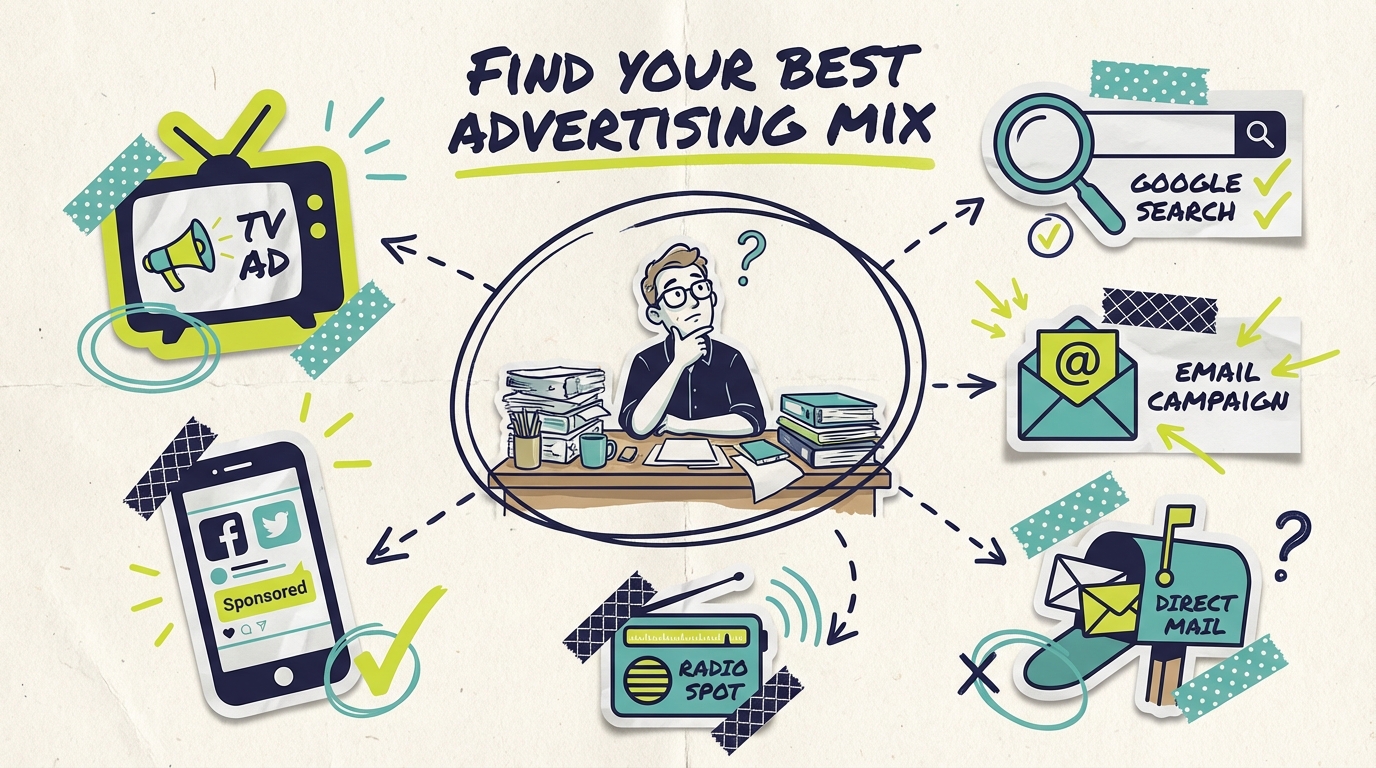
How to Choose the Right Advertising Mix
The best advertising strategy for your small business depends on several factors:
Consider your timeline. If you need customers this week, focus on Google Ads and review sites where people are actively searching. If you're building for long-term growth, invest in local SEO, streaming TV, and email marketing.
Match your industry. Visual businesses (restaurants, retail, fitness) benefit from Instagram and streaming TV. Service businesses (plumbers, lawyers, dentists) see strong results from Google Ads and local SEO. B2B companies should prioritize LinkedIn.
Start with your budget. With less than $500 monthly, focus on one or two channels rather than spreading thin. Streaming TV and email marketing offer low entry points with strong results. As budget grows, layer in additional channels.
Consider your competitive landscape. In categories where Google Ads costs are extremely high, alternative channels like streaming TV or direct mail may offer better value. Test and compare results.
Think about trust. For businesses where trust matters (healthcare, financial services, home services), TV advertising builds credibility that digital ads often can't match. Appearing on the same screen as major brands elevates perception.
A Sample Advertising Plan for 2026
For a local service business with a $1,000 monthly advertising budget, here's a balanced approach:
Foundation (ongoing):
- Local SEO optimization: $0-200/month
- Email marketing to existing customers: $50/month
- Google Business Profile maintenance: $0
Active advertising:
- Streaming TV for brand awareness: $300/month
- Google Ads for immediate leads: $400/month
Seasonal boost:
- Increase streaming TV and Google Ads during peak seasons
- Add direct mail for specific neighborhood promotions
This mix captures active searchers (Google), builds brand recognition and trust (streaming TV), nurtures existing relationships (email), and maintains long-term visibility (local SEO).
Measuring What Works
Regardless of which channels you choose, measurement matters. Here's how to track effectiveness:
For digital channels: Use UTM parameters and conversion tracking to measure website visits, form submissions, and calls from each source.
For streaming TV: Track branded search increases, website traffic during campaign periods, and ask new customers how they heard about you. Learn more about CTV measurement.
For offline channels: Use dedicated phone numbers, unique offer codes, or simple customer surveys to attribute new business to specific advertising.
Calculate your cost per acquisition. Divide total advertising spend by the number of new customers acquired. Compare this across channels to understand where your money works hardest.
Common Questions Answered
What's the best advertising for a small business with a limited budget? Start with two channels that complement each other: streaming TV for awareness and trust-building ($50-200/month) plus Google Ads or local SEO for capturing active searchers. This combination builds your brand while driving immediate leads. As results come in, invest more in what's working.
How much should a small business spend on advertising? Most small businesses allocate 5-10% of revenue to marketing, with advertising being a portion of that. For new businesses or those in growth mode, 10-15% isn't unusual. Start with what you can sustain for at least 3-6 months, as consistency matters more than brief bursts of heavy spending.
Is social media advertising worth it for small businesses? It depends on your business. Visual businesses (restaurants, retail, fitness) often see good results from Instagram. Service businesses may find Google Ads more effective. Social media requires ongoing content creation and active management to work well. If you don't have resources for that, other channels may deliver better results with less effort.
Should small businesses advertise on TV? Yes, and it's more accessible than ever. Streaming TV advertising starts at $50 with platforms like Adwave, with no production costs thanks to AI-generated commercials. TV builds trust and credibility that digital advertising often can't match, making it particularly valuable for service businesses, healthcare, and any category where customers need to trust you.
How long does advertising take to work? It varies by channel. Google Ads can drive leads within days. Social media typically takes 2-4 weeks to optimize. Streaming TV builds recognition over 4-8 weeks. Local SEO takes 3-6 months for significant improvement. Set realistic expectations for each channel and give campaigns enough time to demonstrate results before making changes.
What advertising mistakes should small businesses avoid? The biggest mistakes are: spreading budget too thin across too many channels, giving up too quickly before results materialize, not tracking results to understand what's working, and choosing channels based on what competitors do rather than what fits your specific business and audience.
The Bottom Line
The best advertising for your small business in 2026 isn't a single channel. It's the right combination of channels that reach your customers at different points in their journey.
Start with a foundation of local SEO and email marketing, which require minimal ongoing costs. Layer in one or two paid channels based on your goals: streaming TV for trust and awareness, Google Ads for capturing active searchers, or social media for visual businesses and events.
Test, measure, and adjust. What works for one business may not work for another, even in the same industry. The businesses that succeed with advertising are those that treat it as an ongoing experiment rather than a one-time decision.
Ready to add TV to your advertising mix? Create your first streaming TV ad in minutes with Adwave, starting at just $50.
Version history
| Version | When | Summary |
|---|---|---|
| v1 | 6/20/2026, 3:11:54 AM | migration import |