Local Event Marketing: Filling Seats on a Budget
slug: local-event-marketing-filling-seats-budget · status: draft · score: 84% · 1 versions
Not yet published.
Validation
| Rule | Detail | |
|---|---|---|
| pass | No banned competitors | No banned competitors |
| pass | No emdashes | No emdashes |
| pass | Avoid AI telltale words | No AI telltale words |
| pass | Primary keyword in title | No primary keyword to check |
| pass | Use contractions | Contractions used |
| fail | Minimum internal links | Internal links not in sitemap: /resources/what-is-connected-tv-advertising, /how-it-works, /how-it-works, /try-free, /try-free |
| pass | FAQ section required | FAQ section present |
| fail | Author assigned | No author assigned (never use 'Adwave Team' for new content) |
| pass | Industry pages need taxonomy | Not an Industry page |
| pass | Title length 50-60 | Title length 48 |
| pass | Minimum 4 images | 4 images |
| warn | SEO description under 160 | Missing seoDescription |
| pass | Adwave mention cadence | 2 Adwave mentions |
| warn | Short description present | Missing shortDescription |
| pass | Word count by type | Word count 2533 (no target for type) |
| pass | Year-dated title for evergreen types | Type not year-dated |
| pass | No manual table of contents | No manual TOC |
Images (4)
Content
Local Event Marketing: Filling Seats on a Budget
You've planned an amazing event. The venue is booked, the schedule is set, and everything is coming together. Now comes the hard part: getting people to actually show up.
Local events face a fundamental challenge. You have a fixed date, limited seats, and a short window to build awareness and drive registrations. Whether you're organizing a community fundraiser, a local festival, a workshop, a concert, or a business event, the marketing principles are similar.
This guide covers practical, budget-friendly strategies for filling seats at local events, from free tactics that anyone can implement to affordable paid options that amplify your reach.
Start with Your Event's Unique Selling Points
Before spending any money on marketing, get clear on what makes your event worth attending. Generic events get generic turnout. Specific, compelling reasons to attend drive action.
Ask yourself: Why would someone clear their calendar, find childcare, and drive to your event instead of staying home? The answer should be specific and concrete.
Wrong approach: "A community gathering to bring people together."
Better approach: "Meet three-time Grammy winner Sarah Johnson in an intimate Q&A, followed by a performance for just 100 guests."
Wrong approach: "A networking event for local professionals."
Better approach: "Speed-date your way to your next business partner: 15 three-minute conversations with fellow entrepreneurs, guaranteed."
Your marketing will only be as compelling as your answer to "why should I attend?" Spend time sharpening this before investing in promotion.
Free Marketing Channels That Work
Limited budget doesn't mean limited options. Start with channels that cost nothing but effort.
Email Marketing
If you have any existing email list, even a small one, it's your most valuable marketing asset.
Your own list is gold. Email reaches people who already know you with a message they're likely to open. Announce your event to your list immediately upon confirming details. Send reminder emails as the date approaches. The open rates and response rates for event emails typically exceed any other channel.
Partner lists amplify reach. Other organizations in your community have their own email lists. Offer to cross-promote: you'll share their events with your list if they share yours. This works particularly well when audiences overlap but don't duplicate.
Email capture from registration. Even if people don't buy tickets immediately, capture emails through "interested" lists, early-bird notifications, or event updates. These warm leads convert at higher rates than cold audiences.
Social Media (Organic)
Organic social media reach has declined, but it still works for events when approached strategically.
Create a Facebook event. Facebook's event feature still drives attendance, particularly for local events. Create the event early, invite your network, and post updates regularly. The "interested" and "going" counts create social proof that encourages others to commit.
Use community groups. Local Facebook groups, neighborhood apps like Nextdoor, and community forums are filled with people looking for things to do. Post about your event where it's welcome and relevant. Follow group rules about promotional content.
Partner social cross-promotion. Every sponsor, performer, vendor, or participant has their own social following. Provide them with easy-to-share content (images, copy, links) and ask them to post. Their endorsement carries credibility their followers trust.
Content series building to the event. Rather than posting "Come to our event!" repeatedly, create content that builds interest. Behind-the-scenes preparation, speaker or performer spotlights, venue reveals, and countdown posts create narrative momentum.
Community Partnerships
Local organizations can become powerful promotional partners.
Complementary businesses. Find businesses whose customers would enjoy your event. A cooking workshop might partner with kitchen supply stores. A music festival might connect with restaurants and bars. Offer promotional partnership: you feature them, they feature you.
Community organizations. Chambers of commerce, Rotary clubs, churches, schools, and civic groups all communicate regularly with their members. Present your event as something valuable for their community, and many will share it through their channels.
Media partnerships. Local newspapers, radio stations, and community blogs often partner with events in exchange for promotion. You mention them as "media partner," they cover the event in their content. This is particularly common for recurring events or those with broad community appeal.
Word of Mouth Acceleration
Personal recommendations drive event attendance more than almost any other factor.
Make sharing easy. Create shareable content (graphics, videos, one-liners) that attendees can forward to friends. Include simple calls to action: "Know someone who'd love this? Share this post."
Ambassador programs. Recruit enthusiastic supporters as "ambassadors" who commit to inviting a certain number of people. Offer incentives like free tickets, VIP access, or recognition.
Early bird social proof. Announce when you hit registration milestones. "100 tickets sold in the first week!" creates urgency and demonstrates that others have committed.
Affordable Paid Marketing Options
When you have some budget to invest, these channels offer strong returns for local events.
Streaming TV Advertising
Connected TV advertising has become surprisingly accessible for event promotion.
Why it works for events: TV creates excitement and urgency that other formats struggle to match. Seeing an event promoted on the same screen where you watch your favorite shows makes it feel bigger, more important, more worth attending.
The targeting advantage: You can target viewers specifically in your event's draw area. A regional festival might reach everyone within a two-hour drive. A local fundraiser might focus on specific neighborhoods.
Budget accessibility: With Adwave, you can create a professional commercial and launch a campaign starting at just $50. For events with limited promotional windows, that modest investment can drive significant awareness.
Timing recommendations: Start TV advertising 4-6 weeks before your event for best results. This gives viewers time to plan while maintaining urgency. Increase frequency in the final two weeks when people are making weekend decisions.
Social Media Advertising
Paid social extends your reach beyond organic limitations.
Facebook and Instagram ads let you target people by location, interests, age, and behaviors. For local events, geographic targeting is essential: don't pay to reach people who live too far away to attend.
Event response ads specifically optimize for getting people to respond "interested" or "going" to your Facebook event. This creates social proof while building an audience you can retarget.
Lookalike audiences find people similar to your existing attendees or email list. If you have data from previous events, this targeting often outperforms broad demographic targeting.
Budget guidance: Start with $200-500 for a local event. Test multiple audiences and creative approaches in the first week, then shift budget toward what performs best.
Google Advertising
Google captures people actively searching for events or activities.
Search ads for relevant queries like "things to do this weekend [city]" or "[event type] near me" reach people looking for exactly what you offer.
Discovery ads appear on Google properties when users browse content related to your event's theme.
Budget guidance: Even $100-300 can provide meaningful visibility for local event searches. Focus on specific, local keywords rather than broad terms.
Local Media Advertising
Traditional local media still reaches certain audiences effectively.
Local radio reaches commuters during drive time. Many stations offer event sponsorship packages that combine advertising with on-air mentions.
Community newspapers and magazines reach readers who specifically consume local content. Print ads for events can be surprisingly affordable.
Event listing sites like Eventbrite, local event calendars, and community websites often offer paid placement options.
The Event Marketing Timeline
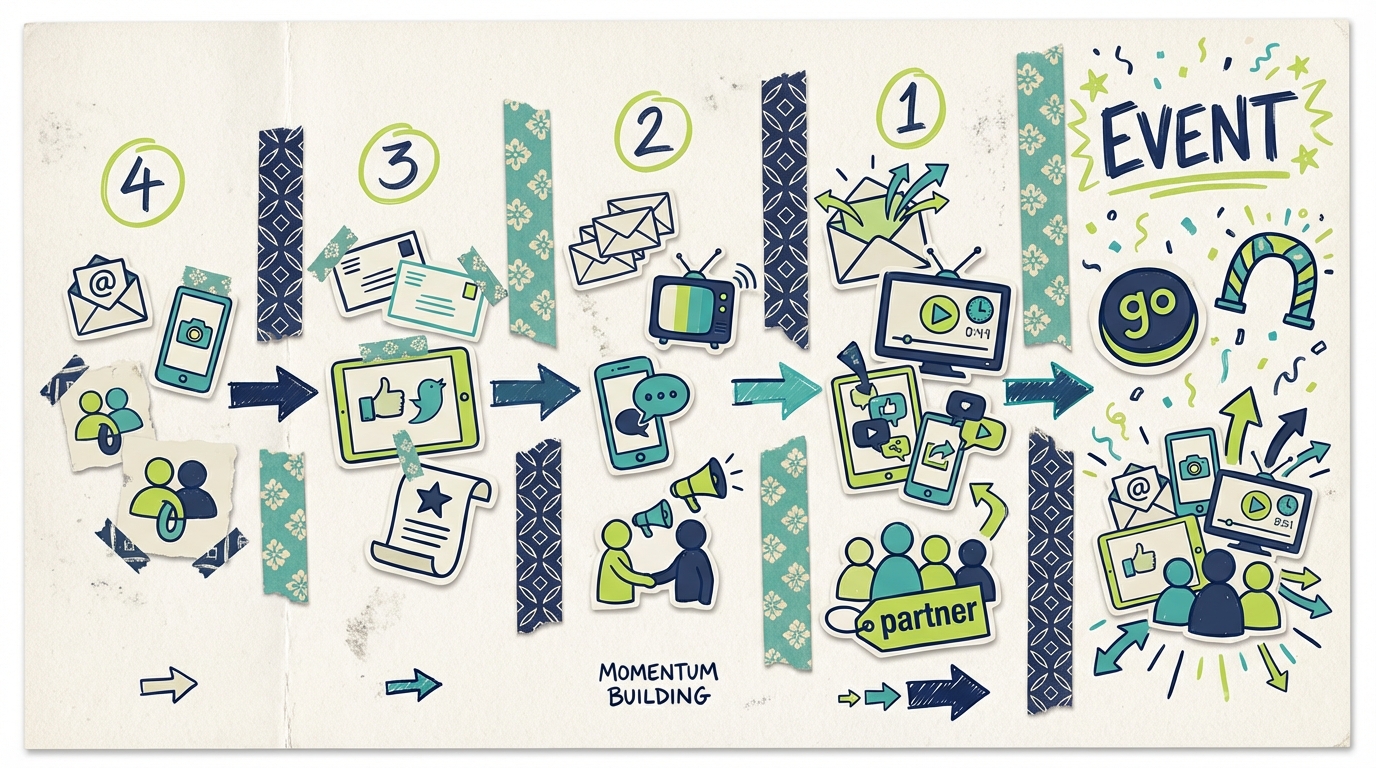
Effective event marketing follows a timeline that builds momentum.
8-12 weeks before: Launch initial announcement. Create event pages and registration. Begin organic social posting. Reach out to potential partners.
6-8 weeks before: Activate email marketing to your list. Launch early-bird pricing if applicable. Begin partner cross-promotion. Start content series building interest.
4-6 weeks before: Launch paid advertising if budget allows. Secure media coverage or partnerships. Accelerate social media posting. Send partnership promotional materials to speakers/sponsors.
2-4 weeks before: Intensify all channels. Share testimonials from past events. Create urgency with limited availability messaging. Retarget people who showed interest but haven't registered.
Final week: Send "last chance" communications. Remind registered attendees with logistics. Push final ticket sales through all channels.
Day of and after: Live social coverage creates content for future events. Thank you communications build loyalty for next time. Collect feedback while experience is fresh.
Budget Allocation Strategies
How you allocate limited budget depends on your event type and audience.
For community events with broad appeal: Invest in reach. Streaming TV, Facebook ads, and community partnerships maximize awareness among the general population.
For niche events with specific audiences: Invest in targeting. Google ads capturing relevant searches, LinkedIn for professional events, and targeted social ads reach qualified attendees efficiently.
For recurring events with existing audiences: Invest in retention. Email marketing to past attendees, early-bird rewards for returning guests, and ambassador programs tap into your existing community.
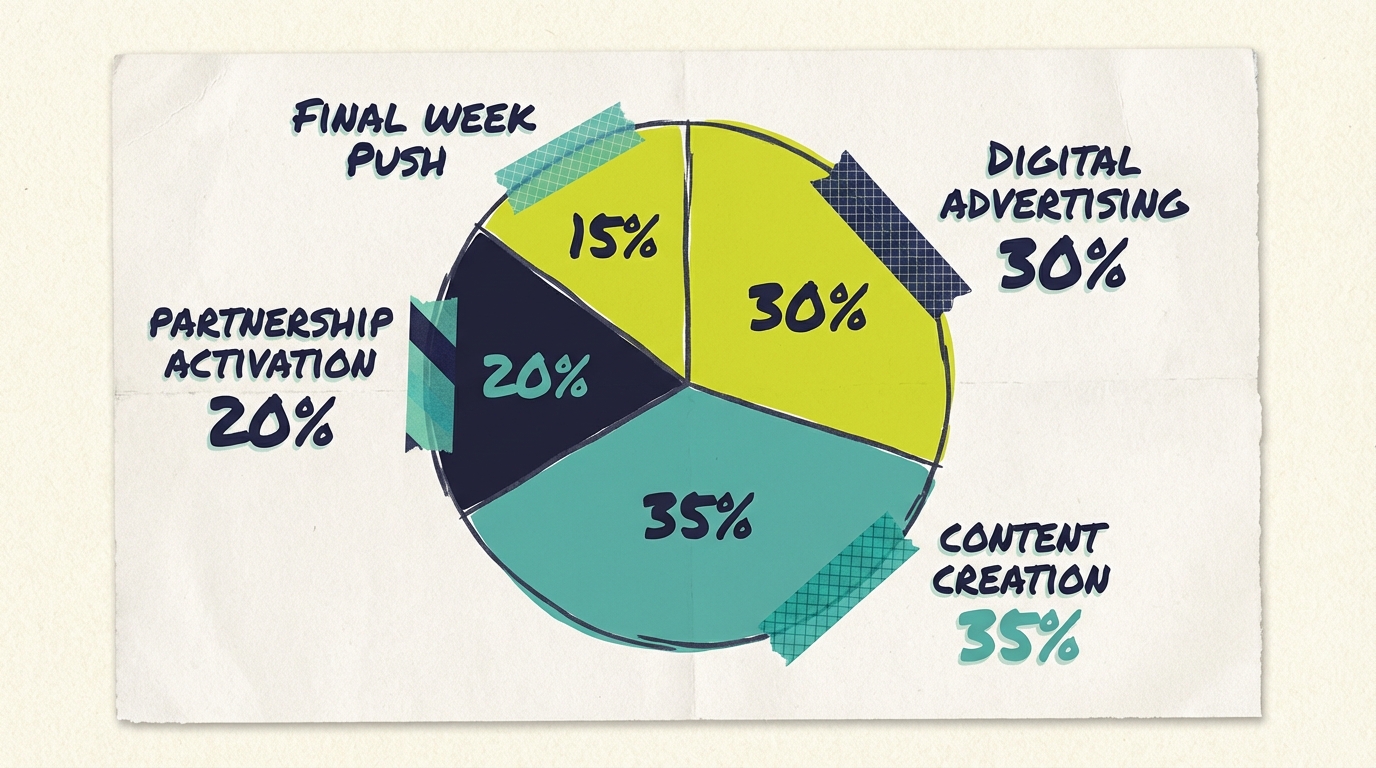
General guidance:
- 40-50% on digital advertising (social, Google, CTV)
- 20-30% on content creation (graphics, video)
- 15-20% on partnership activation
- 10-15% reserved for final-week push
Measuring What Works
Track your marketing effectiveness to improve future events.
Registration source tracking. Ask registrants how they heard about the event. Use unique URLs, promo codes, or registration sources to track which channels drive sign-ups.
Cost per registration. Divide channel spend by registrations attributed to that channel. This reveals which investments deliver the best returns.
Registration timeline. Map when registrations happen relative to marketing activities. This shows which efforts drive immediate response versus building awareness.
Social engagement metrics. Track shares, comments, and event responses. High engagement indicates resonant content that can be amplified further.
Partner effectiveness. Track registrations from partner promotions specifically. This reveals which partnerships to prioritize for future events.
Post-Event Marketing: Building for Next Time
The work doesn't end when your event does. What you do after the event shapes your success next time.
Capture content during the event. Photos and videos of attendees having a great time become your most powerful marketing assets for future events. Hire a photographer if budget allows, or assign someone to capture moments throughout. Get crowd shots, speaker highlights, candid moments, and testimonials.
Gather feedback immediately. Send a survey within 24-48 hours while the experience is fresh. Ask what people loved, what could improve, and whether they'd recommend the event to others. This feedback informs both your next event and your marketing approach.
Thank your attendees publicly. Post-event social content thanking attendees reinforces the positive experience and creates FOMO for those who didn't attend. Tag people who are comfortable being featured. Share highlights that make people excited for next year.
Capture email addresses for next time. If you didn't collect emails at registration, use post-event touchpoints to build your list. "Want to hear about next year's event first?" converts attendees into subscribers who become your warmest audience.
Maintain engagement between events. If your event recurs, don't disappear until promotion starts again. Share throwback content, announce dates early, and keep your audience engaged year-round. The organizations that do this well see dramatically higher early registration rates.
Common Mistakes to Avoid
Learn from what doesn't work.
Starting too late. Event marketing builds momentum. Starting 2-3 weeks before an event leaves insufficient time for awareness to translate into action. Begin at least 6-8 weeks out.
Relying on a single channel. No single channel reaches everyone. People need to encounter your event multiple times across different contexts before they commit. Combine channels for reinforcement.
Generic messaging. "Don't miss this great event!" doesn't motivate anyone. Specific benefits, clear details, and compelling reasons to attend drive registrations.
Ignoring existing audiences. Your email list, social followers, and past attendees are far more likely to register than cold audiences. Prioritize these warm audiences while also reaching new ones.
Stopping promotion too early. Many registrations happen in the final week or even final days. Don't exhaust your budget early and go dark when urgency peaks.
Forgetting to document. Events happen once, but content lives forever. An event without photos and videos is a missed marketing opportunity. Plan your content capture before the event starts.
Common Questions Answered
How much should I spend on marketing a local event? Industry guidelines suggest 20-30% of projected revenue for new events, 10-15% for established ones. If tickets are $50 and you're targeting 200 attendees, that's $10,000 revenue and $1,000-2,000 marketing budget.
How early should I start promoting my event? 8-12 weeks for larger events, 4-6 weeks for smaller ones. Earlier is better because it gives people time to plan and creates more opportunities for word-of-mouth.
What if I have almost no budget? Focus entirely on free channels: email to any list you have, organic social, community partnerships, and word-of-mouth acceleration. Many successful events have been filled purely through these approaches.
How do I know if my marketing is working? Track registrations over time. If you're adding registrations steadily, marketing is working. If registrations plateau, try different messaging, channels, or offers.
Should I offer early-bird pricing? Early-bird pricing accelerates initial registrations, creates urgency, and provides early cash flow. It also builds momentum and social proof. For most events, it's worth offering.
What's the most important marketing channel for events? Your own email list consistently outperforms other channels for conversion rate. But reaching people not on your list requires paid advertising or organic social reach. Combine channels for best results.
How do I create urgency without being annoying? Real urgency works better than manufactured urgency. Limited capacity, early-bird deadlines, and genuinely popular events create natural urgency. Communicate facts: "Only 50 seats left" or "Early-bird pricing ends Friday." Avoid fake countdowns or artificial scarcity that erodes trust. When urgency is real, communicate it clearly and frequently. When it's not, focus on value rather than pressure.
Should I invest in video content for event marketing? Video consistently outperforms static images for event marketing. A highlight reel from last year's event shows people what they're missing. Behind-the-scenes footage builds anticipation. Speaker or performer previews generate excitement. You don't need professional production. Smartphone videos with good lighting and audio work well on social platforms. For TV advertising, Adwave creates professional commercials from your existing content.
How do I market a new event with no track record? First events are challenging because you lack social proof and content from previous years. Focus on your speakers, performers, or attractions since their credibility transfers to your event. Partner with established organizations whose endorsement provides credibility. Offer early supporters incentives that reward their risk. Create content that demonstrates the value attendees will receive. And document everything at your first event so you have marketing assets for year two.
The Bottom Line
Filling seats at local events comes down to reaching the right people with a compelling reason to attend, enough times that they actually take action.
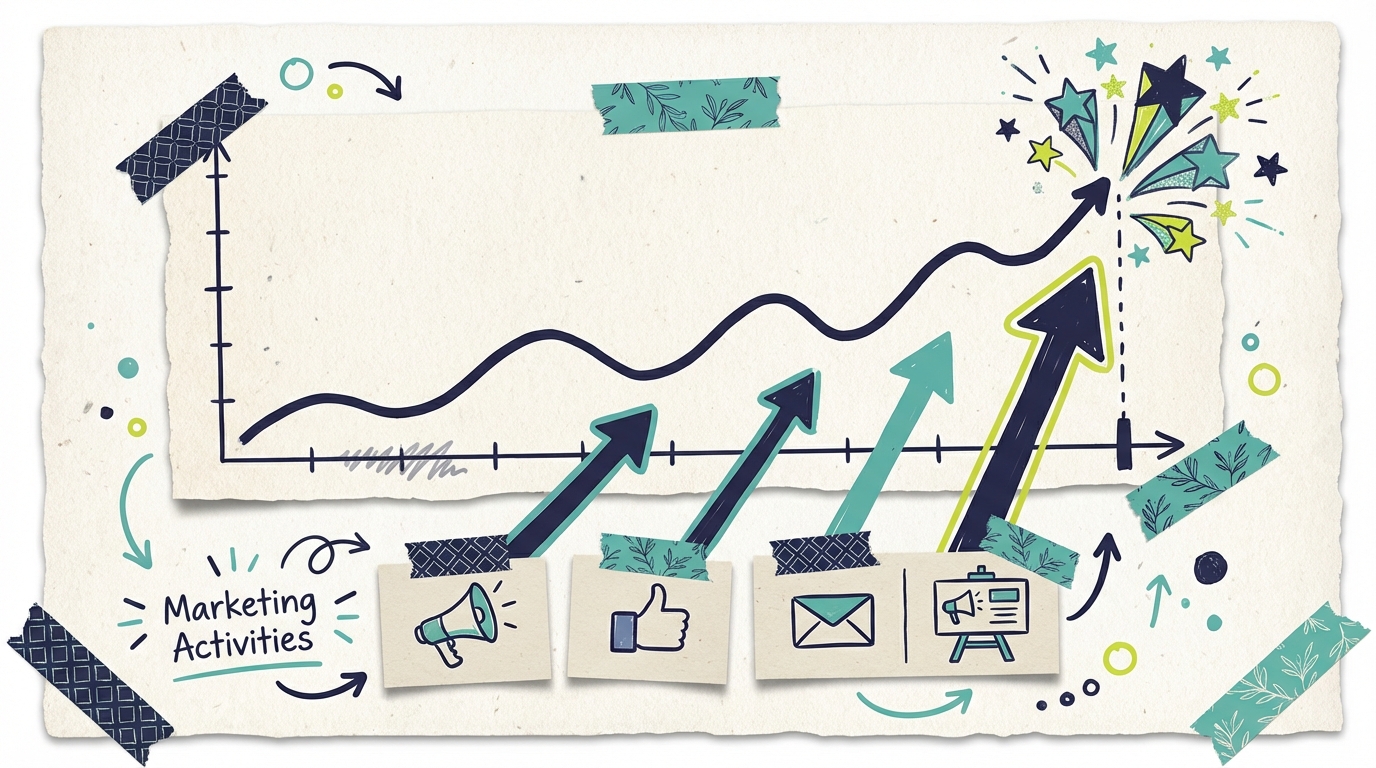
Free channels like email, organic social, and community partnerships provide the foundation. Paid channels like streaming TV, social ads, and Google advertising amplify your reach. The combination creates marketing momentum that builds as your event approaches.
Start early, stay consistent, and make it genuinely compelling. The events that fill seats are the ones that give people a specific, exciting reason to show up.
Ready to get your event on TV? Create your first ad in minutes and reach local viewers on streaming platforms, starting at just $50.
Version history
| Version | When | Summary |
|---|---|---|
| v1 | 6/20/2026, 3:11:54 AM | migration import |