Best Advertising for Funeral Homes & Cremation (2026)
slug: best-advertising-funeral-homes · status: draft · score: 85% · 1 versions
View published version → · Contentful entry: 570LStHCE9T9CEqxHhL9AQ
Validation
| Rule | Detail | |
|---|---|---|
| pass | No banned competitors | No banned competitors |
| pass | No emdashes | No emdashes |
| pass | Avoid AI telltale words | No AI telltale words |
| pass | Primary keyword in title | No primary keyword to check |
| pass | Use contractions | Contractions used |
| fail | Minimum internal links | Internal links not in sitemap: /how-it-works, /resources/why-customers-trust-tv-brands, /resources/test-tv-advertising-without-big-budget, /resources/best-advertising-senior-care-assisted-living, /resources/how-much-does-it-cost-to-advertise, /how-it-works |
| pass | FAQ section required | FAQ section present |
| fail | Author assigned | No author assigned (never use 'Adwave Team' for new content) |
| pass | Title length 50-60 | Title length 53 |
| pass | Minimum 4 images | 4 images |
| pass | SEO description under 160 | seoDescription 142 chars |
| pass | Adwave mention cadence | 4 Adwave mentions |
| pass | Short description present | shortDescription 169 chars |
| warn | Word count by type | Word count 1924 below target (2500-5000) |
| pass | Year-dated title for evergreen types | Title carries year 2026 |
| pass | No manual table of contents | No manual TOC |
Images (4)

Content
Best Advertising for Funeral Homes & Cremation (2026)
Funeral home advertising carries a weight no other local category does. The families you serve arrive on the hardest days of their lives, the decisions are made in hours under grief, and the entire purchase rests on a single question: do we trust these people with this? Marketing that would be ordinary anywhere else (urgency tactics, discount pushes, aggressive retargeting) isn't just ineffective here; it's disqualifying.
And yet funeral homes must advertise, because the category's quiet structural shift demands it: cremation's rise, new competitors, online price-shopping, and the erosion of the generational loyalty that once filled the calendar on reputation alone. This guide compares the seven channels that work for funeral homes and cremation providers in 2026, organized around the distinction that drives everything in this category: at-need versus pre-need.
The two demand types
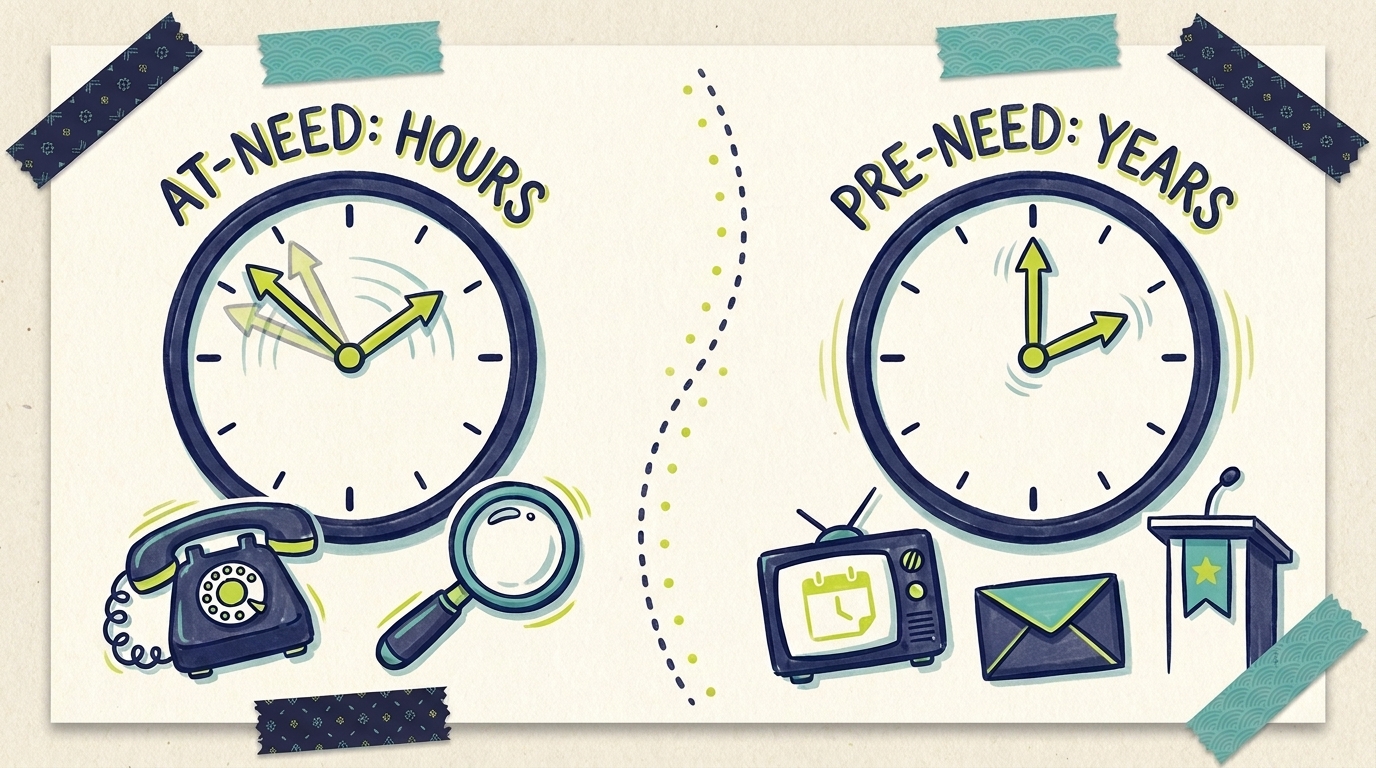
At-need is the family who needs you today. The decision window is hours to a day or two, the chooser is often an adult child coordinating under stress, and the channel behavior is narrow: they search, they ask the hospice nurse or clergy, they check what they find, and they call. At-need advertising is about being findable and validated at the moment of need.
Pre-need is the planning decision: individuals and couples, usually 55+, arranging and often funding services years in advance. The decision window is months, the mindset is deliberate, and the channels are completely different: this is where awareness, seminars, mail, and television live. Pre-need is also where the category's growth is, because every pre-need arrangement is a future at-need call that never goes to a competitor.
Most funeral home marketing fails by running one playbook for both. The seven channels below each serve one demand type primarily, and the budget split at the end keeps them in proportion.
The seven channels
1. Google Ads (at-need capture)
"Funeral home near me," "cremation services [city]," and the after-hours variants are the highest-stakes searches in local marketing, and they're contested: regional chains and cremation brands bid hard. A funeral home that isn't present is invisible at the exact moment of need.
The craft is in the tone: copy that leads with availability and compassion ("Here when you need us. Call anytime."), never price-blasting or urgency. Send clicks to a page with a phone number above the fold, clear immediate-need guidance, and your people's faces. Expect $800-$2,000 monthly in most markets, concentrated on at-need terms; pre-need search volume is thinner but cheap to cover.
2. Local SEO, reviews, and the validation layer
Every at-need family validates before calling: the Google Business Profile, the rating, the recent reviews. Reviews in this category carry unusual emotional specificity ("they treated Dad with such dignity"), and they're persuasive precisely because asking for them is delicate.
The working pattern: a gentle note to families several weeks after the service, acknowledging the ask is unusual and explaining that their words help other families find care. Response rates are higher than most owners fear, and a profile with 80 heartfelt reviews is the strongest at-need asset a funeral home can own. Keep photos current and warm (the building, the staff, the grounds), because families are imagining standing there.
3. Streaming TV (pre-need trust)
Television is the natural pre-need channel, and streaming brought it into local funeral home budgets: $15-35 CPMs, zip-level targeting around your service area, and creative generated from your website in about two minutes.
Three reasons the fit is strong. The pre-need audience (55+) is heavily present on streaming as cord-cutting reaches every age bracket. The trust effect of television lands hardest in the most trust-dependent category there is; "the funeral home we see on TV" reads as established, stable, and community-rooted. And TV reaches couples together, which is how pre-need decisions actually get made.
Creative tone: community institution, not service provider. Your building through the seasons, your family's generations of stewardship, the message that planning ahead is a gift to your children. No urgency, no price, a soft invitation to a conversation or seminar. Budget $600-$1,500 monthly, run steadily; this is a presence play measured in quarters, and the low-budget testing approach maps cleanly onto a six-month pre-need awareness flight. The same household-trust logic that works for senior care advertising applies here, often to the same households a few years earlier.
4. Pre-need seminars and events
The classic still works: lunch-and-learn seminars on estate planning and final arrangements, co-hosted with elder law attorneys or financial planners, convert deliberate planners at high rates. The modern update is the funnel around them: TV and mail drive seminar awareness, the seminar drives consultations, and consultations close pre-need arrangements. Open houses and community events (grief support groups, holiday remembrance services) build the same familiarity with no sales content at all, which is often the point.
5. Direct mail (pre-need)
Age-and-zip-targeted mail remains a workhorse for pre-need: the audience reads mail, the format suits a sensitive topic better than a feed ad, and the call to action (a seminar date, a planning guide offer) gives the recipient control of the pace. Mail performs measurably better in the weeks a TV flight is running in the same zips; familiarity opens envelopes.
6. Community relationships
Hospice teams, clergy, senior living staff, and estate attorneys guide at-need families and pre-need planners alike. These referral relationships run on reliability and respect rather than spend: being responsive at 2am, handling every family well, showing up for the community institutions that show up for families. Budget is time, and the return compounds over decades. This channel is also your protection: a funeral home woven into the community's care network doesn't lose families to a chain's search ads.
7. Website and obituary presence
The funeral home website is unusual: its obituary pages draw steady local traffic from people who may not need services for years, making every obituary a quiet brand impression. Keep the site fast, dignified, and mobile-first (at-need searches happen on phones), with pricing transparency where you're comfortable, planning resources, and prominent humanity: the staff page matters more here than in any other business category.
Side-by-side channel comparison
A budget that respects both clocks
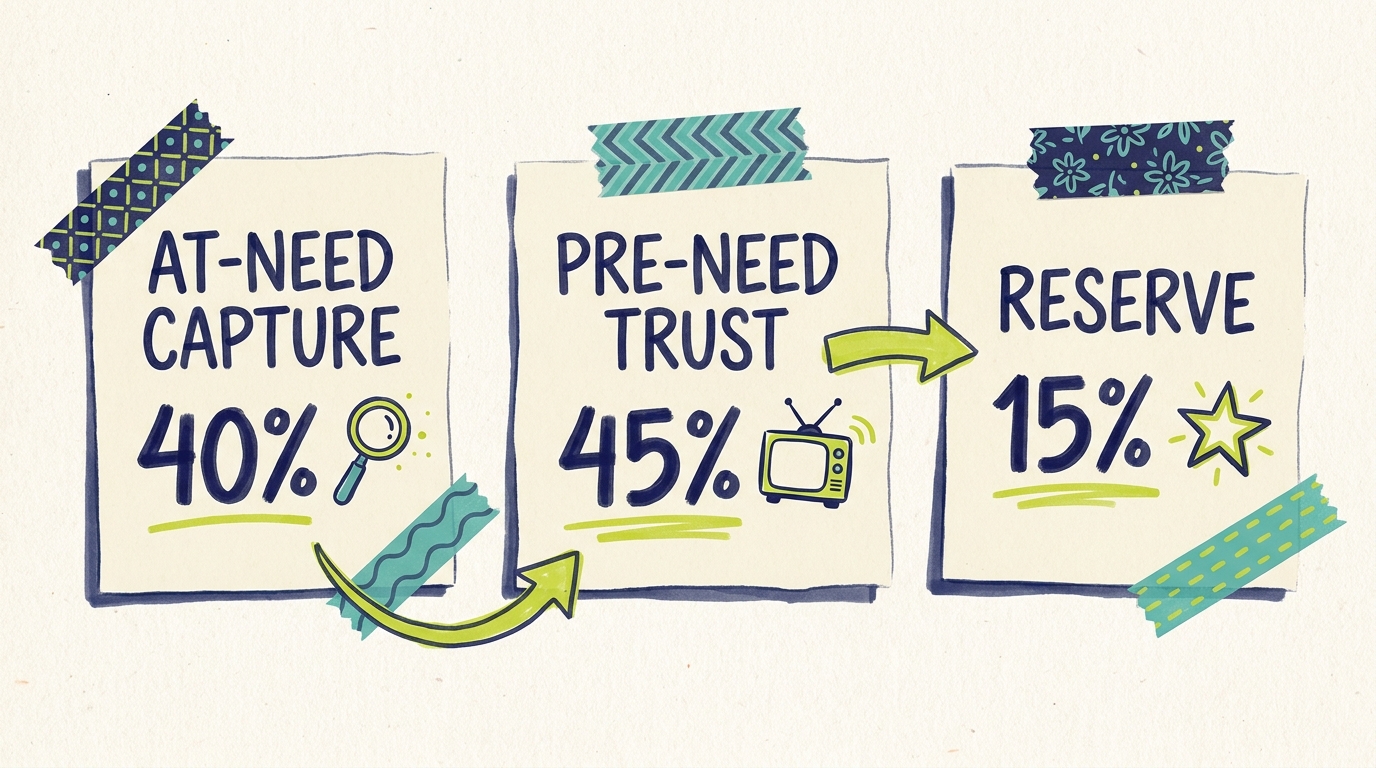
For a funeral home investing $3,500-$5,000 monthly in paid channels:
- At-need capture (40%): Google Ads on at-need terms, with the validation layer (reviews, GBP) maintained as weekly discipline rather than spend.
- Pre-need trust (45%): CTV running steadily, direct mail in coordinated pulses, seminar programs quarterly. This is the growth engine, and the half that most firms underfund because its payoff sits quarters away.
- Flexibility reserve (15%): seminar pushes, community sponsorships, and the occasional competitive response.
The strategic logic: every pre-need dollar eventually removes an at-need auction from your future. Firms that shift weight toward pre-need trust-building watch their at-need cost per call decline over the following years, because more families arrive already decided. What the totals should be for your market size is covered in how much it costs to advertise.
Tone: the rules that override everything
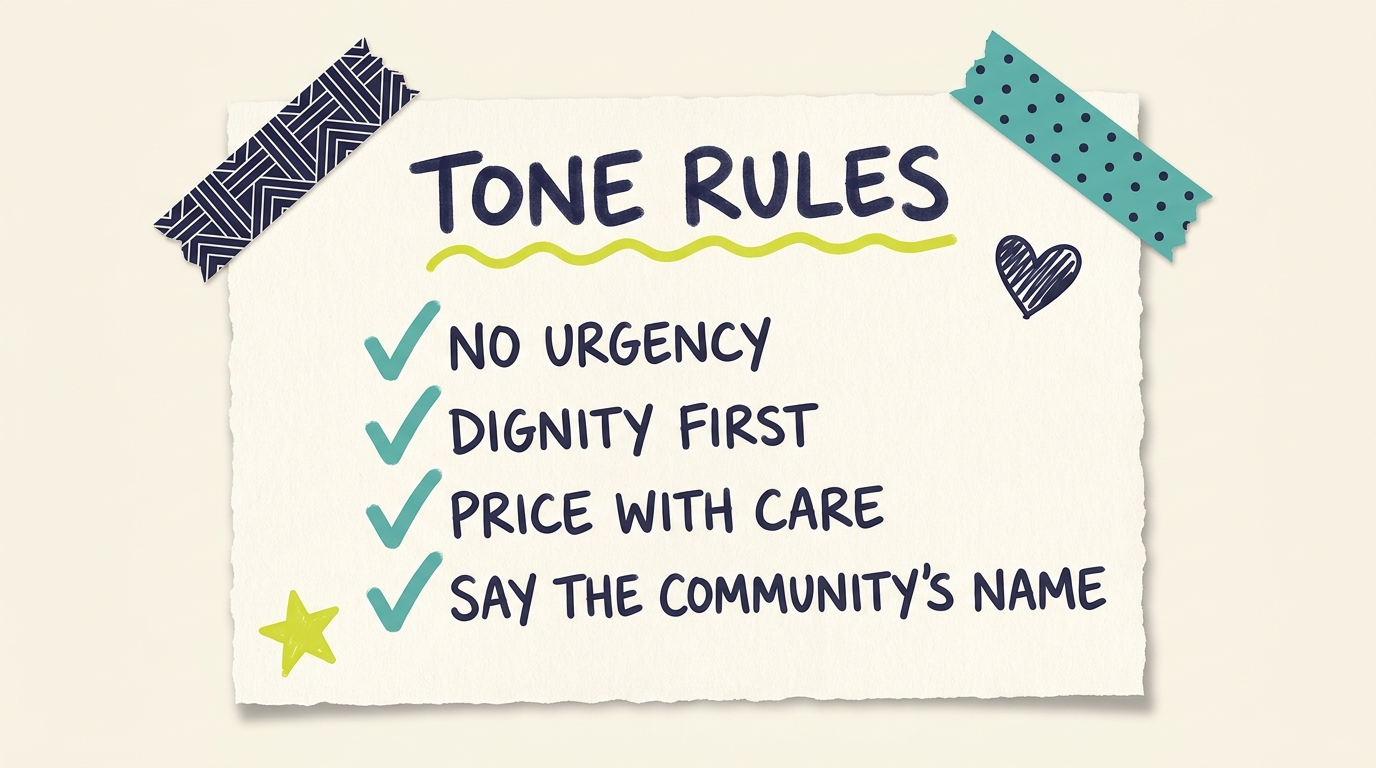
In this category, how you advertise is what you're advertising:
- No urgency, ever. Deadlines and "act now" framing are category poison. The pre-need invitation is patient by design.
- Dignity in every frame. Warm light, real staff, the building and grounds. No stock grief imagery, no caskets in ads.
- Price with care. Transparency builds trust on your website where context lives; price-led advertising reads as discounting the un-discountable. Cremation-focused brands compete on price; established funeral homes usually win by competing on care.
- Say the community's name. Decades served, generations of families, local roots. This is the asset chains can't copy, and television is where it plays best.
Common questions answered
What's the most effective advertising for a funeral home?
A two-clock system: at-need capture (Google Ads on immediate-need searches plus a strong review profile) so families find and validate you in their hardest hours, and pre-need trust-building (steady streaming TV, seminars, and targeted mail) so more families arrive already decided. Firms that run only the at-need half pay rising auction prices for the rest of their existence.
Is TV advertising appropriate for funeral homes?
It's among the most natural fits in local advertising, provided the creative honors the category: community-institution tone, planning-ahead framing, no urgency. Streaming TV reaches the 55+ pre-need audience on the household screen where couples decide together, carries the credibility this decision demands, and now runs at local-business budgets, with ad creation free and campaigns from $50 on Adwave.
How do funeral homes ask for reviews respectfully?
A brief, warm note several weeks after the service, acknowledging that the request is unusual and explaining that the family's words help other families find compassionate care. Offer an easy link, expect nothing, and never incentivize. Families who felt well cared for frequently want to say so; the ask simply opens the door.
Should funeral homes advertise cremation services separately?
Usually yes, because cremation shoppers search differently ("cremation cost [city]") and weigh price more heavily. A dedicated cremation page with transparent pricing, supported by its own search terms, keeps you present in that growing segment without re-toning your core brand. The pre-need TV layer serves both; trust is trust.
How long does pre-need advertising take to pay off?
Seminar and mail responses arrive within weeks; the deeper payoff (families calling you at need because they planned with you, or simply because yours is the name they know) accrues over quarters and years. Treat pre-need spend as building the next decade's call volume, measure leading indicators (seminar attendance, planning consultations, branded search), and let the at-need cost decline confirm the strategy annually.
The institution families already know
Bottom line: funeral homes win by being known, trusted, and findable, in that order of investment and the reverse order of urgency. Capture the at-need search with compassion, validate it with the reviews your care has earned, and spend patiently on the pre-need trust that turns your community's households into families who never shop. Television is the most powerful patient channel there is, and it finally fits the budget.
See how Adwave works: generate a dignified spot from your website in about two minutes, target the zips your families come from, and be the name they already know.
Internal Links Used
- /resources/why-customers-trust-tv-brands
- /resources/test-tv-advertising-without-big-budget
- /resources/best-advertising-senior-care-assisted-living
- /resources/how-much-does-it-cost-to-advertise
Sources
- Cremation rate trends: NFDA cremation/burial reports, widely published
- TV vs social trust: Adwave consumer trust snapshot (Q4 2025)
- Adwave product facts: $15-35 CPM, from $50, free creation, ~2 min generation
Version history
| Version | When | Summary |
|---|---|---|
| v1 | 6/20/2026, 3:11:54 AM | migration import |