Marketing Your New Business in the First Year: A Complete Guide
slug: marketing-new-business-first-year · status: draft · score: 78% · 1 versions
View published version → · Contentful entry: MbPyTsatOyv6L7xwcScIR
Validation
| Rule | Detail | |
|---|---|---|
| pass | No banned competitors | No banned competitors |
| pass | No emdashes | No emdashes |
| pass | Avoid AI telltale words | No AI telltale words |
| pass | Primary keyword in title | No primary keyword to check |
| pass | Use contractions | Contractions used |
| warn | Minimum internal links | Only 2 internal links (minimum 3-5) |
| fail | FAQ section required | Missing FAQ / 'Common questions answered' section |
| fail | Author assigned | No author assigned (never use 'Adwave Team' for new content) |
| pass | Title length 50-60 | Title length 63 |
| pass | Minimum 4 images | 4 images |
| warn | SEO description under 160 | seoDescription 165 chars (keep under 160) |
| pass | Adwave mention cadence | 2 Adwave mentions |
| pass | Short description present | shortDescription 152 chars |
| warn | Word count by type | Word count 1455 below target (2500-5000) |
| warn | Year-dated title for evergreen types | Year-dated type should include (2026) in the title |
| pass | No manual table of contents | No manual TOC |
Images (4)
Content
Marketing Your New Business in the First Year: A Complete Guide
You've got a new business to build, and here's the uncomfortable truth: you need customers to make money, but you need money to get customers. Every new business owner faces this paradox in year one.
The good news? There's a smarter path through this challenge. You don't need a massive marketing budget to get your first customers. You need the right approach at the right time, building from free foundations to strategic investments as your revenue grows.
This guide breaks down exactly what to focus on during each phase of your first year, so you're not wasting money before you're ready or leaving opportunities on the table once you are.
Months 1-3: Building Your Foundation (Free to Low Cost)
Your first three months aren't about paid advertising. They're about establishing the basics that make all future marketing work better.
Set up your Google Business Profile. This is non-negotiable. When someone searches for what you do in your area, you want to show up. A complete Google Business Profile with photos, hours, and accurate information is free and immediately puts you on the map. Ask your first customers to leave reviews here.
Establish a basic social media presence. Pick one or two platforms where your customers actually spend time. Don't spread yourself across every network. A restaurant should be on Instagram. A B2B consultant should be on LinkedIn. A home services company should be on Facebook. Post consistently, even if it's just 2-3 times per week.
Activate your personal network. Tell everyone you know about your new business. Friends, family, former colleagues, neighbors. Word of mouth remains the most powerful marketing channel for new businesses. Ask people to spread the word, not just to buy from you.
Join local networking groups. Chamber of commerce meetings, BNI chapters, industry meetups. These take time but cost little beyond membership fees. The relationships you build now will pay dividends for years.
Focus on delivering exceptional service. Your first customers are your marketing department. Every positive experience generates referrals. Every negative one spreads faster. Make your early customers so happy they can't help but tell others.
Months 4-6: Testing Paid Channels
Once you have some revenue coming in and your foundations are solid, it's time to experiment with paid advertising. But don't throw money around randomly.
Start with $100-500 for testing. This isn't about generating massive returns yet. It's about learning what works for your specific business in your specific market. Treat this as tuition for marketing education.
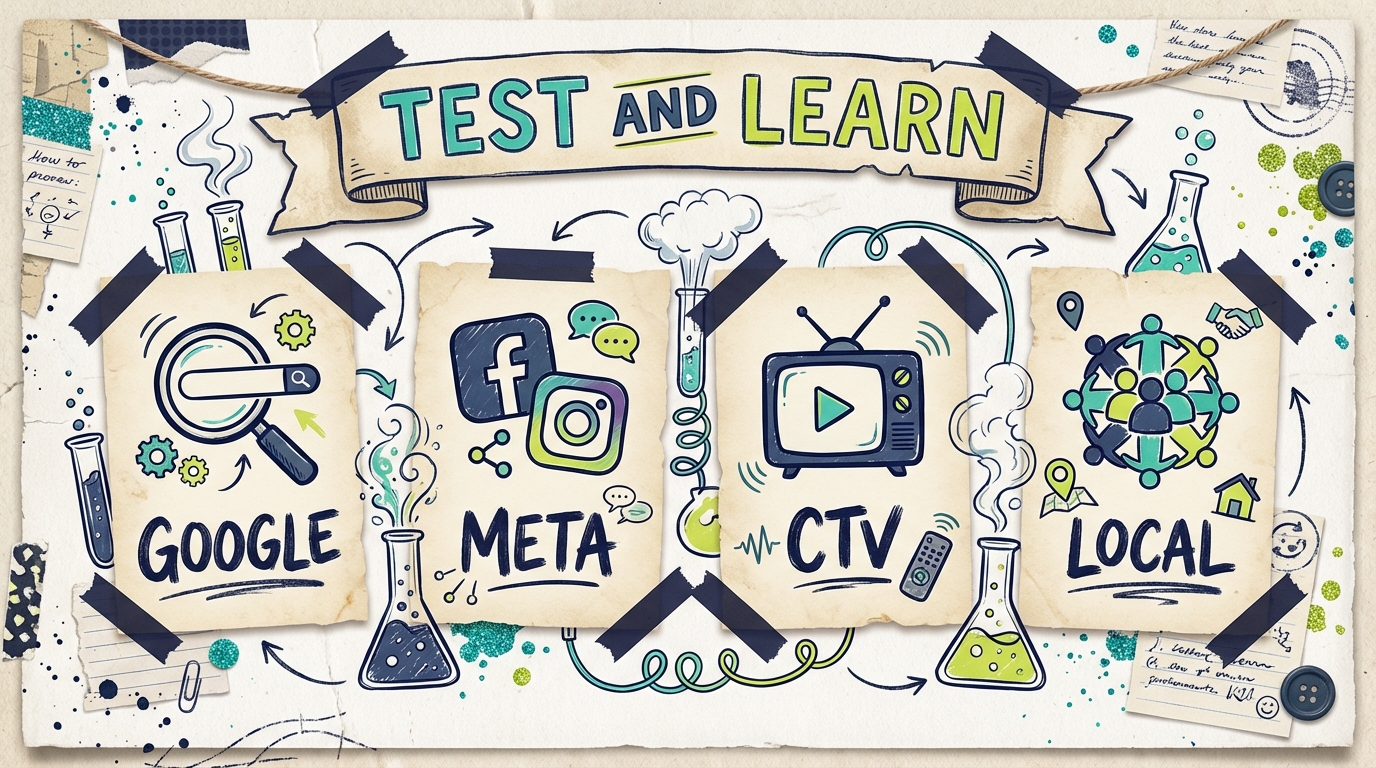
Test one channel at a time. The biggest mistake new business owners make is trying everything at once. You'll have no idea what's actually working. Pick one channel, give it 30 days and sufficient budget, measure results, then decide whether to continue or try something else.
Consider your options carefully. Google Local Services Ads work well for service businesses because you're reaching people actively searching for help. Facebook and Instagram work well for visual products and local awareness. YouTube works for consideration-stage content where you can explain your value.
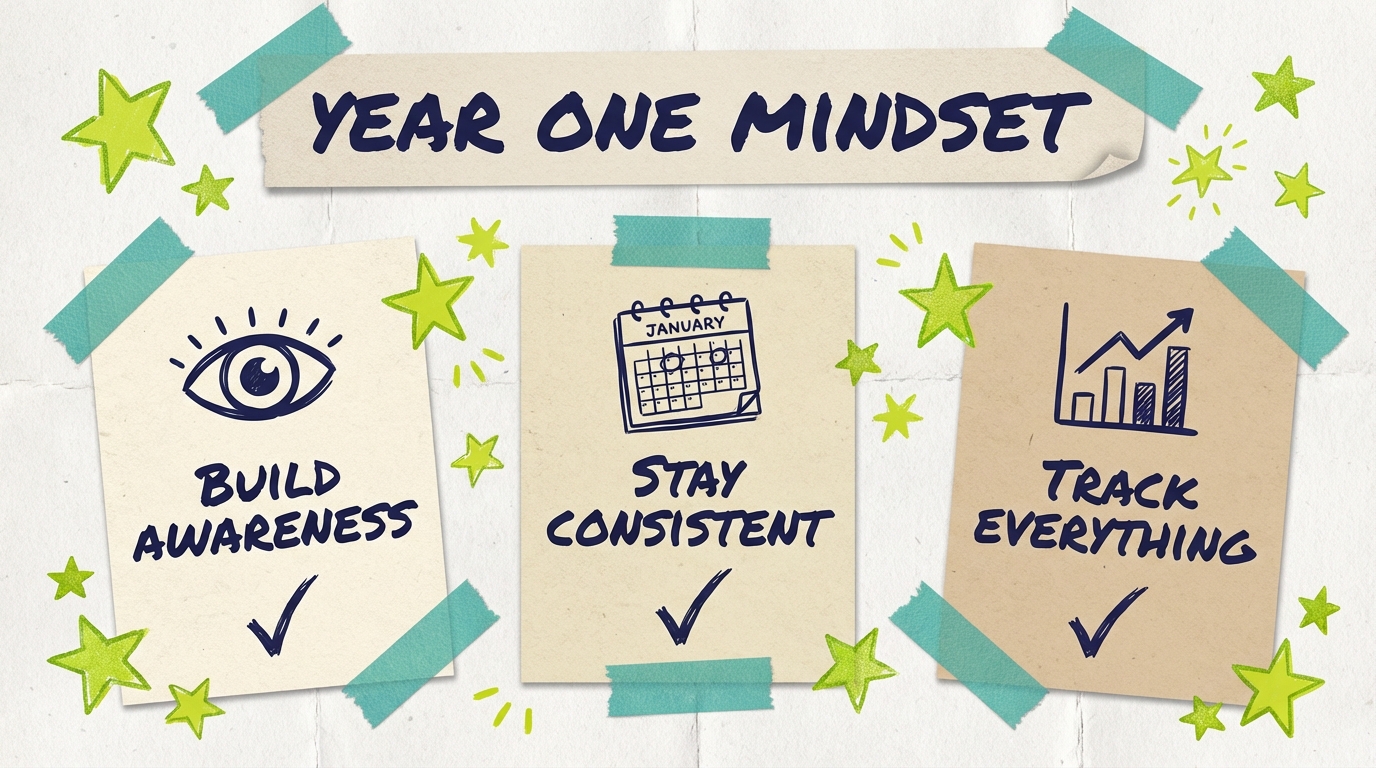
Track everything obsessively. Set up Google Analytics. Use UTM parameters on your links. Ask every new customer how they found you. Without tracking, you're flying blind. With tracking, you can make informed decisions about where to invest more.
Be patient but not passive. Some channels take time to show results. Give each test a fair shot before declaring it a failure. But also don't keep throwing money at something that's clearly not working after sufficient data.
Months 7-9: Doubling Down on What Works
By now, you should have data. Some channels performed better than others. Some messaging resonated more. It's time to focus.
Identify your winner channels. Look at your tracking data. Which channels brought customers at a reasonable cost? Which ones felt sustainable? Double down on what's working rather than spreading resources across everything.
Increase budget strategically. If Facebook ads are working at $200/month, try $400. See if results scale proportionally. Sometimes they do, sometimes they don't. The only way to know is to test incrementally.
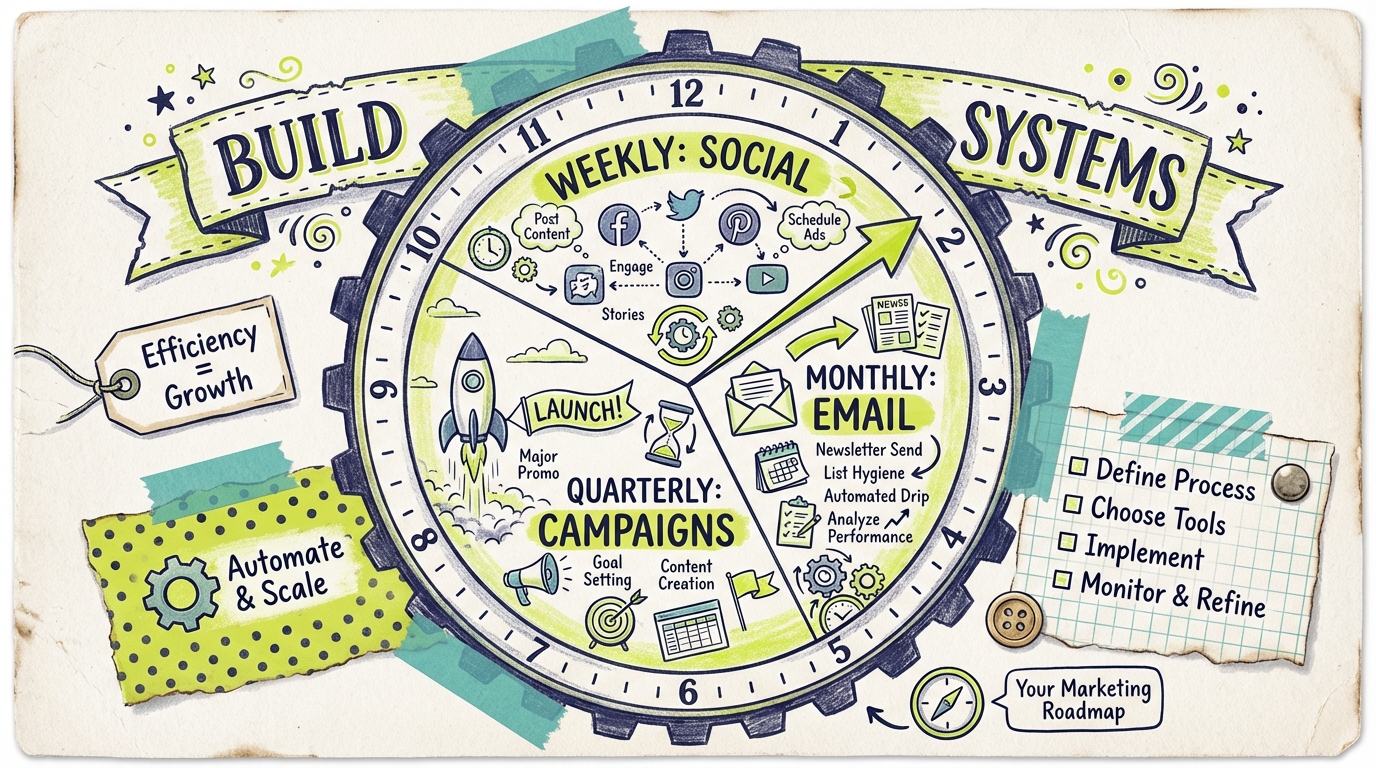
Build systems and processes. Marketing that relies entirely on you doesn't scale. Start documenting what works. Create templates. Consider tools that automate repetitive tasks. You want marketing that runs even when you're busy with operations.
Reinvest profits into growth. As revenue grows, your marketing budget should grow too. A common rule of thumb: invest 7-10% of revenue back into marketing. For a new business trying to grow, you might go higher.
Months 10-12: Building Brand for Year Two
If you've followed this path, you likely have a functioning customer acquisition system by now. The final quarter of year one is about building something bigger: brand recognition that sets you up for sustainable growth.
Move from getting customers to building recognition. Early marketing is about immediate conversions. Sustainable marketing is about being the first business people think of when they need what you offer. That requires awareness beyond people actively searching.
This is when TV advertising makes sense. Yes, TV. Not cable commercials that cost thousands. Streaming TV (CTV) advertising that you can start for $50. Running ads on Hulu, Roku, and other streaming services puts your business on the biggest screen in the house.
The credibility effect is real. Nothing says "we're a real, established business" like being on TV. For a business in its first year, this perception matters enormously. Customers trust businesses they've seen on TV more than businesses they've only seen in social media feeds.
With platforms like Adwave, you can create a professional TV commercial from your website and launch a campaign in the same day. No production budget required. Start at $50 and scale as you see results.
The Channel Most New Businesses Don't Know About
Here's what most first-year business owners don't realize: TV advertising isn't just for big brands anymore.
You can be on TV for $50. The barriers that kept small businesses off television have crumbled. Streaming services need ad inventory. New platforms make buying that inventory accessible. AI can create professional commercials without expensive production.
New businesses need credibility fast. You're competing against established businesses with years of reputation. TV advertising accelerates perceived legitimacy. When customers see you on their TV screen, you feel like a business that's been around, even if you opened last month.
The "I saw them on TV" effect is powerful. Ask any business owner who's run TV ads about the customer comments. People mention seeing the ad. It comes up in sales conversations. It builds trust in ways that social media ads simply don't.
Common First-Year Marketing Mistakes
Avoid these pitfalls that trip up most new business owners:
Trying everything at once. When you spread $500 across ten channels, you learn nothing. You don't have enough data from any single channel to know if it works. Focus beats fragmentation every time.
Not tracking results. "I think Facebook is working" isn't good enough. You need to know which channels bring customers, at what cost, and with what lifetime value. Without tracking, you're guessing with your business's survival.
Giving up too soon. Marketing takes time to build momentum. A new Google Ads campaign might need 4-6 weeks to optimize. Social media presence takes months to build engagement. Quitting after two weeks means you never find out what could have worked.
Ignoring awareness for conversion only. Every marketing dollar going to "buy now" advertising creates a leaky bucket. You're only reaching people ready to purchase today. Brand awareness fills the top of your funnel with future customers who will remember you when they're ready.
Building Your First-Year Marketing Plan
Here's how to put this all together:
Months 1-3: Focus on free foundations. Google Business Profile, basic social media, personal networking, exceptional service that generates referrals. Total investment: your time.
Months 4-6: Start testing paid channels. Budget $100-500/month. Test one channel thoroughly before moving to another. Track everything. Learn what resonates with your market.
Months 7-9: Scale what's working. Cut what isn't. Build systems so marketing doesn't depend entirely on you. Reinvest revenue into growth.
Months 10-12: Add brand awareness to your mix. Consider TV advertising to build credibility and recognition. Prepare for year two with a sustainable, multi-channel approach.
Ready to Build Credibility Fast?
Your first year in business is a sprint to establish yourself. Every advantage helps. TV advertising used to be reserved for businesses with massive budgets. That's no longer true.
Adwave helps new businesses get on TV the same day they decide to try it. Create your ad free, launch a campaign for as little as $50, and start building the credibility that accelerates growth.
Version history
| Version | When | Summary |
|---|---|---|
| v1 | 6/20/2026, 3:11:54 AM | migration import |