Best Advertising for Mobile Apps (2026)
slug: best-advertising-mobile-apps · status: draft · score: 86% · 1 versions
View published version → · Contentful entry: 23jC0QfcBE5Ec1ddes7p0s
Validation
| Rule | Detail | |
|---|---|---|
| pass | No banned competitors | No banned competitors |
| pass | No emdashes | No emdashes |
| warn | Avoid AI telltale words | AI telltale words found: landscape |
| pass | Primary keyword in title | No primary keyword to check |
| pass | Use contractions | Contractions used |
| warn | Minimum internal links | Only 2 internal links (minimum 3-5) |
| pass | FAQ section required | FAQ section present |
| fail | Author assigned | No author assigned (never use 'Adwave Team' for new content) |
| pass | Title length 50-60 | Title length 39 |
| pass | Minimum 4 images | 4 images |
| pass | SEO description under 160 | seoDescription 149 chars |
| pass | Adwave mention cadence | 4 Adwave mentions |
| pass | Short description present | shortDescription 153 chars |
| warn | Word count by type | Word count 2421 below target (2500-5000) |
| pass | Year-dated title for evergreen types | Title carries year 2026 |
| pass | No manual table of contents | No manual TOC |
Images (4)
Content
Best Advertising for Mobile Apps (2026)
Getting downloads is only half the battle. The real challenge for app developers and marketers is finding advertising channels that deliver quality users who actually stick around, open the app regularly, and make in-app purchases. With millions of apps competing for attention in the App Store and Google Play, the right advertising strategy can be the difference between a breakout hit and an app that quietly fades into obscurity.
Here's the thing: most app marketing advice focuses exclusively on digital channels like social media and search ads. But the landscape has shifted. New channels, including connected TV (CTV), are helping app marketers reach audiences in ways that weren't possible even a few years ago.
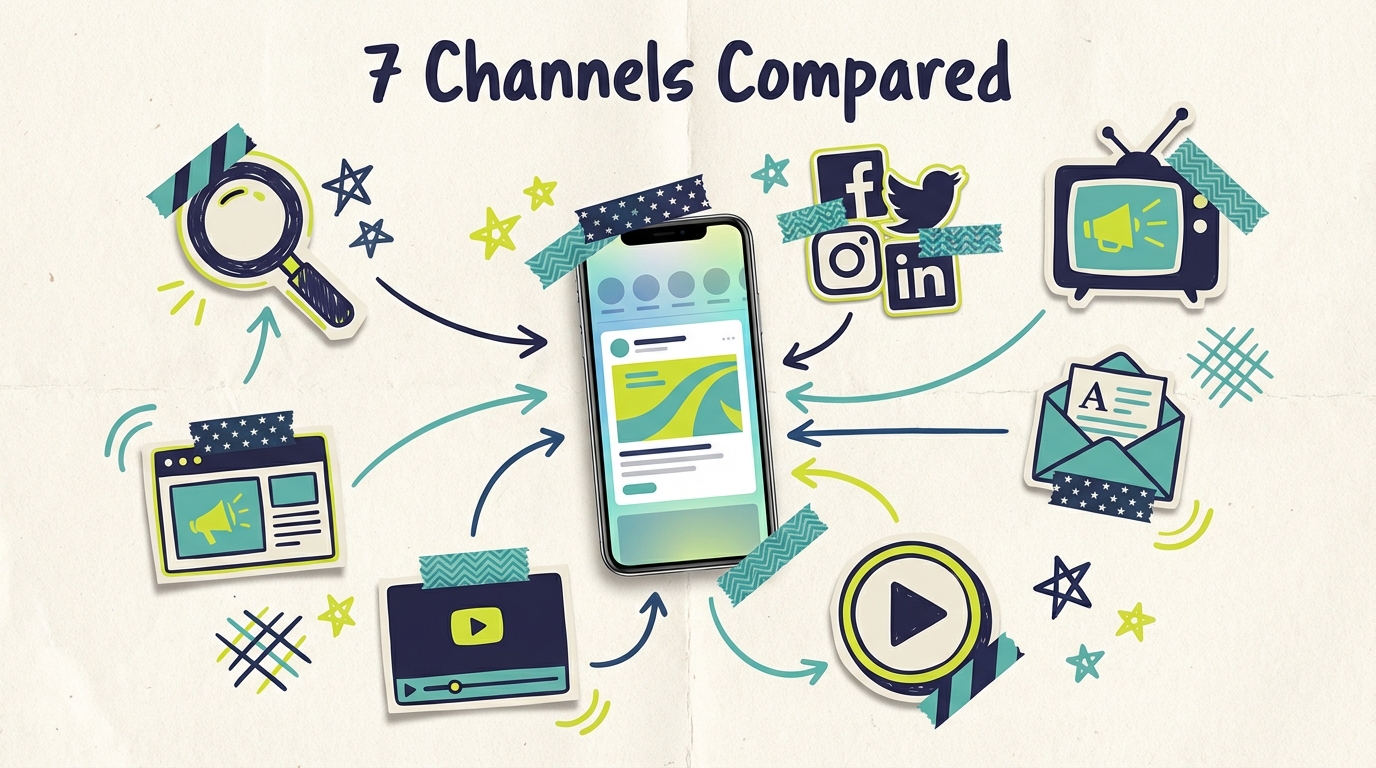
Let's break down the best advertising channels for mobile apps in 2026, what each one costs, and how to decide where to put your budget.
App Store Optimization: Your Foundation
Before spending a dollar on paid advertising, your app store listing needs to be airtight. App Store Optimization (ASO) is the organic foundation that makes every paid channel more effective.
ASO covers your app title, subtitle, description, screenshots, preview video, and ratings. According to Apple, 65% of App Store downloads come directly from search within the store itself. If your listing doesn't convert browsers into downloaders, you're pouring paid traffic into a leaky bucket.
Key ASO tactics:
- Research keywords with tools like Sensor Tower or App Annie and work primary terms into your title and subtitle
- Use all available screenshot slots with benefit-focused visuals, not feature lists
- Add a preview video that shows the core experience in 15 to 30 seconds
- Actively manage ratings and respond to reviews to maintain a 4.0+ star rating
- A/B test your icon, screenshots, and descriptions through the App Store's native testing tools
ASO won't replace paid advertising, but it will multiply everything else you do. A well-optimized listing can improve conversion rates by 20% to 30%, which means every ad dollar stretches further.
Apple Search Ads and Google App Campaigns
These two platforms sit right at the moment of highest intent: someone is actively searching for an app. That makes them some of the most efficient acquisition channels available.
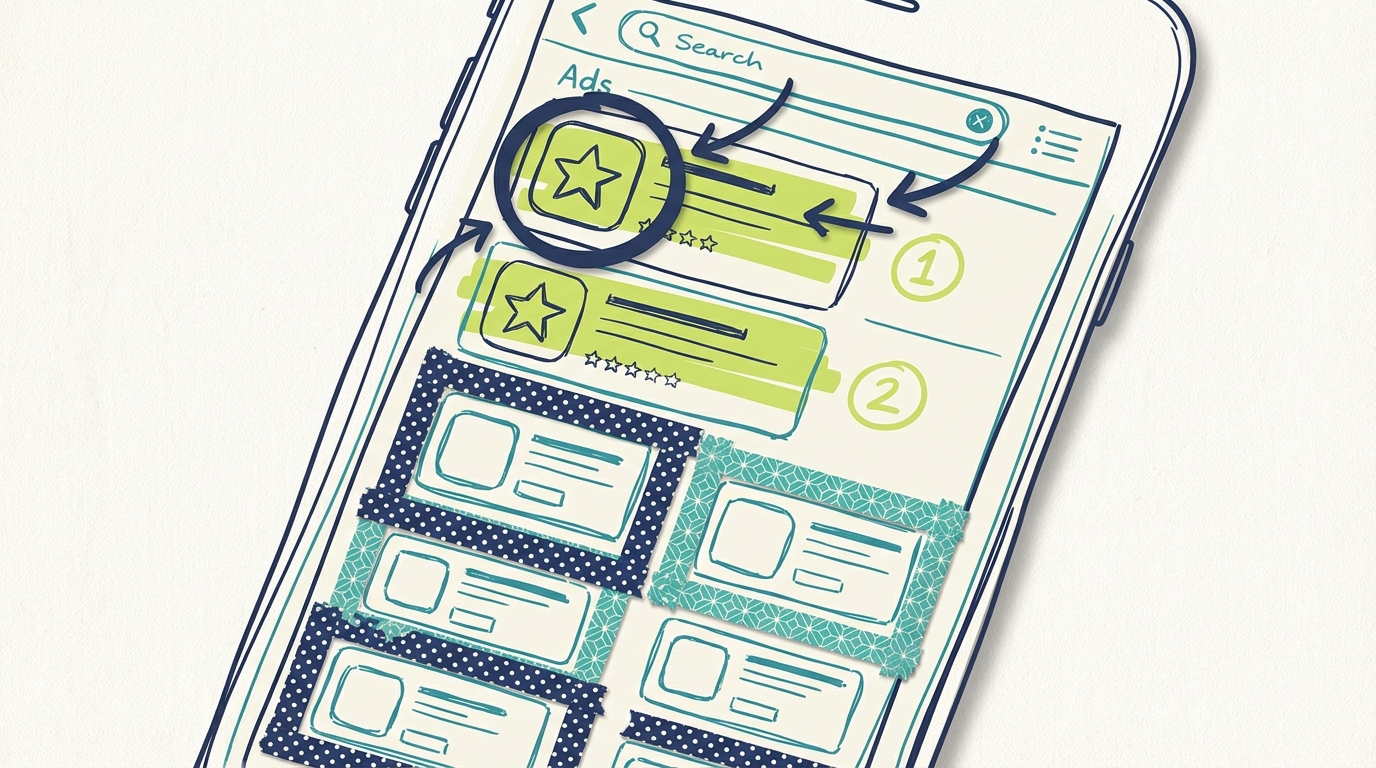
Apple Search Ads let you bid on keywords within the App Store. Your ad appears at the top of search results, and you pay per tap. Average cost per tap ranges from $0.50 to $2.00 for most categories, though competitive categories like finance and gaming can run $3.00 to $5.00+. The big advantage is that these users are already in the store, ready to download.
Apple reports an average conversion rate of 50% for Search Ads, which makes sense since users are one tap away from installing. For most app marketers, this should be one of the first paid channels to test.
Google App Campaigns (formerly Universal App Campaigns) work differently. You provide creative assets, a budget, and a target cost per install, and Google's machine learning distributes your ads across Search, Google Play, YouTube, the Display Network, and Discover. Average cost per install (CPI) through Google ranges from $0.50 to $3.00 depending on your category and geography.
The downside of Google App Campaigns is limited control. You can't pick specific placements or audiences with the precision you'd get on other platforms. But for broad reach at scale, it's hard to beat.
Best for: High-intent users, scaling installs quickly, apps in competitive categories where you need visibility at the point of search.
Social Media Advertising
Social platforms remain a core channel for app install campaigns, though rising costs and privacy changes have made them trickier than a few years ago.
Meta (Facebook and Instagram) still commands the largest share of app install budgets. The platform's App Installs objective is specifically designed for driving downloads, and deep linking can take users straight to the App Store or Google Play. Average CPI on Meta ranges from $1.50 to $4.00, though this varies widely by vertical. Post-ATT (Apple's App Tracking Transparency), retargeting and lookalike audience accuracy has declined, which means your creative quality matters more than ever.
TikTok has become a powerhouse for app marketing, especially for apps targeting users under 35. TikTok's App Install campaigns let you optimize for installs or in-app events. Average CPI runs $1.00 to $3.00, and the platform's full-screen video format is naturally suited to showcasing app experiences. The catch is that TikTok ad creative burns out fast, so you need a steady pipeline of fresh video content.
Snapchat offers competitive CPIs (often $1.00 to $2.50) and strong reach with younger audiences. It's particularly effective for gaming, social, and lifestyle apps.
Best for: Reaching specific demographics, retargeting lapsed users, apps with visually engaging experiences that translate well to short-form video.
Connected TV (CTV) Advertising
Here's a channel that most app marketers overlook, and that's exactly why it works so well right now.
CTV advertising places your app's message on streaming platforms like Hulu, Peacock, Tubi, and ESPN, reaching viewers on the biggest screen in the house. According to eMarketer, U.S. adults spend an average of 2 hours and 13 minutes per day watching CTV content, and that number continues to grow as cord cutting accelerates.
Why does CTV work for app marketing? A few reasons:
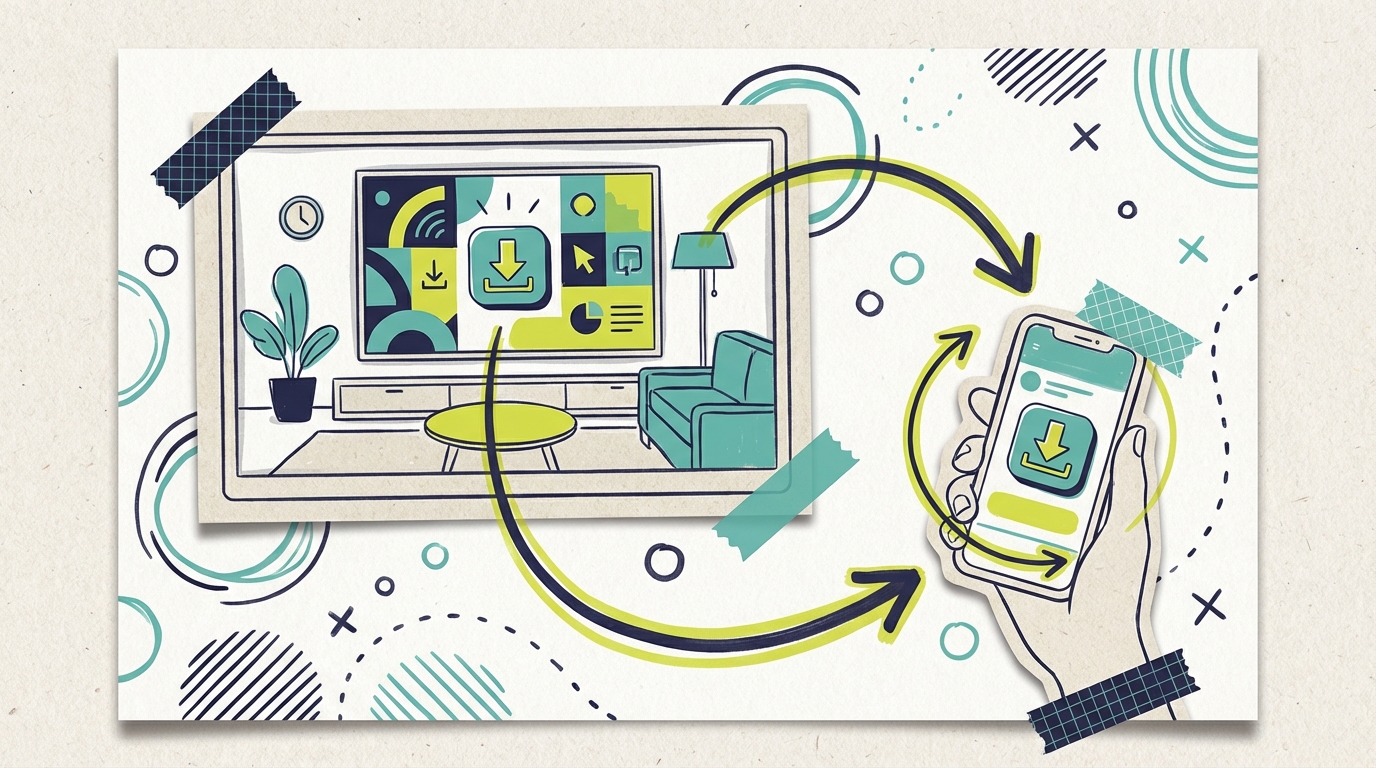
- Second-screen behavior is real. According to Nielsen, 88% of Americans use a second device while watching TV. When your ad runs on the TV screen, viewers are already holding the phone where they'll download your app.
- Brand recall is higher. TV-format ads generate stronger brand recall than social or display ads. A study by Magna and IPG found that CTV ads drive 2.2x higher brand recall compared to mobile video ads.
- Less competition. Most app marketers haven't discovered CTV yet, which means lower CPMs and less ad fatigue for your audience.
With platforms like Adwave, you can launch a CTV campaign for your app starting at just $50. Adwave creates a broadcast-quality 30-second commercial from your app's website or landing page in about 2 minutes, then distributes it across 100+ premium streaming channels. You get real-time analytics showing impressions, reach, and engagement.
For app marketers, CTV works best as a brand awareness and consideration driver. Run CTV alongside your performance channels (search ads, social), and you'll typically see improved conversion rates across the board as more users recognize your app when they encounter it elsewhere.
Best for: Building brand awareness, reaching cord-cutter audiences, apps targeting audiences 25 and older, complementing lower-funnel performance campaigns.
Influencer Marketing
Working with influencers to promote your app can deliver authentic endorsements that paid ads can't replicate. When a trusted creator demonstrates your app in a real-world context, their audience pays attention.
Micro-influencers (10,000 to 100,000 followers) typically deliver the best ROI for app campaigns. Their engagement rates are higher than mega-influencers, and their audiences tend to be more niche and trusting. Expect to pay $100 to $1,000 per post for micro-influencers, depending on platform and niche.
YouTube is particularly effective for app promotion because creators can show the full app experience in tutorials, reviews, or "day in my life" content. The longer format allows for genuine demonstration rather than a quick flash.
Key tips for influencer app campaigns:
- Provide unique tracking links or promo codes to measure installs from each influencer
- Give influencers creative freedom rather than scripting every word
- Focus on creators whose audience matches your target user, not just follower count
- Consider long-term partnerships rather than one-off posts for stronger results
Best for: Apps that benefit from demonstration, lifestyle and productivity apps, reaching niche audiences, building credibility with skeptical users.
Content Marketing and SEO
Content marketing is a slower play, but it compounds over time and drives installs at effectively zero marginal cost once the content ranks.
Create blog posts, guides, and comparison articles that address problems your app solves. For example, a budgeting app could publish articles like "How to Save $500 a Month" or "Best Budgeting Methods for Beginners." When readers find your content through Google, they discover your app as a natural solution.
Tactics that work for app content marketing:
- Build a blog or resource section on your app's website
- Target long-tail keywords related to your app's core use case
- Create comparison content (your app vs. competitors) to capture bottom-of-funnel searches
- Publish app guides and tutorials to keep existing users engaged and attract new ones
- Submit guest posts to tech publications and industry blogs
According to HubSpot, companies that blog generate 67% more leads than those that don't. For app businesses, this translates directly to organic installs that don't carry a per-download cost.
Best for: Long-term organic growth, apps solving specific problems, building authority in your category, reducing overall customer acquisition costs.
Programmatic Display and Video
Programmatic advertising lets you buy display and video ad placements across thousands of apps and websites through demand-side platforms (DSPs). This channel offers massive scale but requires careful optimization to avoid wasted spend.
Mobile display ads (banners and interstitials) are the most affordable option, with CPMs ranging from $1.00 to $5.00. However, banner blindness is real, and click-through rates tend to be low (0.1% to 0.3%). Interstitials perform better but can annoy users if poorly timed.
Rewarded video ads in mobile games are a standout format for app promotion. Users voluntarily watch a 15 to 30 second video in exchange for in-game rewards, which means high completion rates and positive sentiment. Networks like Unity Ads, ironSource, and AdColony specialize in this format.
Best for: Scaling reach at low CPMs, gaming apps, apps with broad audiences, retargeting users who visited your listing but didn't install.
Email and Cross-Promotion
If you already have an audience through another product, email list, or app, cross-promotion is one of the lowest-cost acquisition channels available.
Email campaigns promoting a new app to an existing customer base can drive installs at negligible cost. The key is to make the value proposition immediately clear and include direct download links for both iOS and Android.
If you operate multiple apps, in-app cross-promotion (showing ads for your other apps within your existing products) can drive installs at no media cost. Many gaming companies use this strategy to build their portfolio audience.
Best for: Businesses launching a new app to an existing audience, companies with multiple apps, apps with a companion web product.
How to Build Your App Advertising Budget
There's no one-size-fits-all budget for app marketing, but here's a framework that works for most app businesses:
Startup phase (pre-launch to 10,000 installs):
- 40% App Store search ads (Apple Search Ads, Google App Campaigns)
- 30% Social media (Meta, TikTok)
- 20% CTV/brand awareness (Adwave campaigns starting at $50)
- 10% Influencer tests
Growth phase (10,000 to 100,000 installs):
- 30% App Store search ads
- 25% Social media
- 20% CTV/brand awareness
- 15% Programmatic/retargeting
- 10% Content marketing and SEO
Scale phase (100,000+ installs):
- 25% App Store search ads
- 20% Social media
- 20% CTV/TV advertising
- 15% Programmatic/retargeting
- 10% Content marketing
- 10% Influencer and partnerships
The most common mistake app marketers make is going all-in on one channel. Diversification protects you from algorithm changes, policy updates (like ATT), and audience fatigue on any single platform.
Measuring What Matters
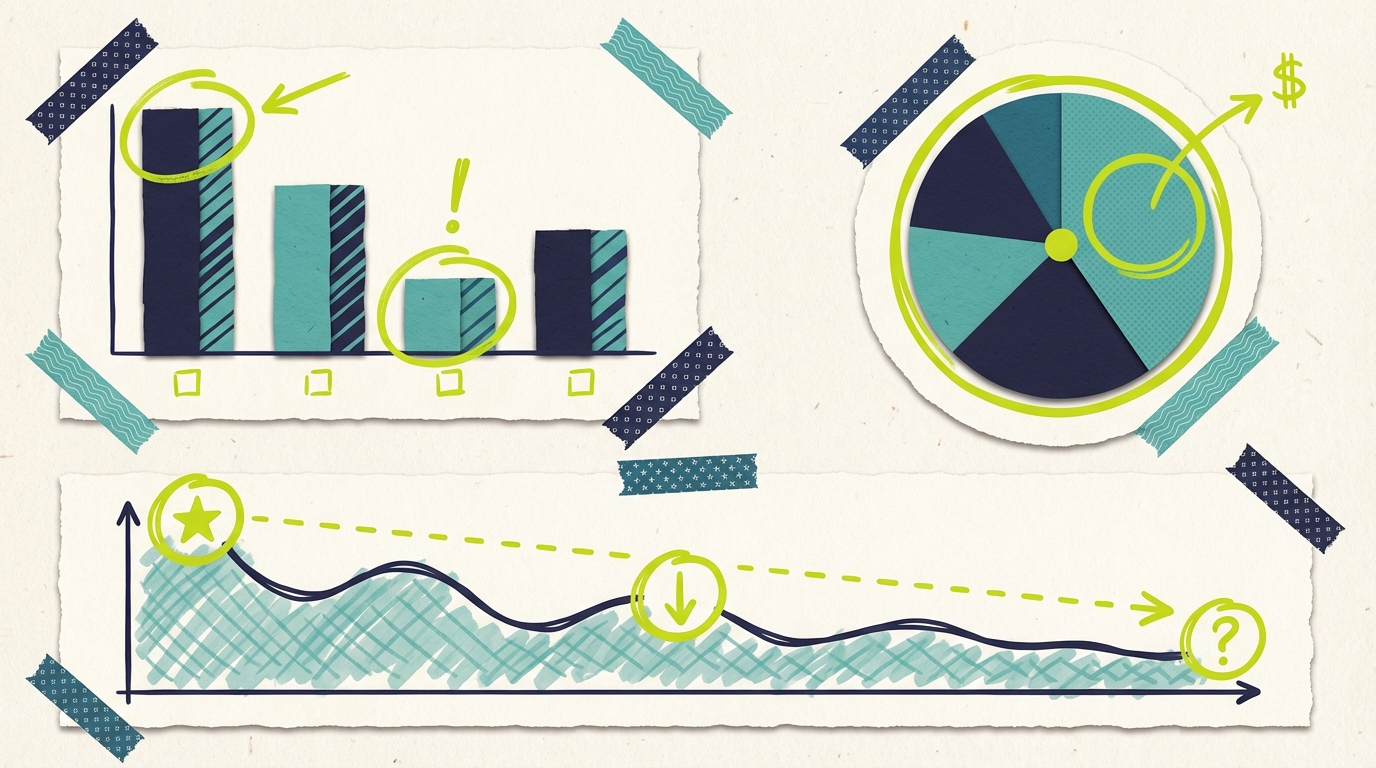
Downloads alone don't tell the full story. Track these metrics across all your advertising channels:
- Cost per install (CPI): What you pay for each download. Industry averages range from $1.00 to $5.00 depending on platform and category.
- Cost per acquisition (CPA): What you pay for a user who completes a key action (registration, purchase, subscription). This is the metric that actually ties to revenue.
- Day 1/7/30 retention: What percentage of users come back. Industry benchmarks show Day 1 retention averaging 25% to 30%, dropping to 10% to 15% by Day 7.
- Lifetime value (LTV): The total revenue a user generates over their lifetime. Your CPA needs to stay below your LTV for sustainable growth.
- Return on ad spend (ROAS): Revenue generated per dollar spent on advertising. Aim for 3x+ ROAS for subscription apps and 2x+ for free-to-play with in-app purchases.
Use a mobile measurement partner (MMP) like Adjust, AppsFlyer, or Branch to track installs and post-install events across all your channels. Without proper attribution, you're flying blind.
Common questions answered
What is the most cost-effective way to advertise a mobile app? Apple Search Ads and Google App Campaigns typically deliver the lowest cost per install because they reach users at the moment of highest intent. However, the most cost-effective strategy combines high-intent channels with brand awareness plays like CTV advertising to improve conversion rates across all channels simultaneously.
How much should I budget for mobile app advertising? Most successful app launches allocate $5,000 to $20,000 for the initial push, though you can start testing individual channels for much less. CTV campaigns through Adwave start at $50, and you can run small tests on social and search platforms for $500 to $1,000 each. Scale your budget based on what delivers a CPA below your user's lifetime value.
Does TV advertising work for mobile apps? Yes, and it's becoming more accessible. CTV advertising reaches viewers who are already holding their phones while watching, creating a natural path from TV ad to app download. With second-screen behavior now the norm, CTV campaigns for apps are seeing strong results, especially when combined with search and social campaigns that capture the demand TV generates.
How do I track which advertising channel drives app installs? Use a mobile measurement partner like AppsFlyer, Adjust, or Branch. These platforms attribute installs to specific campaigns and channels, including view-through attribution for CTV ads. Set up deep links so you can track the full user journey from ad impression to install to in-app actions.
What's the biggest mistake app marketers make with advertising? Relying too heavily on a single channel. When Apple introduced App Tracking Transparency in 2021, marketers who depended entirely on Facebook saw their acquisition costs spike overnight. Diversifying across search, social, CTV, and organic channels protects your growth from platform-level disruptions.
Sources
- Apple Search Ads benchmarks: Apple Ads documentation, 2025
- eMarketer, "US Connected TV Advertising," 2025
- Nielsen, "Second-Screen Behavior," 2025
- Magna/IPG, "CTV Ad Effectiveness Study," 2024
- HubSpot, "State of Marketing Report," 2025
- Industry CPI/CPA benchmarks: data.ai (formerly App Annie), 2025
Internal Links Used
- /how-it-works
- /pricing
- /resources/how-to-get-users-mobile-app
- /resources/ctv-vs-meta-ads-comparison
- /resources/video-marketing-for-small-business
Version history
| Version | When | Summary |
|---|---|---|
| v1 | 6/20/2026, 3:11:54 AM | migration import |