Geotargeting Political Ads: Precision District Targeting
slug: geotargeting-political-ads-ctv · status: draft · score: 83% · 1 versions
View published version → · Contentful entry: 4H5RZaG91WPuutSsaJE1Fg
Validation
| Rule | Detail | |
|---|---|---|
| pass | No banned competitors | No banned competitors |
| pass | No emdashes | No emdashes |
| pass | Avoid AI telltale words | No AI telltale words |
| pass | Primary keyword in title | No primary keyword to check |
| pass | Use contractions | Contractions used |
| fail | Minimum internal links | Internal links not in sitemap: /resources/ctv-political-advertising, /resources/down-ballot-advertising-local-races, /resources/political-ad-targeting-voters-tv, /resources/political-advertising-costs, /how-it-works, /resources/down-ballot-advertising-local-races, /resources/political-tv-advertising-2026-guide |
| pass | FAQ section required | FAQ section present |
| fail | Author assigned | No author assigned (never use 'Adwave Team' for new content) |
| pass | Title length 50-60 | Title length 56 |
| pass | Minimum 4 images | 4 images |
| pass | SEO description under 160 | seoDescription 152 chars |
| pass | Adwave mention cadence | 3 Adwave mentions |
| pass | Short description present | shortDescription 158 chars |
| warn | Word count by type | Word count 1967 below target (2500-5000) |
| warn | Year-dated title for evergreen types | Year-dated type should include (2026) in the title |
| pass | No manual table of contents | No manual TOC |
Images (4)

Content
Geotargeting Political Ads: Precision District Targeting
Every dollar a political campaign spends reaching voters outside its district is a dollar wasted. And on broadcast TV, that waste is staggering.
In Arizona's 1st Congressional District, campaigns waste 88.5% of every ad buy reaching viewers who can't vote for them (Patrick McMahon, 2018). In Northern Kentucky, 79.1% of political TV spend goes to households in Ohio and Indiana (Ad Age, 2018). Across the country, DMA-based buying has cost campaigns over $80 million in wasted impressions broadcasting to voters outside their districts.
Here's the thing: it doesn't have to work this way anymore.
CTV political ad spending is projected to hit $2.5 billion for the 2026 midterms, a 128% increase over 2022 (FreeWheel via BusinessWire, 2025). The reason is simple: streaming TV lets campaigns target voters by ZIP code, district, and even precinct, so every impression counts.
This guide breaks down how geotargeting works for political campaigns on CTV, what targeting levels are available, and how to build a geographic strategy that matches your district.
Why DMA-Based Buying Fails Political Campaigns
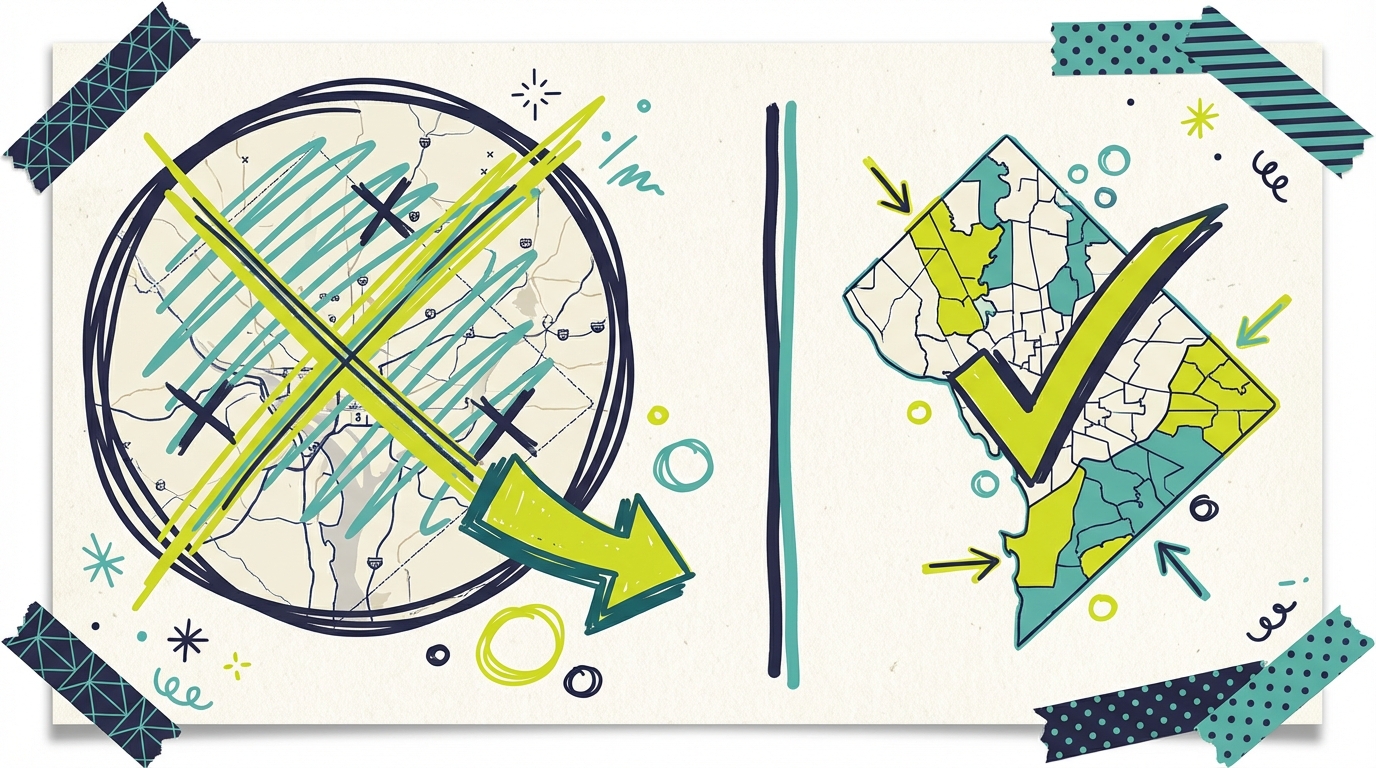
Television advertising has always been sold by Designated Market Areas. There are 210 DMAs in the United States, and they were designed for commercial advertising, not politics. The problem is that congressional districts, state legislative districts, and city council wards almost never align with DMA boundaries.
A single DMA might cover a dozen state legislative districts. A congressional district might span parts of three separate DMAs. A city council race might sit inside a DMA that serves 4 million households.
The Math on Wasted Spend
When a state senate candidate buys broadcast time in a major metro DMA, they're paying to reach millions of households that can't vote for them. For a race covering 100,000 households inside a DMA of 2 million, that's 95% waste.
The St. Louis DMA illustrates this perfectly. From January 2017 through Election Day 2018, 47% of political TV and radio ad spending in the St. Louis market went to Illinois candidates reaching Missouri voters, and Missouri candidates reaching Illinois voters (Crain's Chicago Business, 2018). The border splits the DMA, so every buy in that market pays for impressions on the wrong side.
For down-ballot races with tight budgets, this kind of waste can be the difference between getting your message out and going dark weeks before Election Day.
How Geotargeting Works on Streaming TV
Connected TV changes the targeting equation entirely. Instead of buying an entire media market, campaigns can serve ads to specific households based on their location. Here's how it works at each geographic level.
ZIP Code Targeting
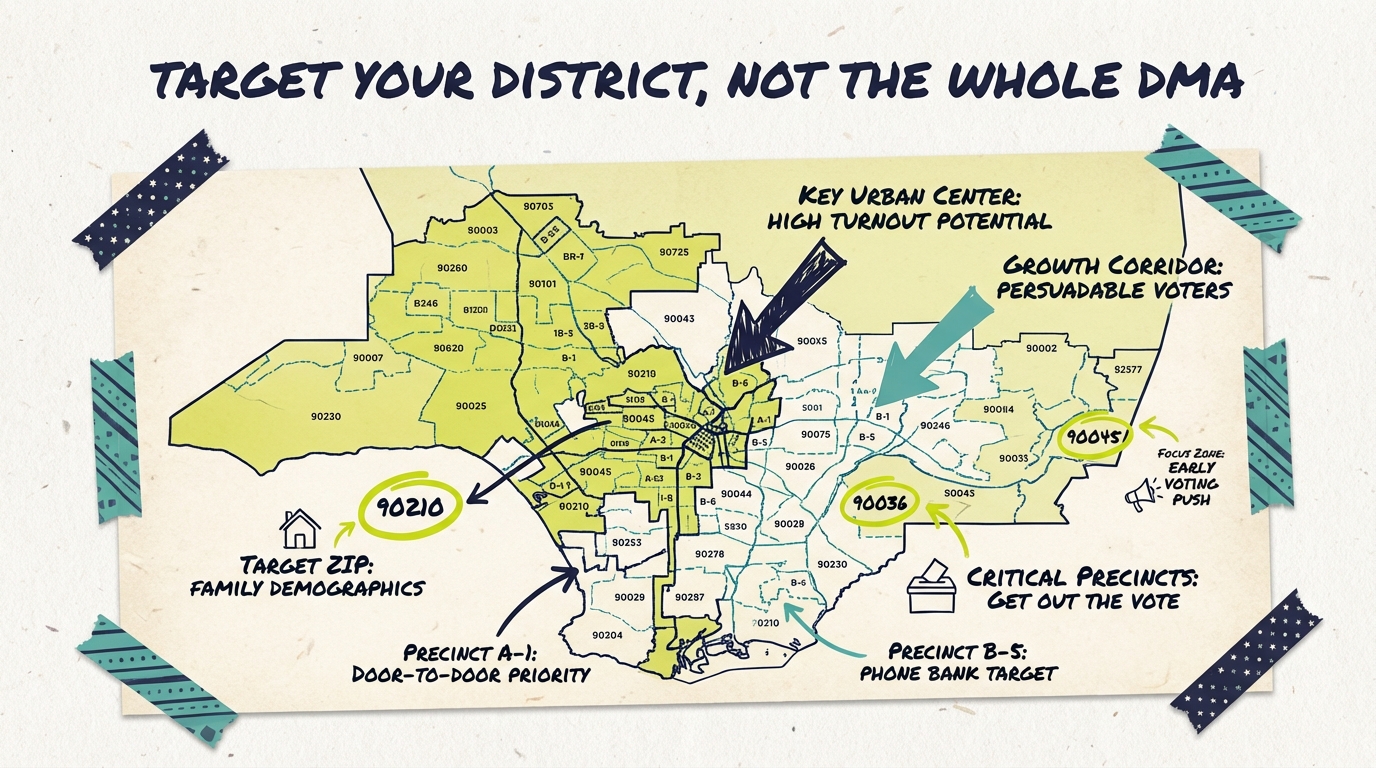
ZIP code targeting is the foundation of political geotargeting on CTV. Campaigns upload a list of ZIP codes that fall within their district, and ads are served only to households in those areas.
This is especially powerful for local races where the district covers a small number of ZIP codes. A school board candidate whose district spans 12 ZIP codes can target exactly those 12, with zero waste to neighboring areas.
Congressional and Legislative District Targeting
Advanced CTV platforms can map congressional and state legislative district boundaries directly. Instead of building a ZIP code list manually, campaigns select their district and the platform handles the geographic matching.
This matters because district boundaries don't follow ZIP code lines perfectly. A ZIP code might straddle two congressional districts. District-level targeting uses more precise geographic data to ensure ads reach the right households, even in split-ZIP situations.
County and Municipal Targeting
For county commissioner, city council, and mayoral races, CTV platforms support county-level and city-level targeting. Combined with ZIP code lists, this gives local campaigns tight geographic control without the overhead of DMA buying.
Radius Targeting
Some platforms also offer radius targeting, drawing a circle around a specific point. While less common for political campaigns than ZIP code or district targeting, radius targeting can be useful for community-based races where the candidate's presence centers around a specific area.
Building a Geographic Targeting Strategy for Your Race
Knowing the tools is one thing. Building a strategy that puts them to work is another. Here's how to approach geotargeting based on race type.
Step 1: Map Your District Boundaries
Start with your district map. Every state publishes official district boundary files, and most are available through the U.S. Census Bureau's TIGER/Line data. For local races, check your county elections office or city clerk.
You need two things:
- A clear boundary map of your district
- A list of every ZIP code that falls fully or partially inside the boundary
Step 2: Identify High-Priority Zones
Not every part of your district deserves equal ad spend. Layer voter data on top of geography to find the areas where your budget will have the most impact:
- Swing precincts: Areas where recent elections were decided by narrow margins
- High-turnout zones: Precincts with consistently strong voter participation
- Persuadable households: Areas with a high percentage of independent or unaffiliated voters
- Undervote areas: Precincts where turnout for your specific race type (city council, school board) has historically lagged
Step 3: Match Targeting to Budget
Your race type and budget determine how precise your targeting needs to be.
Smaller races benefit most from tight geographic targeting because their districts are small enough that even modest waste eats a significant share of budget.
Step 4: Layer Demographic and Behavioral Targeting
Geography gets your ads in front of the right households. Adding demographic and behavioral layers helps you reach the right viewers within those households.
On CTV, you can layer voter targeting data on top of geographic targeting:
- Party affiliation and voter history from providers like L2 and Data Trust
- Issue interest based on content consumption patterns
- Age and household composition to reach specific voter demographics
The combination of precise geography and voter data is what makes CTV political advertising so much more efficient than broadcast. You're not just reaching the right district. You're reaching the right voters in the right district.
Timing Your Geotargeted Campaign
Geographic strategy isn't just about where. It's about when. Political campaigns have natural inflection points where geotargeted ads become more or less valuable.
Early campaign (6+ months out): Focus on name recognition in high-population areas of your district. Broad geographic targeting within district boundaries. Budget allocation: 20-30% of total.
Primary season: Tighten targeting to areas with high primary voter turnout. If your primary electorate skews toward specific precincts, shift budget there. Budget allocation: 15-25%.
General election push (final 8 weeks): Maximum precision. Target swing precincts and undervote areas where persuasion and turnout efforts have the biggest impact. Budget allocation: 45-60%.
Final 72 hours: Saturate high-priority precincts with turnout-focused messaging. This is where geotargeting pays its biggest dividends: every impression lands on a voter who can still be motivated to show up.
What Geotargeted Political Ads Cost on CTV
One of the biggest advantages of CTV geotargeting is cost efficiency. You're not paying for wasted impressions outside your district.
Typical CPMs for political advertising on CTV range from $25 to $40, depending on targeting precision and inventory demand. During peak political season (September through Election Day), rates climb as inventory tightens.
But here's the comparison that matters: a broadcast buy in a major DMA might cost $50,000 per week to reach a fraction of your actual voters. A geotargeted CTV campaign reaching only your district's households might cost $2,000 to $5,000 per week for comparable voter impressions, with zero waste.
For campaigns running on tighter budgets, platforms like Adwave let you start with as little as $50 and target voters in specific ZIP codes across 100+ streaming networks. That makes TV advertising accessible even for city council and school board races that never could have afforded it before.
Measurement and Optimization
Geotargeting doesn't just reduce waste on the front end. It gives you cleaner data to optimize throughout the campaign.
When your ads only run in your district, you can track:
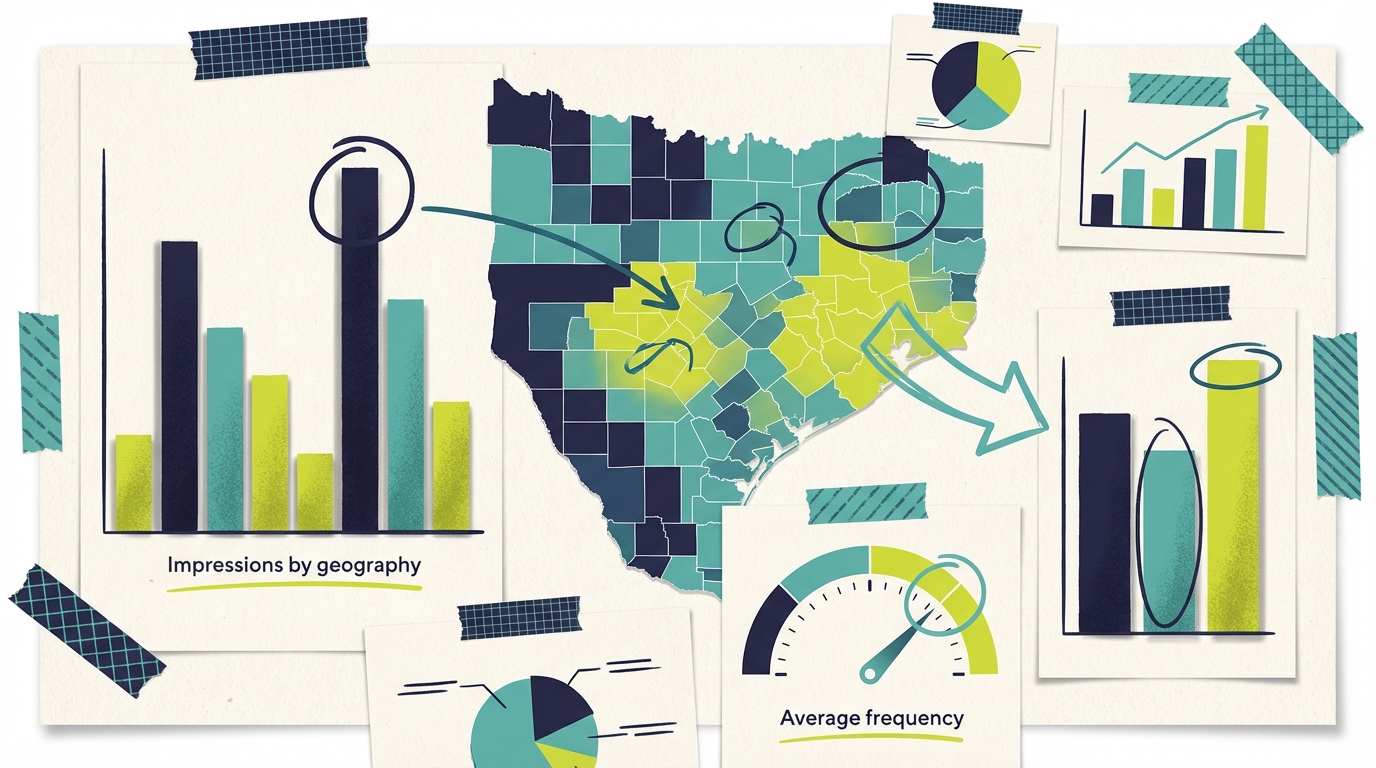
- Impression delivery by ZIP code: See exactly where your ads are running and adjust budget toward high-performing areas
- Frequency by geography: Make sure you're hitting target precincts enough times without oversaturating lower-priority areas
- Website visits by location: Correlate ad delivery with spikes in campaign website traffic from targeted ZIP codes
- Voter contact alignment: Compare your CTV delivery map with your ground game to ensure digital and field efforts reinforce each other
This level of geographic reporting is impossible with broadcast TV, where you get a DMA-level audience estimate and nothing more.
Common questions answered
How precise is geotargeting for political ads on CTV? CTV platforms can target ads down to the ZIP code level, and some support direct congressional or state legislative district targeting. This is far more precise than broadcast TV, which requires buying an entire DMA that may cover dozens of districts. For most campaigns, ZIP code targeting eliminates 90%+ of the waste inherent in broadcast buying.
Can small local campaigns afford geotargeted TV ads? Yes. Geotargeted CTV ads are actually more cost-effective for local campaigns than traditional TV because you only pay for impressions in your district. Platforms like Adwave let campaigns start with as little as $50, making TV advertising viable for city council, school board, and other down-ballot races that previously couldn't afford it.
What's the difference between DMA targeting and ZIP code targeting? DMA targeting is the traditional broadcast TV model where you buy airtime that reaches everyone in a media market, which can span hundreds of miles and multiple states. ZIP code targeting on CTV lets you select the specific postal codes within your district, so your ads only reach households where your voters actually live. The waste reduction is dramatic.
Do I need voter data to geotarget political ads? Not necessarily. Geographic targeting alone (ZIP codes or district boundaries) eliminates the biggest source of waste in political advertising. Voter data from providers like L2 or Data Trust lets you add another layer of precision by targeting specific voter segments within your geography, but it's an enhancement, not a requirement.
When should I start running geotargeted ads for my campaign? Most campaigns benefit from starting 6+ months before Election Day with broader geographic targeting for name recognition, then tightening to high-priority precincts in the final 8 weeks. The flexibility of CTV means you can adjust targeting throughout the campaign based on polling, fundraising, and field data.
Your district has borders. Your TV advertising should too. With CTV geotargeting, every ad dollar goes toward reaching voters who can actually cast a ballot for you, not households three DMAs away who've never heard of your race.
Sources
- Patrick McMahon, "50 States of Waste," patrickmcmahon.work, 2018
- Crain's Chicago Business, "Half of the political radio and TV ad spending in this metro area is wasted," 2018
- FreeWheel/BusinessWire, "FreeWheel Unlocks Precision Political Targeting on Streaming with First-of-its-Kind Data Partnerships," November 2025
- Ad Age, "Half of the TV/radio political ad spending in this metro area is wasted," 2018
Internal Links Used
- /resources/ctv-political-advertising (CTV political advertising)
- /resources/down-ballot-advertising-local-races (down-ballot advertising)
- /resources/political-ad-targeting-voters-tv (political ad targeting)
- /resources/political-advertising-costs (political advertising costs)
- /resources/political-tv-advertising-2026-guide (political TV advertising guide)
- /how-it-works/ (Adwave how it works)
Version history
| Version | When | Summary |
|---|---|---|
| v1 | 6/20/2026, 3:11:54 AM | migration import |