Best Advertising for Mobile Apps (2026)
slug: best-advertising-for-mobile-apps · status: draft · score: 88% · 1 versions
View published version → · Contentful entry: 69Sg9ltsUNCn9vo0WIjjQY
Validation
| Rule | Detail | |
|---|---|---|
| pass | No banned competitors | No banned competitors |
| pass | No emdashes | No emdashes |
| pass | Avoid AI telltale words | No AI telltale words |
| pass | Primary keyword in title | No primary keyword to check |
| pass | Use contractions | Contractions used |
| fail | Minimum internal links | Internal links not in sitemap: /how-it-works, /resources/average-ctv-cpm, /how-it-works, /resources/how-to-get-users-mobile-app, /how-it-works, /resources/average-ctv-cpm, /resources/how-to-get-users-mobile-app |
| pass | FAQ section required | FAQ section present |
| fail | Author assigned | No author assigned (never use 'Adwave Team' for new content) |
| pass | Title length 50-60 | Title length 39 |
| pass | Minimum 4 images | 4 images |
| pass | SEO description under 160 | seoDescription 143 chars |
| pass | Adwave mention cadence | 6 Adwave mentions |
| pass | Short description present | shortDescription 184 chars |
| pass | Word count by type | Word count 4929 within target |
| pass | Year-dated title for evergreen types | Title carries year 2026 |
| pass | No manual table of contents | No manual TOC |
Images (4)
Content
Best Advertising for Mobile Apps (2026)
Getting your app discovered is harder than building it. With over 5.7 million apps across the App Store and Google Play as of early 2026 (Statista, 2025), simply launching and hoping for downloads isn't a strategy. It's a wish.
The average cost per install hit $2.24 globally in 2024, up 15% year over year (Liftoff, 2024 Mobile Ad Creative Index). For some categories like finance and shopping, CPIs run even higher. And those are just installs. Getting a user who actually sticks around? That costs two to five times more.
Here's the thing: the apps that win aren't necessarily the ones with the biggest budgets. They're the ones that pick the right advertising channels for the right stage of growth and combine them into a stack that compounds over time.
This guide breaks down the seven best advertising channels for mobile apps in 2026, including what each costs, where it fits in your marketing mix, and how to build a strategy that drives real, measurable growth.
App Store Optimization: The Foundation Everything Else Builds On
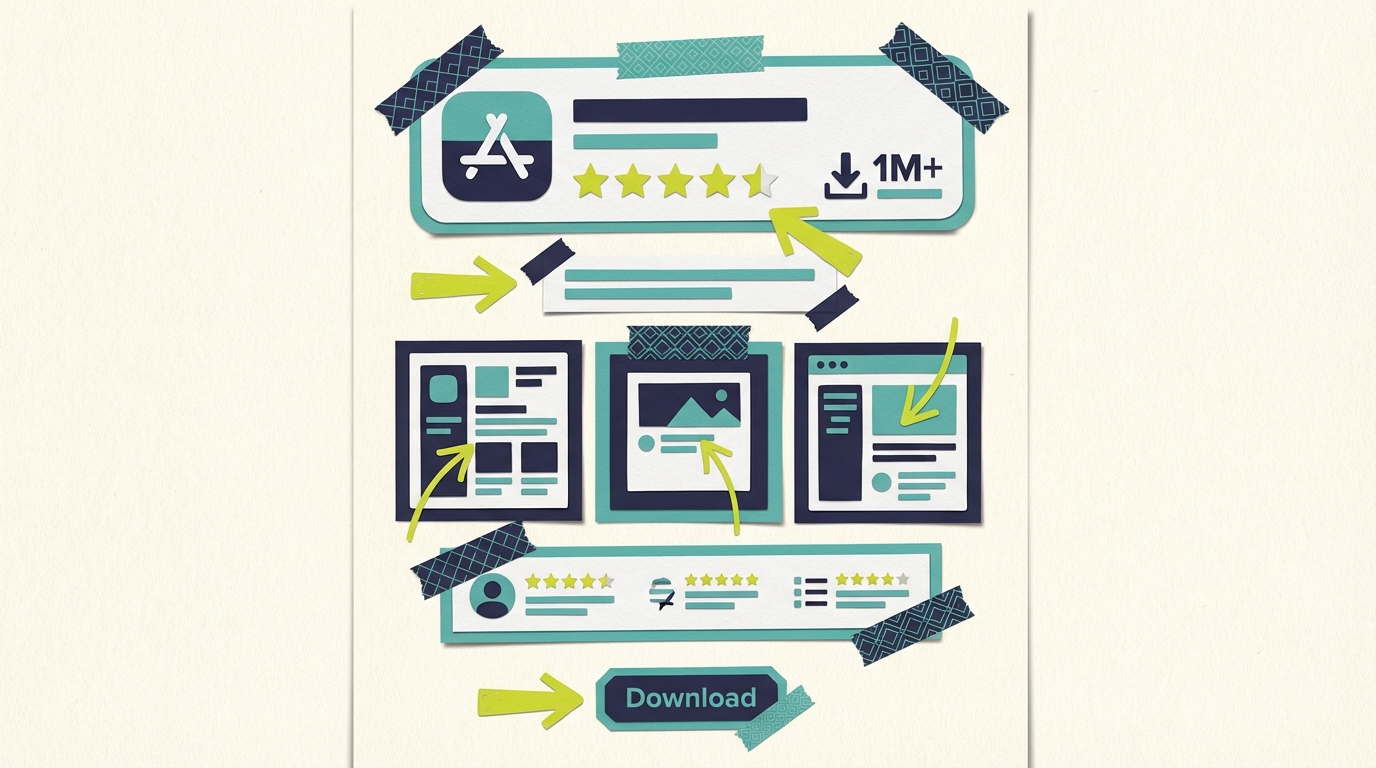
Before you spend a dollar on advertising, your app store listing needs to convert. App store optimization (ASO) isn't technically "advertising," but it affects every other channel on this list. Every ad click, every influencer mention, every search result leads back to your store page. If that page doesn't convert, you're burning money.
Why ASO Matters So Much
Apple reports that 65% of App Store downloads come directly from search (Apple, 2023). Google Play tells a similar story. Your app title, subtitle, keywords, screenshots, and ratings collectively determine whether someone taps "Get" or keeps scrolling.
The ROI case is straightforward: ASO improvements are free (aside from your time) and they compound indefinitely. A better-converting store page lifts performance across every paid channel simultaneously.
Tactics That Move the Needle
Keywords and metadata. Your app title is your most powerful keyword signal. Include your primary search term naturally. "BudgetBee: Expense Tracker & Budget Planner" hits three high-volume terms while staying readable. Subtitle and keyword field (iOS) or short description (Android) are your next priority slots.
Screenshots and video previews. These are your sales pitch. Lead with your strongest feature. Show the actual interface, not abstract marketing graphics. Apps with video previews see 25-30% higher conversion rates on average (SplitMetrics, 2024). Use all available slots. Each screenshot should communicate one clear benefit.
Ratings and reviews. Apps rated 4.5 stars and above convert at roughly double the rate of apps rated 3.5 (Alchemer Mobile, 2024). Prompt users to rate after positive moments, like completing a level, finishing a workout, or achieving a goal. Never interrupt the core experience to ask. Respond to negative reviews publicly and fix the issues they raise.
Localization. Even translating your store listing (without localizing the app itself) can boost downloads 30%+ in non-English markets (Phiture, 2024). Start with markets where your app category has high demand but low competition.
Best For
Apps at every stage. ASO should be your first investment and an ongoing optimization effort. Expect to revisit keywords quarterly and refresh screenshots with every major update.
Cost
Free to implement yourself. ASO tools like Sensor Tower, AppTweak, or AppFollow cost $50-500/month for keyword tracking and competitive intelligence. Professional ASO agencies charge $2,000-10,000/month.
Quick Tip: Run A/B tests on your screenshots and descriptions before launching paid campaigns. Apple's product page optimization and Google Play's store listing experiments let you test variants with real traffic at no extra cost.
Google App Campaigns: The Machine Learning Workhorse
Google App Campaigns (formerly Universal App Campaigns) remain the single largest paid channel for most app marketers. They run across Google Search, YouTube, Google Play, the Display Network, and Discover, all from a single campaign setup.
How Google App Campaigns Work
You don't build individual ads. Instead, you provide text ideas, images, and video assets, and Google's machine learning assembles and tests combinations automatically. You set a target cost per install (tCPI) or target cost per action (tCPA), and Google optimizes delivery across its entire network.
This means less creative control but access to extraordinary scale. Google reaches over 4 billion devices worldwide (Google Ads, 2025). For sheer reach, nothing else comes close.
Performance Benchmarks
Average CPIs for Google App Campaigns vary significantly by category and geography. In 2024, the global average sat around $1.22 for Android and $3.60 for iOS (Business of Apps, 2024). Games tend to be cheaper; finance and e-commerce apps cost more.
The real advantage is Google's ability to find high-value users, not just cheap installs. By optimizing for in-app actions (purchases, subscriptions, level completions), you can train the algorithm to target people likely to become paying customers, even if the upfront CPI is higher.
Tactics That Move the Needle
Feed the algorithm variety. Upload at least 5 text assets, 20 image assets, and 5 video assets. More creative variety gives Google more combinations to test. Replace your lowest performers monthly.
Optimize for downstream events. Start with install campaigns to build conversion data, then switch to tCPA campaigns optimizing for the in-app event that matters most (purchase, subscription start, etc.). You need at least 10 conversions per day for tCPA campaigns to work well.
Test different budgets by geography. CPIs in Southeast Asia, Latin America, and Eastern Europe are often one-third to one-fifth of U.S. costs. If your app works globally, geo-expansion is one of the easiest scaling moves.
Use deep links. Send users to specific in-app content rather than just the home screen. Users who land on relevant content retain at higher rates.
Best For
Apps seeking scale. Google App Campaigns work best when you have enough budget ($50-100/day minimum) to give the algorithm room to learn and enough in-app events to optimize against.
Cost
Minimum daily budget: $10-20. Effective minimum for meaningful data: $50-100/day. CPIs: $1-5 for most categories, $5-15 for competitive verticals.
Quick Tip: Don't judge Google App Campaign performance in the first 7 days. The algorithm needs a learning period to identify your best audience segments. Resist the urge to make changes during this window.
Social Media Ads: Where Discovery Happens
Social platforms are where people discover apps they didn't know they needed. Meta (Facebook and Instagram), TikTok, and Snapchat each offer app install ad formats purpose-built for driving downloads.
Meta (Facebook and Instagram)
Meta's app install campaigns remain the industry standard for a reason. The targeting capabilities are unmatched in specificity, the creative formats are diverse, and the measurement infrastructure is mature.
In 2024, the average CPI on Meta was $1.75 for Android and $3.23 for iOS globally (Liftoff, 2024). Costs have increased steadily since Apple's App Tracking Transparency changes in 2021, but Meta has rebuilt much of its signal through Aggregated Event Measurement and its Conversions API.
What works in 2026: Short-form video (under 15 seconds), user-generated content style ads, and Advantage+ app campaigns that use Meta's AI to optimize targeting automatically. Advantage+ campaigns consistently outperform manual targeting for most app advertisers.
Creative matters enormously. The biggest lever in Meta app campaigns isn't targeting. It's creative. Test at least 5-10 creative concepts per month. Show your app in action. Demonstrate the core benefit in the first 2-3 seconds before anyone scrolls past.
TikTok
TikTok has become the second-largest social platform for app installs behind Meta. Its recommendation algorithm excels at introducing new products to interested audiences, which makes it ideal for app discovery.
Average CPIs on TikTok range from $1.00-3.00 depending on category (TikTok for Business, 2024). The platform works especially well for consumer apps, games, and lifestyle categories.
What works in 2026: TikTok-native content that feels like organic posts, not ads. Partner with creators to produce authentic demos. Spark Ads (which boost organic creator posts as paid ads) consistently outperform polished, brand-produced creative. Trends move fast on TikTok, so refresh creative every 1-2 weeks.
Snapchat
Snapchat's app install format is often overlooked, but it delivers some of the lowest CPIs among major platforms, particularly for apps targeting Gen Z and younger millennials. Average CPIs run $1.00-2.50 (Snap Inc., 2024).
Snapchat's AR lens ads create interactive experiences that can go viral organically. For gaming, AR, and camera-related apps, Snapchat can be a goldmine.
Best For
Consumer apps looking for scale. Social media excels at introducing your app to people who match your user profile but aren't actively searching for a solution. Essential for apps where the target audience skews under 45.
Cost
Meta: $50/day minimum recommended, $1.50-5.00 CPI. TikTok: $50/day minimum, $1.00-3.00 CPI. Snapchat: $20/day minimum, $1.00-2.50 CPI. Budget 15-20% of spend on creative production.
Quick Tip: Don't split your social budget evenly across platforms. Start with one, master it, then expand. Most apps get the best results by starting with Meta (largest audience, best optimization), then adding TikTok once they have winning creative concepts to adapt.
Apple Search Ads: The Highest-Intent Channel
Apple Search Ads put your app at the top of App Store search results. Since 65% of App Store downloads start with a search (Apple, 2023), this channel captures users at the exact moment they're looking for an app like yours.
How Apple Search Ads Work
There are two tiers. Search Ads Basic is a simplified, cost-per-install model with no keyword management. You set a budget, and Apple runs your ad across relevant searches. Search Ads Advanced gives you full control over keyword bidding, audience targeting, and creative sets.
Average tap-through rates for Apple Search Ads hover around 60%, with conversion rates near 50% (Apple Search Ads, 2024). Those numbers dwarf every other paid channel because the intent is so strong. Someone searching "meditation app" or "budget tracker" wants to download something right now.
Tactics That Move the Needle
Start with Search Match. Turn on Search Match in Advanced campaigns to discover which queries actually drive installs. Run it for 2-4 weeks, then build exact match campaigns around your top performers.
Bid on competitor brand terms. When someone searches for a competitor's name, your ad can appear above their organic listing. This is aggressive but effective, especially if your app offers a clear advantage.
Segment by match type. Run separate campaigns for exact match (your core terms) and broad match (discovery). This prevents your best keywords from having their budgets eaten by irrelevant broad queries.
Use Custom Product Pages. Create tailored store page variants for different keyword themes. Someone searching "beginner yoga" should see beginner-focused screenshots, not your advanced pose library.
Best For
iOS-focused apps with clear, searchable use cases. Particularly strong for utility, health, finance, and productivity apps where users search for solutions by category. Less effective for apps people don't know to search for (novel concepts, brand-new categories).
Cost
No minimum spend. Average cost per tap: $1.50-3.00. Average CPI: $2.00-5.00, varying by category. Finance and insurance apps can see CPIs above $10. Gaming apps often see CPIs under $2.00.
Quick Tip: Your Custom Product Pages for Apple Search Ads also work as A/B test variants for your main listing. Winning creative from Search Ads campaigns should inform your default store page.
CTV and Streaming TV: The Brand Awareness Play
Here's the channel most app marketers overlook entirely: connected TV (CTV) and streaming TV advertising. When you think about it, it makes sense. Your future users are spending hours every day watching content on Hulu, Peacock, Tubi, and dozens of other streaming services. Reaching them during that lean-back viewing experience creates a fundamentally different kind of brand impression than a thumb-scrollable social ad.
Why CTV Works for Apps
The average American adult watches 3 hours and 8 minutes of TV per day, with streaming now accounting for over 40% of total TV viewing time (Nielsen, The Gauge, 2025). That's a massive audience in an environment with high attention and minimal ad clutter compared to social feeds.
TV advertising creates brand awareness that lifts performance across every other channel. Research from Roku and Nielsen found that CTV campaigns increased branded search by 22% and boosted app install ad performance by 18% on average (Roku, 2024). It's not an either-or choice between CTV and performance channels. CTV makes your performance channels work harder.
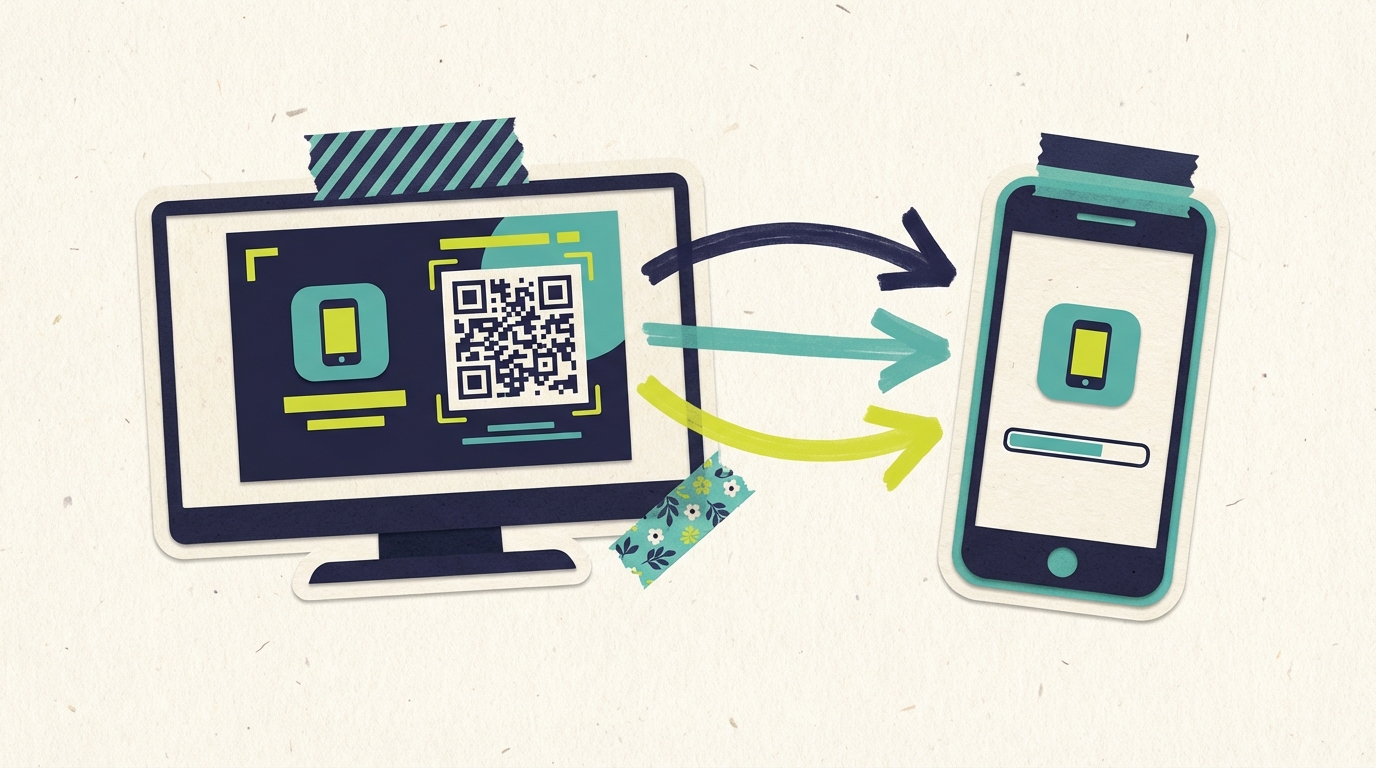
The TV-to-mobile path is more direct than you'd expect. Viewers see your app on the big screen, then grab their phone to download it during the next commercial break. QR codes in CTV ads can bridge that gap instantly.
Getting Started Without a Massive Budget
Traditional TV advertising required five- and six-figure budgets. That's no longer the case. With platforms like Adwave, you can create a broadcast-quality TV commercial for your app in about two minutes and launch campaigns on 100+ premium channels starting at just $50. You don't need a production crew, an agency, or a media buyer.
That $50 entry point makes CTV viable even for bootstrapped apps testing the waters. You can run a targeted local campaign or go national depending on your audience. The average CTV CPM runs $15-35, which means you're reaching thousands of viewers for a modest test budget.
Tactics That Move the Needle
Show the app in use. The best app TV ads demonstrate the core experience visually. Show someone opening the app, completing a key action, and getting results. Keep it simple and focused on one main benefit.
Include a clear CTA and QR code. Always give viewers a way to act immediately. A QR code linking to your app store listing eliminates friction between "that looks cool" and "downloaded."
Target by interest and behavior. CTV platforms offer targeting by demographics, interests, location, and viewing behavior. Target audiences that overlap with your existing users.
Measure the halo effect. Track branded search volume and organic install rates during CTV campaign windows. The true impact of TV extends well beyond last-click attribution.
Best For
Apps at the growth and mature stages that need to build brand awareness beyond the performance marketing ceiling. Especially effective for consumer apps with broad appeal, subscription apps, and apps competing in crowded categories where differentiation matters.
Cost
Starting at $50 with Adwave. Typical test budgets: $500-5,000/month. CPMs: $15-35. CPI measurement is indirect but TV-driven install spikes are measurable through holdout testing and branded search lift.
Quick Tip: Run your CTV campaign during the same period as your highest-performing social and search campaigns. The brand awareness lift from TV amplifies paid install performance, and you'll see the impact in lower CPIs and higher conversion rates across channels.
Influencer and Creator Marketing: Built-In Trust
Influencer marketing isn't just for consumer products. Apps are one of the categories where creator partnerships deliver the strongest results, because a trusted voice demonstrating your app in a real context carries more weight than any ad format.
Why Creator Marketing Works for Apps
A 2024 survey by Influencer Marketing Hub found that 85% of marketers rated influencer marketing as effective for app installs and user engagement (Influencer Marketing Hub, 2024 Benchmark Report). The reason is simple: when a fitness influencer shows how they use a workout app during their daily routine, it's a demonstration with built-in social proof.
Creator content also doubles as paid ad creative. TikTok Spark Ads and Meta's Partnership Ads let you run creator content as paid placements, combining organic authenticity with paid targeting and scale.
How to Structure App Influencer Campaigns
Micro-influencers outperform mega-influencers for apps. Creators with 10,000-100,000 followers in your niche typically deliver 3-5x better cost per install than those with millions of followers (CreatorIQ, 2024). Their audiences are more engaged and more likely to act on recommendations.
Give creators freedom. Provide talking points and your key message, but let them present your app in their own voice and style. Scripted influencer content performs worse than authentic content in almost every measurable way.
Track with unique links and promo codes. Give each creator a unique tracking link (via AppsFlyer, Adjust, or Branch) and a promo code if your app supports them. This lets you measure actual installs per creator rather than relying on follower counts as a proxy for performance.
Think in campaigns, not one-offs. A single creator post might spike downloads for a day. A sustained partnership with 5-10 creators posting monthly builds lasting awareness and generates a library of content you can repurpose as ads.
Best For
Consumer apps with strong visual appeal or lifestyle fit. Apps in fitness, food, finance, gaming, travel, and productivity see the strongest creator marketing results. Less effective for B2B or highly technical apps where the target audience doesn't follow niche creators.
Cost
Micro-influencers (10K-100K followers): $250-2,500 per post. Mid-tier (100K-500K): $2,500-10,000 per post. Macro (500K+): $10,000-50,000+. Many creators accept free access plus affiliate-based compensation for apps they genuinely like. Budget $2,000-10,000/month for a starter program.
Quick Tip: Before reaching out to a creator, install their favorite apps and check which products they've promoted organically (not just through partnerships). If they already use and mention apps in your category, the partnership will feel natural to their audience.
Content Marketing and SEO: The Long Game
Content marketing won't generate downloads tomorrow, but it builds an acquisition engine that compounds over years and costs nothing per install once it's running.
Why Content Works for App Marketing
People search for solutions before they search for apps. Someone Googling "how to stick to a budget" or "best stretches for back pain" is a potential user for dozens of apps. If your content ranks for those queries, you're reaching high-intent users at the moment they're most receptive to trying a new tool.
Content also supports every other channel. Blog posts and guides provide landing page destinations for social ads, email content for re-engagement, and credibility assets that improve conversion rates across the board.
Tactics That Move the Needle
Create content around problems your app solves. If you built a meal planning app, publish recipes, grocery shopping guides, and weekly meal prep plans. A meditation app should publish content about stress management, sleep improvement, and mindfulness techniques. The content should be genuinely useful even without the app.
Build a resource library on your website. App store search is limited to app-specific queries. Web search captures the broader intent. A strong blog or resource section indexed by Google sends a steady stream of qualified visitors to your app download page.
Video content for YouTube. YouTube is the second-largest search engine in the world. Tutorial videos showing your app in action can rank for years and drive consistent installs. A well-made "How to [solve problem] with [app name]" video costs little to produce and can generate thousands of installs over its lifetime.
ASO and SEO reinforce each other. Your website's domain authority helps your app rank in Google's app pack (the app suggestions that appear in mobile search results). And strong ASO signals help your app appear in Google search results alongside your web content.
Best For
Apps with content-rich categories (health, finance, education, cooking, fitness, travel, productivity). Less effective for games or utility apps where users don't typically search for educational content related to the use case.
Cost
Free to produce in-house. Freelance content writers cost $100-500 per article. SEO tools (Ahrefs, SEMrush) cost $100-400/month. The investment is time-heavy upfront but the cost per install drops toward zero as content matures and ranks.
Quick Tip: Repurpose your best-performing content across formats. A blog post that drives traffic becomes a YouTube script, an Instagram carousel, a TikTok series, and an email nurture sequence. One idea, five channels.
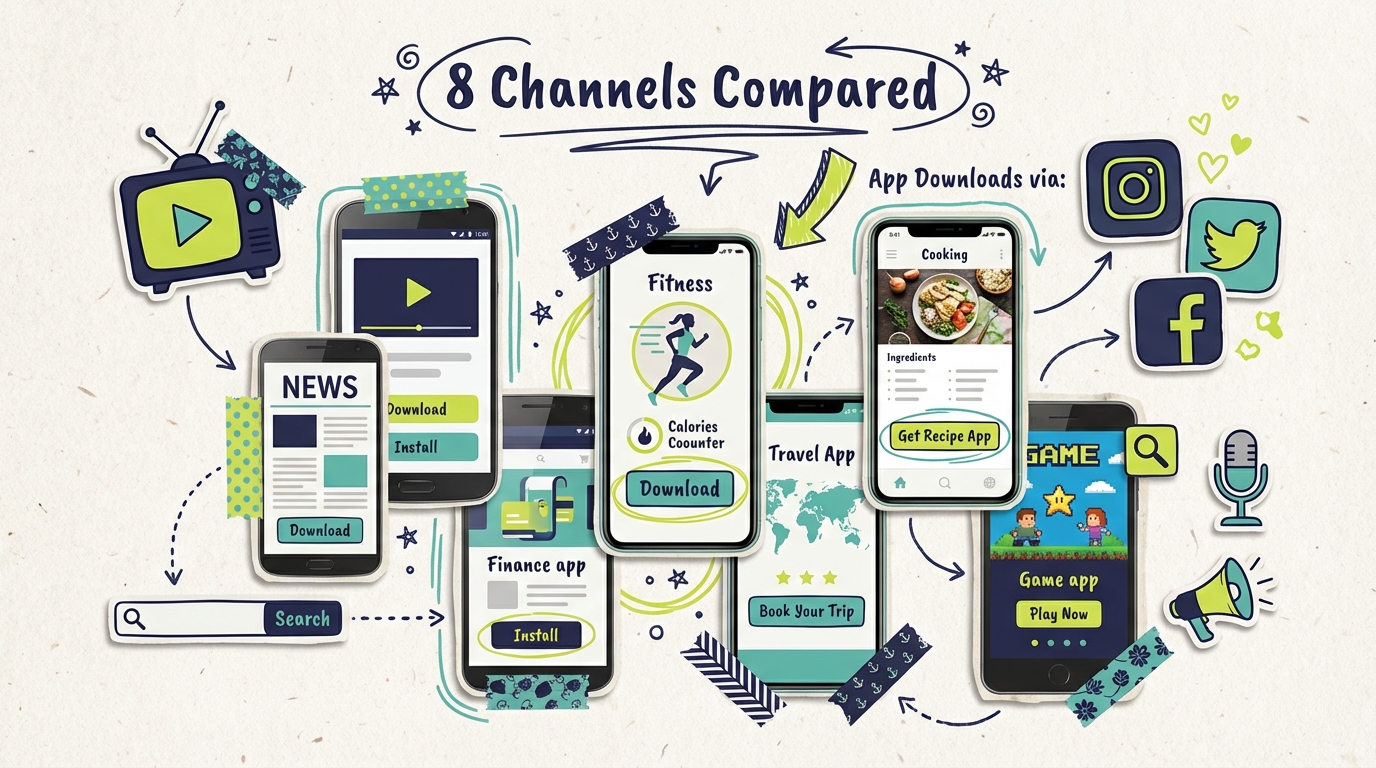
Channel Comparison: Finding the Right Fit
Not every channel suits every app. This comparison helps you match channels to your specific situation.
A few patterns stand out from this comparison. The channels with the fastest time to results (Apple Search Ads, social platforms) tend to cost more per install. The channels with the lowest long-term cost (ASO, content/SEO) take months to ramp up. And CTV sits in a unique position: it doesn't drive installs directly, but it amplifies everything else you're doing.
The smartest app marketers don't pick one channel. They build a stack.
How to Build Your App Marketing Stack by Stage
Your advertising mix should evolve as your app matures. What works for a pre-launch app is different from what works for an app trying to scale past a million users.
Pre-Launch (0 Users)
Primary focus: Build your foundation before spending on acquisition.
- ASO (start immediately). Finalize your app title, keywords, screenshots, and store listing. Run product page experiments if you have enough organic traffic.
- Content/SEO (start 3-6 months before launch). Publish 5-10 articles targeting problems your app solves. Build an email waitlist from web traffic.
- Influencer seeding (start 1-2 months before launch). Send early access to 10-20 micro-influencers. Let them build anticipation organically. Don't pay for posts yet. Focus on genuine interest.
Budget allocation: 70% content creation, 20% ASO tools, 10% influencer outreach.
Growth Stage (1,000 to 100,000 Users)
Primary focus: Find profitable paid channels and scale what works.
- Apple Search Ads (start here for iOS). Capture the highest-intent users first. Build keyword campaigns around your top-performing organic terms.
- Google App Campaigns. Launch with install optimization, then shift to tCPA once you have 10+ daily conversions.
- Meta Ads. Start with Advantage+ app campaigns and broad targeting. Let Meta's algorithm find your audience. Test 5+ creative concepts in the first month.
- Influencer partnerships. Move from seeding to paid partnerships. Work with 3-5 creators on a monthly basis for consistent content.
- ASO (ongoing). Refresh keywords quarterly. Update screenshots with new features.
Budget allocation: 40% Google + Meta, 25% Apple Search Ads, 20% influencer, 10% ASO + content, 5% testing new channels.
Mature Stage (100,000+ Users)
Primary focus: Expand reach, build brand, and reduce acquisition costs through diversification.
- CTV/Streaming TV. This is where TV becomes a strategic advantage. Use Adwave to launch your first streaming TV campaign and test whether the brand awareness lift reduces CPIs across your other channels. Many apps see 15-20% improvement in paid social performance during CTV flight windows.
- TikTok and Snapchat. Expand beyond Meta to reach new audiences. Repurpose your best-performing creator content as paid ads.
- Content/SEO (scaling). Expand your content library to cover adjacent topics. Invest in video content for YouTube.
- Google + Meta (optimization). Shift focus from volume to lifetime value. Optimize for high-value events rather than raw installs.
- Retargeting. Re-engage lapsed users across social, display, and CTV. Win-back campaigns for users who installed but churned.
Budget allocation: 30% Google + Meta, 15% Apple Search Ads, 15% CTV, 15% TikTok/Snapchat, 15% influencer, 10% content/SEO.
The Budget Reality Check
According to AppsFlyer's State of App Marketing report, the median app marketing budget in 2024 was $50,000 per month for apps with 100,000+ monthly active users (AppsFlyer, 2024). But you don't need that to start. Many successful apps began with less than $1,000/month focused on one or two channels.
The key principle: start narrow, find a positive ROI channel, then reinvest profits into diversification. Spreading a small budget across seven channels produces seven weak signals. Concentrating it on one or two channels produces clear data you can act on.
Common Questions Answered
What's the most cost-effective advertising channel for a new mobile app?
For most new apps, Apple Search Ads offer the best starting point because they capture users actively searching for apps in your category. The intent is high, the measurement is clear, and there's no minimum budget requirement. Pair Apple Search Ads with solid ASO to maximize conversion from every tap, and you'll have a cost-effective foundation to build from.
How much should I budget for mobile app advertising?
There's no universal answer, but a useful rule of thumb is to start with $1,000-3,000 per month focused on one or two channels. This gives you enough data to measure what's working within 2-4 weeks. As you find profitable channels, reinvest returns to scale. Apps in the growth stage typically spend $10,000-50,000 per month across multiple channels, while mature apps may spend $50,000-500,000+ monthly.
Does TV advertising actually work for mobile apps?
Yes, and the data supports it. CTV advertising creates a brand awareness lift that improves performance across all your other channels. Roku and Nielsen research found that CTV campaigns boosted app install ad performance by 18% on average (Roku, 2024). The key is to think of TV as a multiplier for your existing marketing stack, not a standalone install driver. With platforms like Adwave, you can test CTV starting at $50 to see how it affects your overall acquisition metrics.
How do I measure the ROI of channels that don't drive direct installs (like CTV or content)?
Use holdout testing and incrementality measurement. Run your campaign in some markets but not others, then compare install rates, branded search volume, and organic download trends between the two groups. For content marketing, track the share of users who visited your website before installing your app using multi-touch attribution tools like AppsFlyer or Adjust. Both CTV and content tend to show their impact through improved conversion rates and lower CPIs on your direct-response channels.
Should I focus on iOS or Android advertising first?
It depends on your app's revenue model. If your app makes money through subscriptions or in-app purchases, iOS users typically generate 2-3x higher lifetime value than Android users (Sensor Tower, 2024), which justifies the higher acquisition costs. If your app relies on ad revenue or large user volume, Android's lower CPIs and larger global user base make more sense. Many developers launch paid campaigns on iOS first to establish unit economics, then expand to Android for scale.
When should I add a new advertising channel to my mix?
Add a new channel when your current channels reach diminishing returns, meaning CPIs are rising, frequency is high, and audience overlap increases. A healthy rule is to master one channel before adding another. Most apps plateau on a single channel at $20,000-50,000/month in spend. That's a natural signal to diversify. Start testing the next channel with 10-15% of your total budget while maintaining spend on what's already working.
The Bottom Line
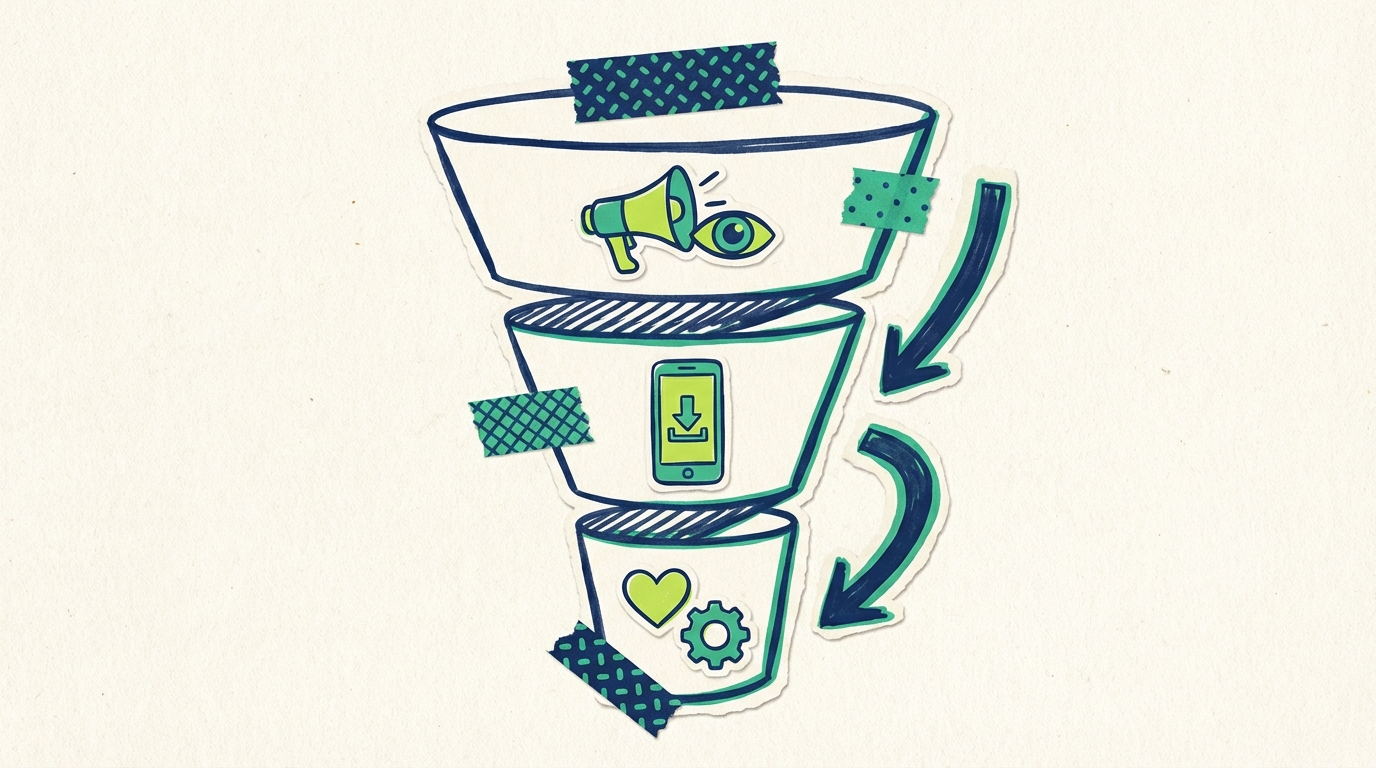
The best advertising strategy for your mobile app isn't about picking a single magic channel. It's about building a stack that covers the full user journey: ASO as your foundation, performance channels like Google and Meta for measurable installs, Apple Search Ads for high-intent captures, creators for trust-building, content for long-term organic growth, and CTV for the brand awareness that makes everything else work harder.
Start with the foundation. Pick one or two paid channels that match your audience and budget. Test, measure, and optimize for the actions that matter (not just raw installs). Then expand methodically as your data points you toward what's working.
The apps that grow sustainably don't chase every new tactic. They build systems that compound. Your advertising stack is one of those systems, and 2026 gives you more accessible, measurable options than app developers have ever had.
---
Sources
- Statista, "Number of apps available in leading app stores Q1 2025," 2025
- Liftoff, "2024 Mobile Ad Creative Index," 2024
- Apple, "App Store search and discovery statistics," 2023
- SplitMetrics, "App Store Conversion Benchmarks," 2024
- Alchemer Mobile, "Mobile App Ratings and Reviews Benchmarks," 2024
- Phiture, "ASO Localization Impact Study," 2024
- Google Ads, "Google App Campaigns Reach Statistics," 2025
- Business of Apps, "Cost Per Install (CPI) Benchmarks," 2024
- TikTok for Business, "App Install Campaign Benchmarks," 2024
- Snap Inc., "Snapchat App Install Advertising Benchmarks," 2024
- Nielsen, "The Gauge: U.S. TV Viewing Report," 2025
- Roku, "CTV Campaign Performance and Brand Lift Study," 2024
- Influencer Marketing Hub, "2024 Influencer Marketing Benchmark Report," 2024
- CreatorIQ, "Creator Marketing ROI Report," 2024
- AppsFlyer, "State of App Marketing," 2024
- Apple Search Ads, "Performance Benchmarks," 2024
- Sensor Tower, "iOS vs Android Revenue Benchmarks," 2024
Internal Links Used
- Adwave How It Works - mentioned in CTV section and marketing stack section
- Average CTV CPM - linked in CTV section cost discussion
- How to Get Users for Your Mobile App - linked in FAQ section
Version history
| Version | When | Summary |
|---|---|---|
| v1 | 6/20/2026, 3:11:54 AM | migration import |