How to Market Your Business During Slow Seasons
slug: slow-season-marketing-strategies · status: draft · score: 76% · 1 versions
View published version → · Contentful entry: 3wARmpU1hQWiwcnLNRv7nV
Validation
| Rule | Detail | |
|---|---|---|
| pass | No banned competitors | No banned competitors |
| pass | No emdashes | No emdashes |
| pass | Avoid AI telltale words | No AI telltale words |
| pass | Primary keyword in title | No primary keyword to check |
| pass | Use contractions | Contractions used |
| fail | Minimum internal links | Internal links not in sitemap: /resources/what-is-connected-tv-advertising, /pricing, /resources/local-tv-advertising-costs, /how-it-works, /how-it-works, /resources/local-tv-advertising-costs, /how-it-works |
| fail | FAQ section required | Missing FAQ / 'Common questions answered' section |
| fail | Author assigned | No author assigned (never use 'Adwave Team' for new content) |
| pass | Title length 50-60 | Title length 47 |
| pass | Minimum 4 images | 4 images |
| pass | SEO description under 160 | seoDescription 159 chars |
| pass | Adwave mention cadence | 1 Adwave mentions |
| pass | Short description present | shortDescription 148 chars |
| warn | Word count by type | Word count 1374 below target (2500-5000) |
| warn | Year-dated title for evergreen types | Year-dated type should include (2026) in the title |
| pass | No manual table of contents | No manual TOC |
Images (4)
Content
How to Market Your Business During Slow Seasons
Article Brief
Publish Date: 2025-08-22 URL Slug: slow-season-marketing-strategies Category: Guides Funnel Stage: TOFU Strategy: SMB-First Target Word Count: 1,800-2,200
---
Every business has a slow season. Restaurants go quiet in January. Retail slumps after the holidays. Home services slow in winter. Wedding vendors have off-season months.
If you're searching for slow season marketing strategies, you already know the pattern. Revenue dips. Foot traffic drops. The temptation is to cut costs and wait it out.
But here's what smart business owners know: slow seasons aren't problems to survive. They're opportunities to get ahead. The businesses that market through their slow periods emerge stronger, while competitors who went dark have to rebuild visibility from scratch.
Why Smart Businesses Actually Love Slow Seasons
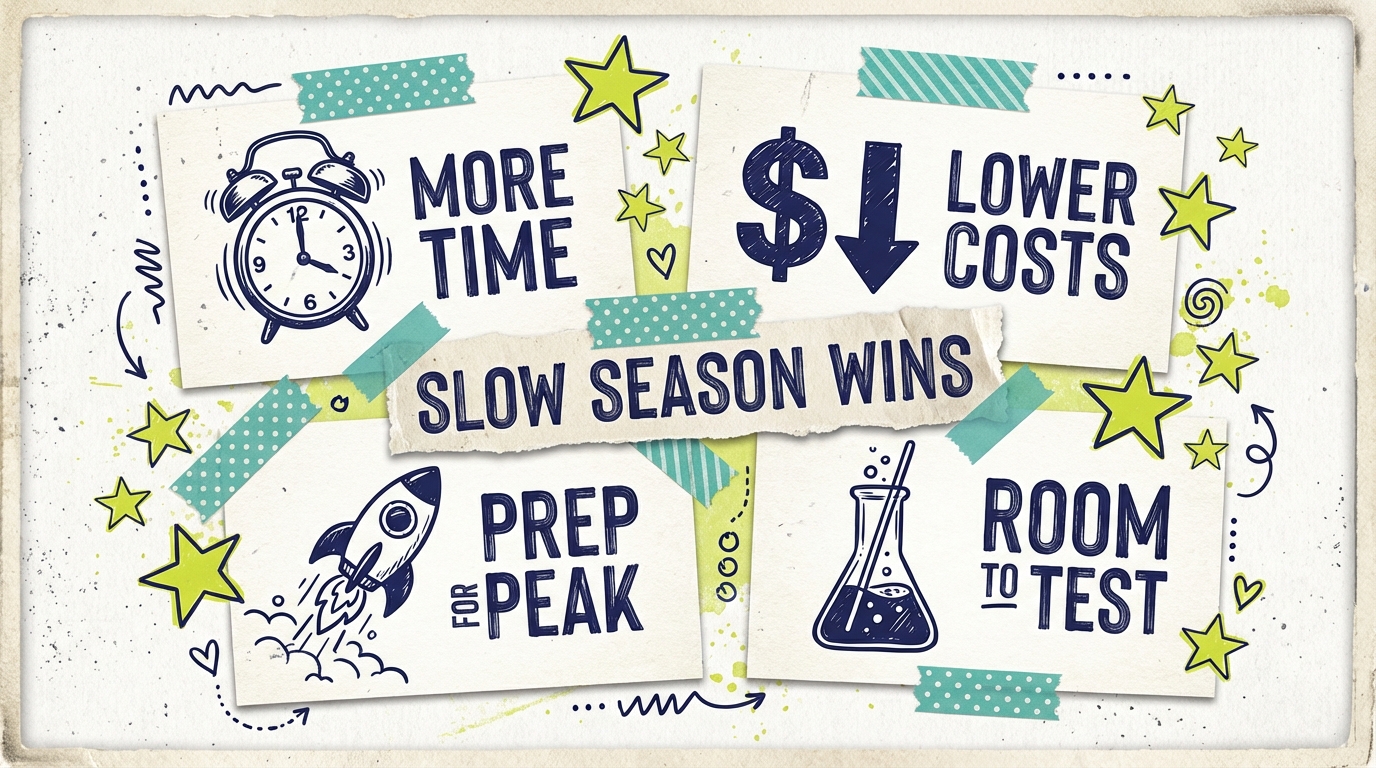
Counter-intuitive as it sounds, slow seasons offer genuine advantages:
Time to build brand awareness. When business slows, you have bandwidth to focus on marketing. And when your competitors go quiet, your message stands out more.
Lower advertising costs. Less competition for ad inventory means lower CPMs (cost per thousand impressions). Your marketing budget goes further during off-peak periods.
Preparation for peak season. The awareness you build during slow months compounds. When peak season hits, customers already know who you are.
Room to experiment. Slow periods are perfect for testing new marketing approaches. If something doesn't work, the stakes are lower.
The businesses that dominate their markets don't pause marketing during slow seasons. They lean in.
The "Stay Visible" Strategy
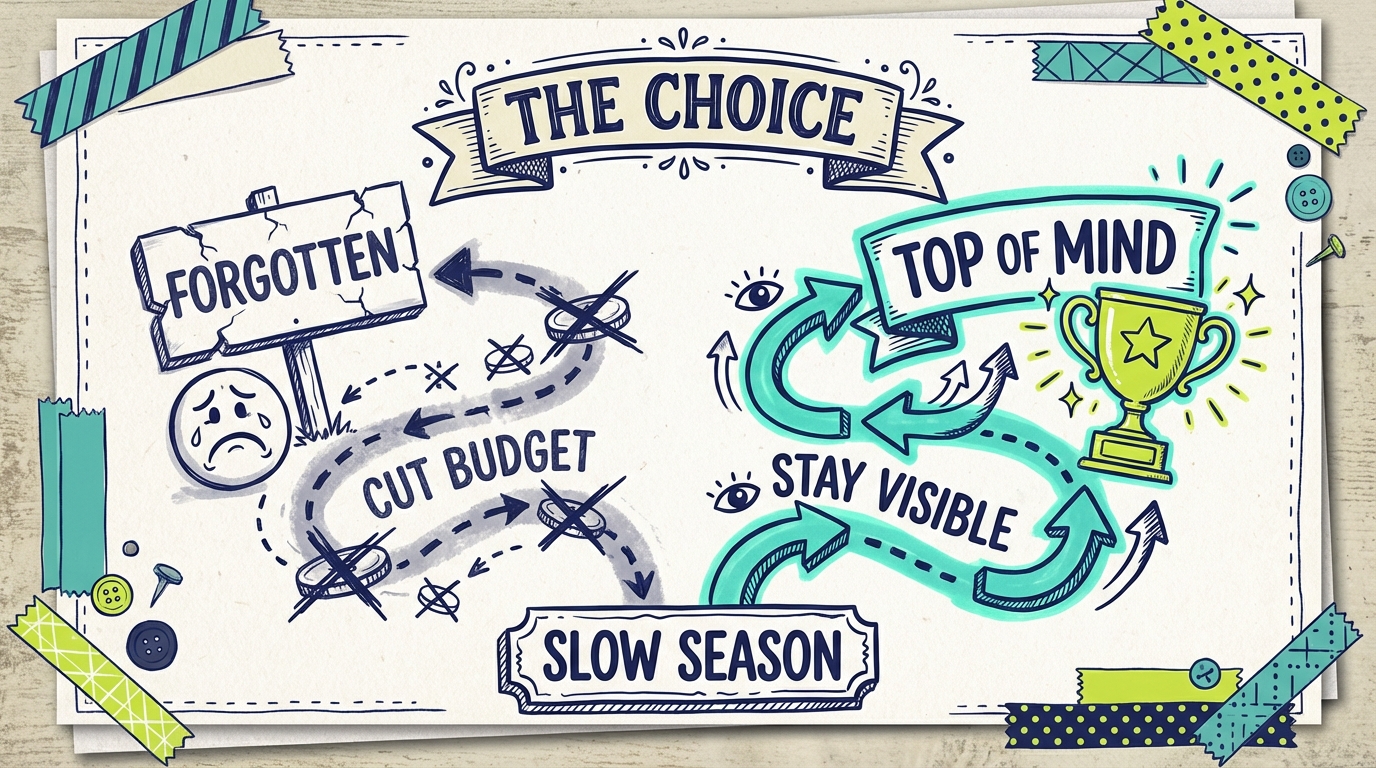
The biggest mistake during slow seasons is disappearing. When you stop marketing, you don't just lose sales now. You lose the momentum that drives sales later.
Don't disappear when things slow down. Customers forget fast. The business that stays visible during the off-season is the one they remember when they're ready to buy.
Consistent advertising builds year-round recognition. Brand awareness compounds. Marketing during slow periods adds to recognition built during busy periods. Stop-start marketing resets that progress.
TV advertising during off-peak = better value. CPMs (the cost to reach 1,000 viewers) are often 20-40% lower during non-holiday periods. Your TV advertising budget reaches more people when competition is quieter.
The goal isn't to match peak-season marketing spend. It's to maintain presence and visibility at efficient costs.
Strategies by Business Type
Different industries have different slow-season opportunities:
Restaurants (January, post-holiday slump):
- Push gift card sales during the holidays for January redemption
- Launch catering services for corporate events
- Create special events (wine dinners, chef's tables)
- Build lunch traffic from nearby offices
- Run local TV ads promoting weeknight specials
Retail (post-holiday, late summer):
- Clearance events that drive foot traffic
- Loyalty program promotions to existing customers
- Awareness campaigns for upcoming seasons
- Email campaigns to past purchasers
Home Services (winter months):
- Maintenance package offers
- Early-bird booking for spring
- Indoor services focus (interior painting, HVAC checks)
- Relationship building with past customers
Wedding Industry (January-March, November):
- Styled shoots for portfolio building
- Off-season discount promotions
- Engagement season advertising (many engagements happen in December)
- Partnerships with venues for package deals
The key: don't just wait for demand. Create reasons for customers to engage during slow periods.
The Counter-Intuitive Move: Advertise More, Not Less
Most businesses cut marketing during slow seasons. That's exactly why you shouldn't.
Why your competitors are wrong to cut budgets:
- They're training customers to forget about them
- They're ceding market visibility to anyone still advertising
- They're starting from zero when peak season returns
- They're missing the lower-cost advertising opportunity
Building awareness when attention is cheaper. Streaming TV advertising costs less per impression during non-peak periods. National brands pull back budgets, leaving more inventory at better prices.
TV advertising during slow season = bigger bang for your buck. A $100 campaign during your slow season might deliver the same reach as a $150 campaign during peak. Same visibility, better economics.
This doesn't mean overspending. It means strategically maintaining visibility while competitors go dark.
Creating Off-Season Offers That Work
Sometimes slow seasons need creative offers to generate activity:
Membership and subscription models. Convert one-time customers to recurring revenue. A monthly maintenance subscription smooths seasonal cash flow.
Early-bird specials. Offer discounts for booking peak-season services during the slow period. Customers get savings; you get predictable future revenue.
Bundle deals. Package slow-season services with peak-season offerings. "Book your summer landscaping now and get free spring cleanup."
Loyalty rewards. Double points or special perks for purchasing during slow months. Reward your best customers for off-season engagement.
Gift cards with bonuses. "Buy $50, get $10 free" promotions during slow periods seed future visits.
The best offers create genuine value for customers while driving activity when you need it most.
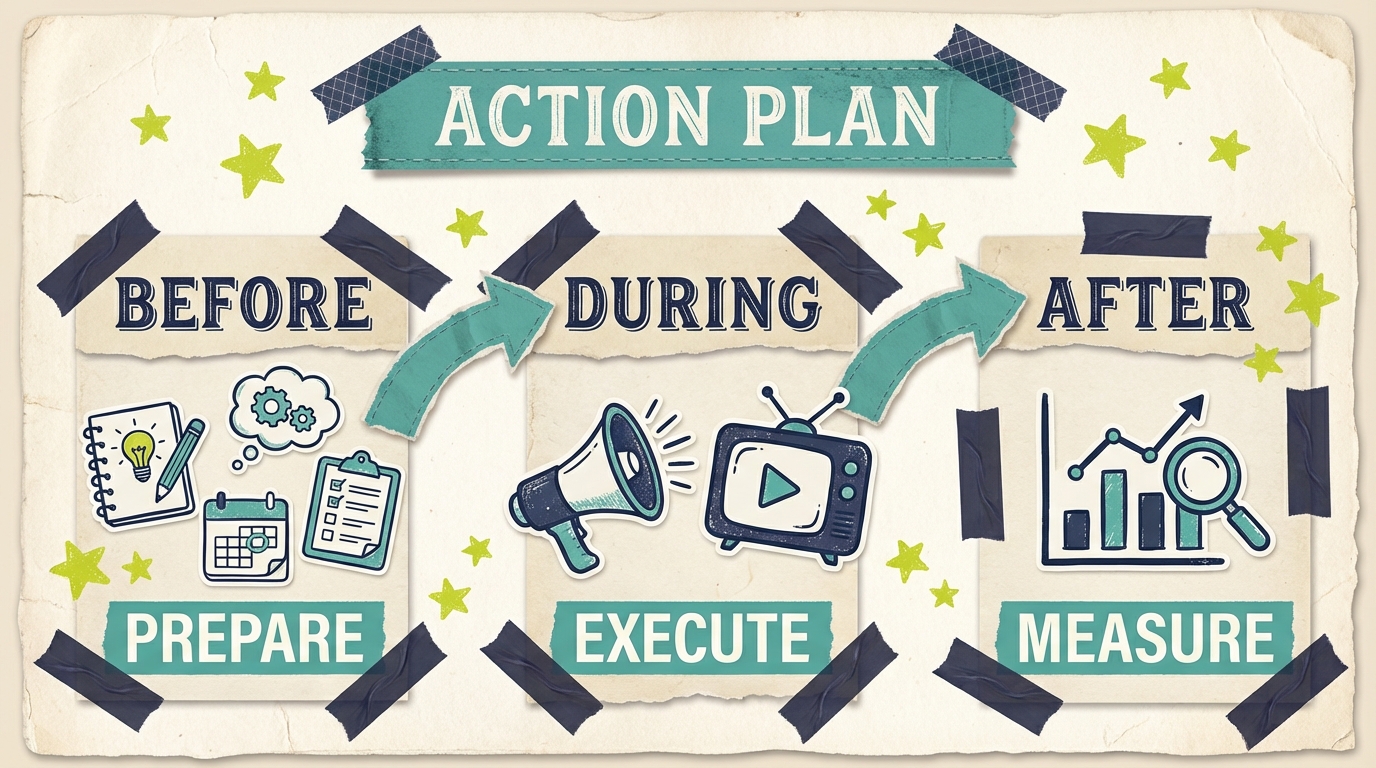
Your Slow Season Action Plan
Here's how to approach your next slow season strategically:
Before slow season hits:
- Identify your slow months based on historical data
- Set a marketing budget (don't cut to zero)
- Prepare creative and offers in advance
- Create TV ad creative while you have time
During slow season:
- Launch local TV advertising campaign
- Implement email campaigns to past customers
- Promote off-season offers
- Strengthen Google Business Profile and request reviews
- Build content and prepare for peak season
Track and measure:
- Monitor brand searches during campaign
- Track coupon/offer redemption
- Note customer acquisition source
- Compare to previous slow season performance
Turn Your Slow Season into an Advantage
Slow seasons don't have to mean slow growth. While competitors go quiet, cut budgets, and hope for the best, you can build the visibility and awareness that pays off all year long.
TV advertising is the perfect slow-season strategy: lower costs, less competition, and powerful brand-building that carries into your peak months.
With Adwave, you can create a professional TV commercial and start reaching local customers for as little as $50. Build awareness now so customers already know you when they're ready to buy.
Start your slow-season campaign and make your quiet months work for you.
Version history
| Version | When | Summary |
|---|---|---|
| v1 | 6/20/2026, 3:11:54 AM | migration import |