Down-Ballot Advertising: TV Strategies for Local Races
slug: down-ballot-advertising · status: draft · score: 81% · 1 versions
Not yet published.
Validation
| Rule | Detail | |
|---|---|---|
| pass | No banned competitors | No banned competitors |
| pass | No emdashes | No emdashes |
| pass | Avoid AI telltale words | No AI telltale words |
| pass | Primary keyword in title | No primary keyword to check |
| warn | Use contractions | Many non-contracted forms (6). Prefer contractions. |
| fail | Minimum internal links | Internal links not in sitemap: /industries/political/local-campaigns/tv-advertising-political-campaigns, /resources/ai-tv-commercials-small-business, /resources/political-tv-advertising-2026-guide, /industries/political/local-campaigns |
| pass | FAQ section required | FAQ section present |
| fail | Author assigned | No author assigned (never use 'Adwave Team' for new content) |
| pass | Industry pages need taxonomy | Not an Industry page |
| pass | Title length 50-60 | Title length 54 |
| pass | Minimum 4 images | 5 images |
| warn | SEO description under 160 | Missing seoDescription |
| pass | Adwave mention cadence | 4 Adwave mentions |
| warn | Short description present | Missing shortDescription |
| pass | Word count by type | Word count 2574 (no target for type) |
| pass | Year-dated title for evergreen types | Type not year-dated |
| pass | No manual table of contents | No manual TOC |
Images (5)
Content
--- title: "Down-Ballot Advertising: TV Strategies for Local Races" slug: down-ballot-advertising-local-races shortDescription: TV advertising strategies for down-ballot candidates. Learn how local campaigns for city council, school board, and county races can effectively reach voters. seoDescription: Down-ballot advertising strategies for local political races. Discover how city council, school board, and county candidates can use TV to win elections affordably. resourceType: Guides resourceDate: 2026-01-24 ---
Down-Ballot Advertising: TV Strategies for Local Races
Down-ballot races often decide who controls local school boards, county commissions, city councils, and state legislatures. These positions shape daily life far more directly than federal offices, yet down-ballot candidates frequently struggle to reach voters through traditional advertising channels.
TV advertising has long been considered out of reach for local campaigns. Traditional broadcast and cable buys require minimum budgets that exceed what most down-ballot candidates can raise. But Connected TV has changed the equation, making TV advertising accessible and effective for races of all sizes.
This guide covers practical TV advertising strategies for down-ballot campaigns, from budget planning to creative execution.
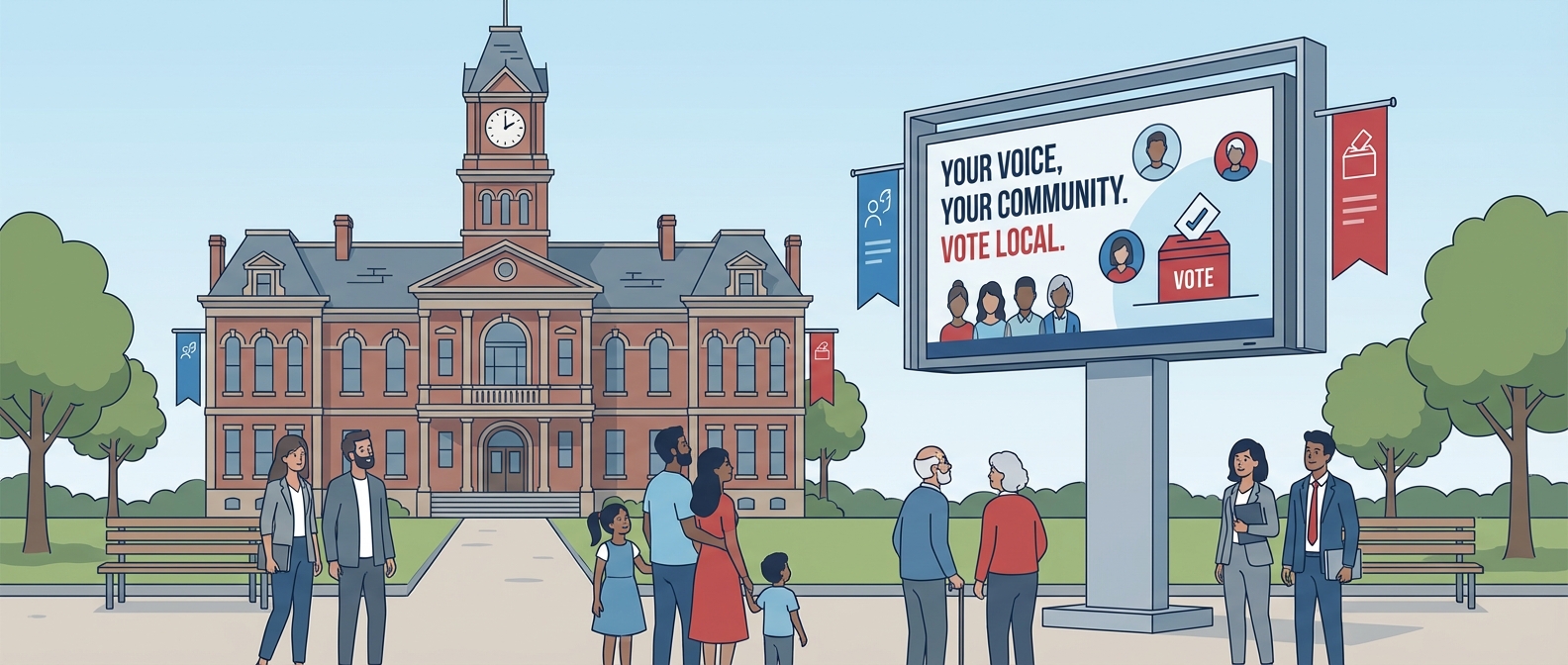
!Down-Ballot TV Advertising for Local Campaigns
What makes down-ballot advertising different
Down-ballot races present unique advertising challenges that don't apply to federal or statewide campaigns.
Smaller geographic footprints
City council districts, school board zones, and county commissioner precincts cover compact areas. A congressional district might span 750,000 people across hundreds of square miles. A city council ward might contain 30,000 people in a few neighborhoods.
This geographic concentration creates both challenges and opportunities. Traditional TV buys reach far beyond district boundaries, wasting budget on voters who can't cast ballots for your candidate. But targeted digital and CTV advertising can focus exclusively on voters within district lines.
Limited budgets
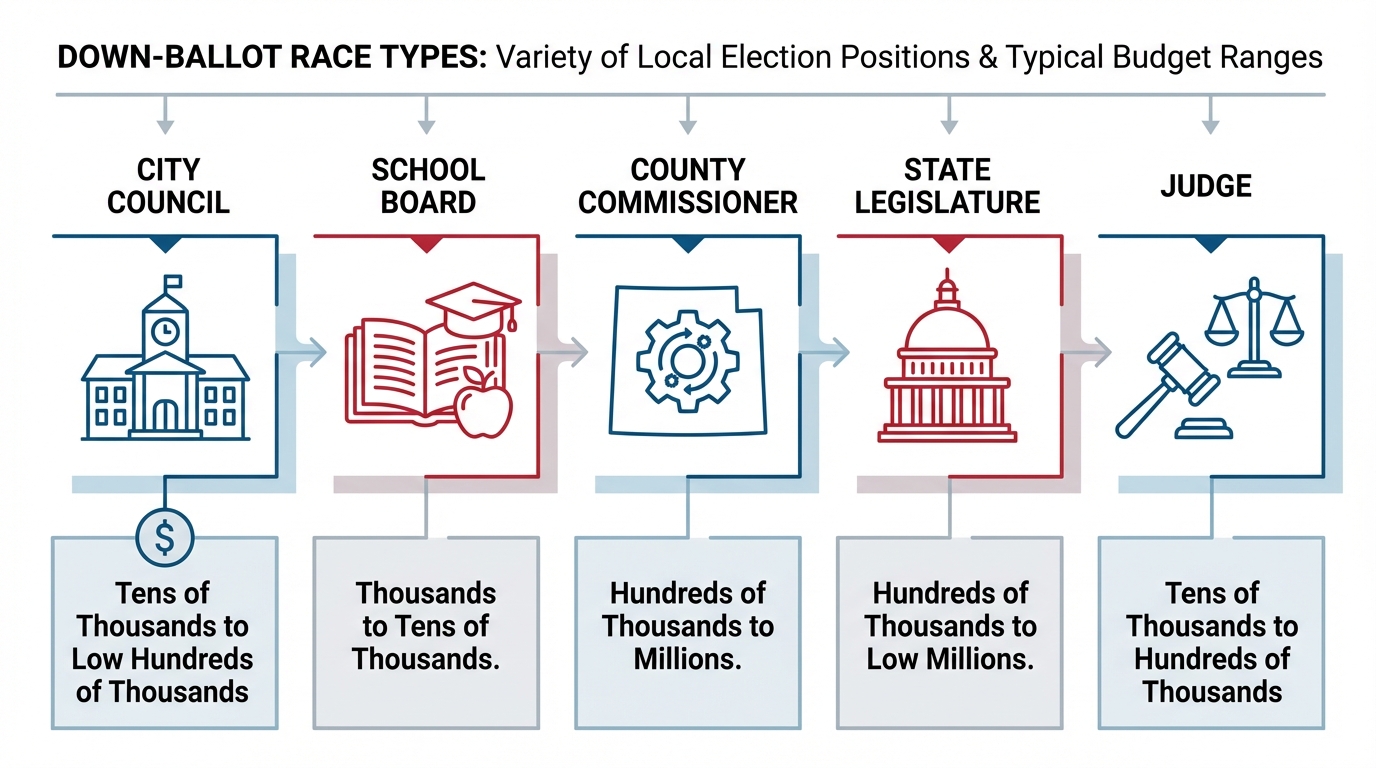
Down-ballot candidates rarely raise six-figure sums. City council races might see total spending of $20,000 to $50,000. School board candidates often work with less than $10,000. These budgets make traditional TV advertising mathematically impossible when minimum buys start at $5,000 per week.
Yet voter persuasion still requires reaching people where they spend time. TV remains the dominant medium for content consumption, and ignoring it means missing significant portions of the electorate.
Lower voter awareness
Voters know presidential candidates. They often recognize Senate and House candidates. But down-ballot candidates start with near-zero name recognition. Many voters don't even know these positions exist until they encounter them on the ballot.
This creates a critical need for visibility and repetition. Down-ballot candidates must introduce themselves to voters who have no existing awareness of the race or the candidates running in it.
Why TV advertising works for local races
Despite the challenges, TV advertising delivers unique advantages for down-ballot campaigns.
Credibility and legitimacy
Appearing on TV signals credibility. Voters perceive candidates with TV presence as serious contenders. For down-ballot races where name recognition is nearly nonexistent, TV advertising establishes legitimacy that other channels struggle to match.
A city council candidate running TV ads on local news and streaming services immediately rises above competitors relying solely on yard signs and door-knocking.
Reaching low-information voters
Down-ballot races are decided by voters who often don't follow local politics closely. These voters may skip local races entirely on their ballots or vote based on party affiliation alone.
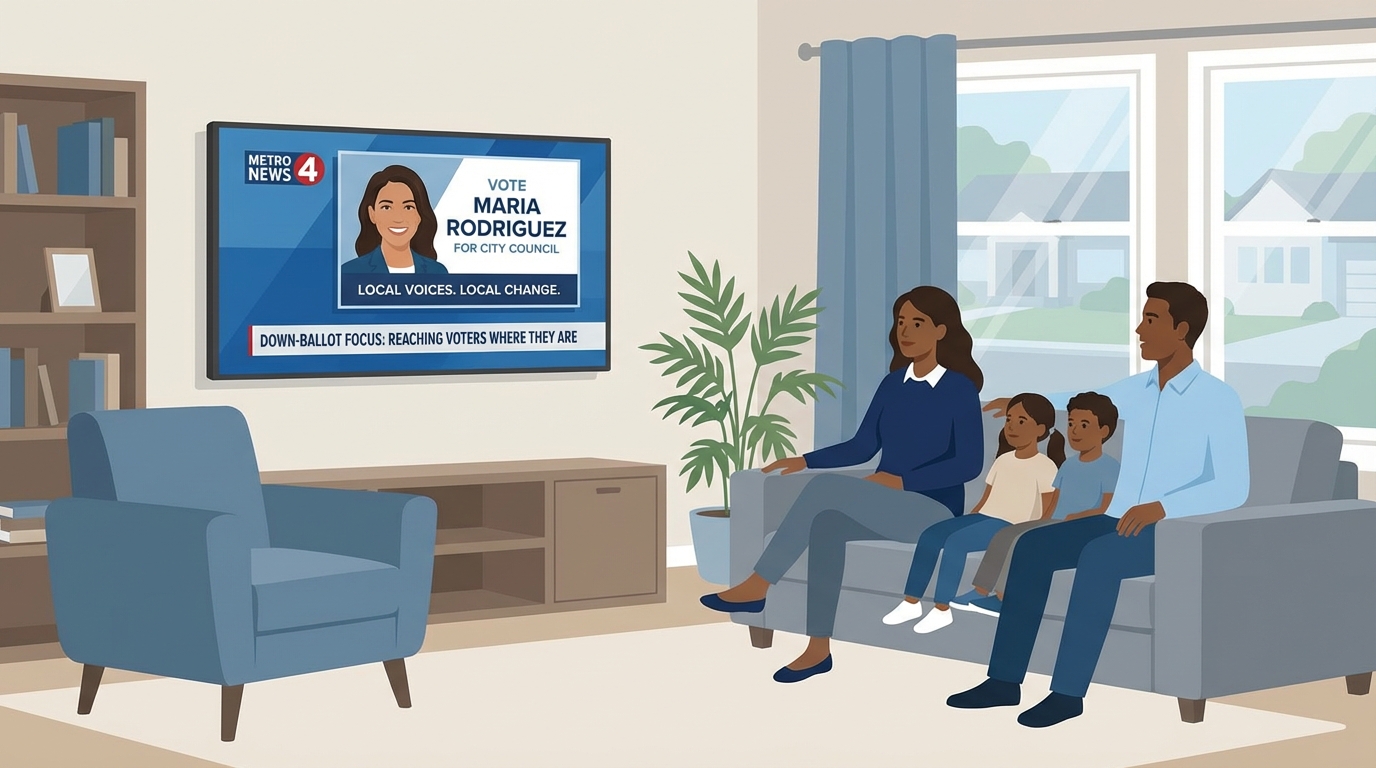
TV advertising reaches these voters in their natural environment. While they may not seek out information about city council races, they will see ads while watching their favorite shows. This passive exposure builds awareness that active channels cannot achieve.
Emotional storytelling
TV's audio-visual format allows for emotional storytelling that static formats cannot match. A candidate explaining why they're running, showing their family, or walking through local neighborhoods creates connection that text and images alone cannot achieve.
For local races where voters don't know the candidates personally, this emotional connection can be decisive.
!TV Reaches Local Voters During Their Daily Content Viewing
Traditional TV vs. Connected TV for down-ballot campaigns
Understanding the differences between traditional TV and CTV helps down-ballot campaigns allocate their limited budgets effectively.
Traditional broadcast and cable limitations
Traditional TV advertising through broadcast stations and cable systems presents serious obstacles for local races.
Minimum spend requirements typically start at $5,000 to $15,000 per month for cable and $10,000 or more for broadcast. These minimums consume entire campaign budgets before meaningful reach is achieved.
Geographic targeting is imprecise. Cable systems cover broad areas. A city council candidate in one district pays for impressions across the entire cable service area, often 80% or more outside their district.
Buying complexity requires media buyers, agencies, or significant time investment to navigate station relationships, negotiate rates, and traffic creative.
CTV advantages for local campaigns
Connected TV advertising through streaming services offers specific advantages for down-ballot races.
Low minimum budgets allow campaigns to start with as little as $50 through platforms like Adwave. This makes TV advertising accessible to virtually any candidate.
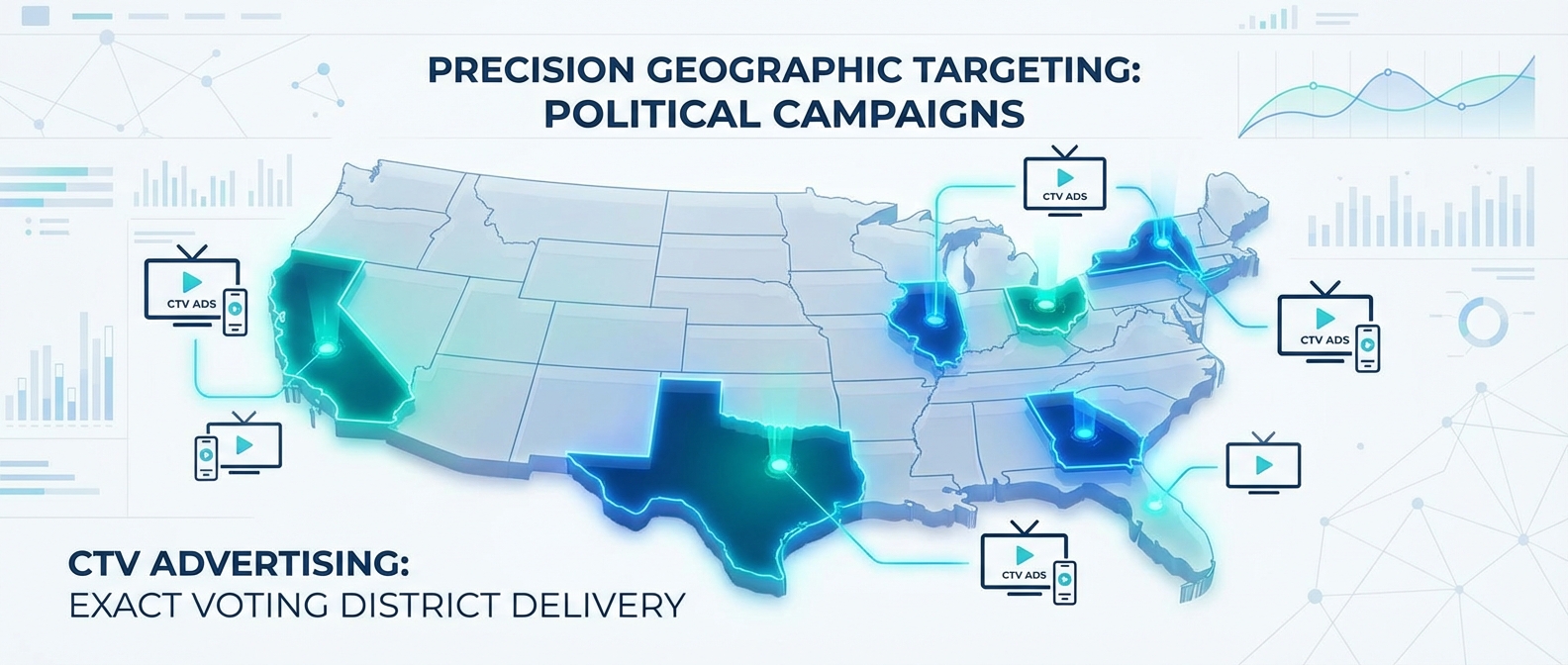
Precision targeting down to zip code, congressional district, or even custom drawn boundaries ensures every dollar reaches voters who can actually vote for your candidate.
Self-serve management eliminates the need for media buyers. Candidates or campaign managers can launch, adjust, and monitor campaigns directly.
Premium inventory places ads on services voters actually watch: Hulu, Peacock, Tubi, local news apps, and hundreds of other streaming destinations.
Budget planning for down-ballot TV campaigns
Effective budget allocation maximizes impact within the constraints local campaigns face.
Sample budgets by race type
City council and local races ($5,000-15,000 total TV spend): Start CTV advertising 6-8 weeks before election day. Focus on building name recognition first, then shift to persuasion messaging in final 3 weeks. With $10,000, expect 300,000-400,000 impressions to targeted voters.
County races ($10,000-30,000 total TV spend): Begin 8-10 weeks out with broader awareness campaign. Geographic targeting covers entire county. Shift budget toward competitive precincts as election approaches. With $20,000, reach most county voters 3-5 times.
State legislature races ($20,000-50,000 total TV spend): Start 10-12 weeks before election. CTV can supplement limited broadcast/cable buys or serve as primary TV channel depending on district demographics. With $35,000, build significant frequency across the district.
!Down-Ballot Race Types and Budget Ranges
Timing your spend
Front-loading TV spend for down-ballot races often works better than concentrating everything in the final week.
Early advertising establishes name recognition before opponents saturate voters. When voters first learn about the race through your advertising, you frame the conversation.
Reserve 30-40% of budget for the final two weeks when voter attention peaks. But don't starve early phases. A candidate no one has heard of entering the final week cannot build awareness fast enough.
Flight pacing strategies
Consider three common pacing approaches:
Continuous flight: Steady spending throughout the campaign period. Best when budgets allow consistent presence and you're building from zero recognition.
Pulsed flight: Heavier spending during key periods (early for introduction, final weeks for persuasion) with lighter spending in between. Stretches limited budgets while maintaining presence.
Front-loaded flight: Heavier early spending tapering toward election day. Works when you need to establish position before opponents enter the airwaves or when competing for attention against higher-profile races.
CPM expectations
CTV CPMs for political advertising typically range from $20 to $35, with political premiums during peak election periods. For a $10,000 CTV budget at $25 CPM, expect approximately 400,000 impressions.
In a district with 50,000 registered voters, 400,000 impressions translates to reaching the average voter 8 times. This frequency level drives meaningful awareness and consideration.
!Local Campaign Geographic Targeting
Targeting strategies for local races
Precision targeting transforms limited budgets into effective campaigns.
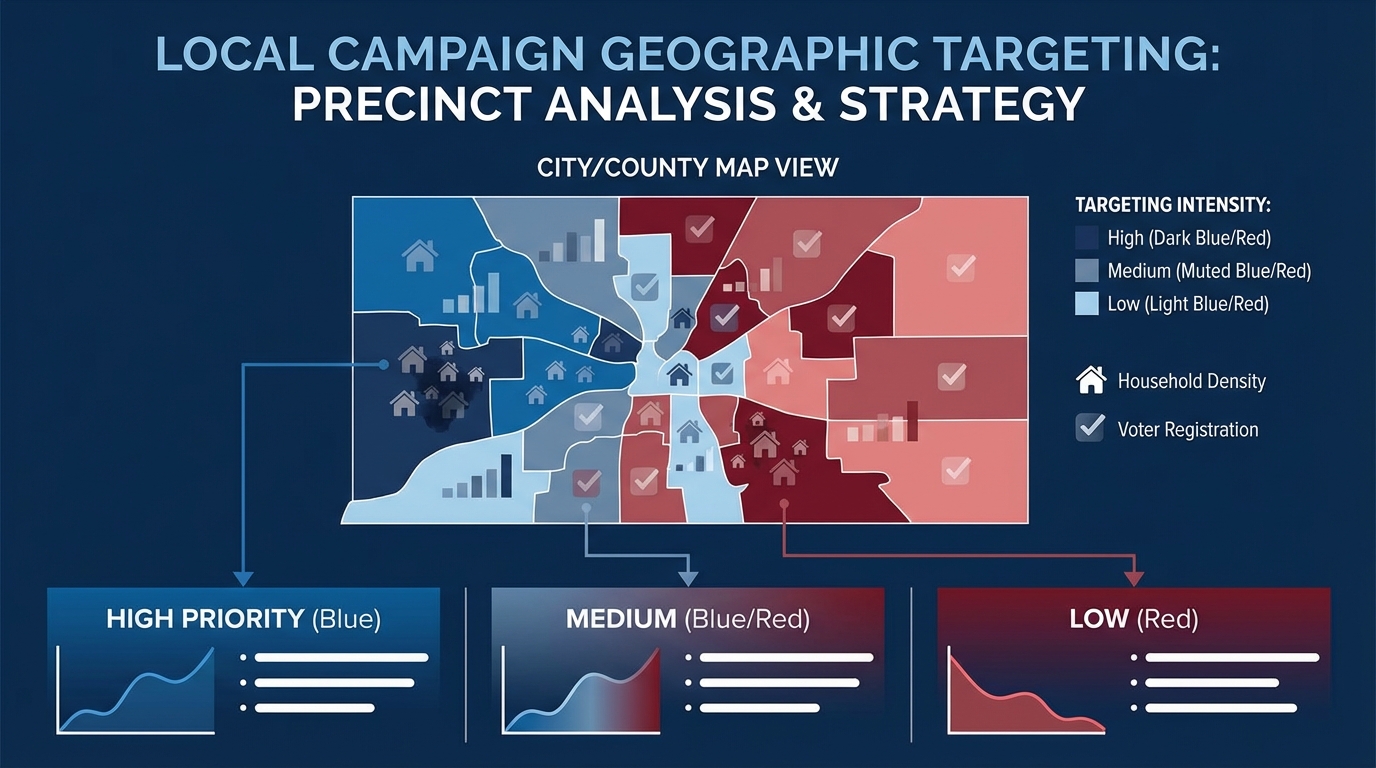
Geographic targeting
CTV platforms allow targeting by:
- State and congressional district
- County
- City
- Zip code
- Custom polygons (draw your exact district boundaries)
For a city council district, upload the official district map or specify the zip codes it contains. Every impression reaches voters who can cast ballots in your race.
Demographic layering
Add demographic targeting to geographic foundations:
- Age: Focus on demographics that vote in local elections (often 45+ skews higher turnout)
- Household income: Match messaging to constituent concerns
- Homeownership: Homeowners vote at higher rates in local races and care about property-related issues
Voter file matching
Some CTV platforms support voter file uploads, enabling targeting of:
- Registered voters only: Eliminate waste from non-voters
- Likely voters: Focus on those with recent primary participation
- Persuadable segments: Target voters who might swing to your candidate
This capability turns TV advertising into precision voter contact, similar to digital but on the big screen.
Audience suppression
Equally important as who you target is who you exclude:
- Opposing partisans: Don't waste budget on voters firmly committed to opponents
- Already-converted voters: Suppress ads to those who've donated, volunteered, or expressed support
- Out-of-district viewers: Even with geographic targeting, suppress known out-of-district addresses
Smart suppression can improve effective CPM by 20-30% by eliminating wasted impressions.
!Precision Geographic Targeting for Local Campaign Districts
Creative strategies for down-ballot ads
Limited budgets require efficient creative approaches.
Keep it simple
Down-ballot ads should accomplish one primary goal: name recognition and basic positioning. Voters need to know:
- Who you are (name, face, approachable presence)
- What position you're seeking
- One or two key priorities
Resist the temptation to explain detailed policy positions. Voters processing dozens of down-ballot races cannot absorb complex messaging.
Lead with local
Emphasize local connections. Show local landmarks. Mention specific neighborhoods. Reference local issues by name.
Generic political messaging that could apply anywhere signals to voters that you don't understand their community. Specific local references demonstrate genuine connection.
Production options
AI-powered platforms like Adwave's video creation tools allow campaigns to create professional-quality ads in minutes without production crews or expensive shoots.
Smartphone video shot on modern phones can work effectively when edited professionally. Authenticity often resonates more than polished production for local candidates.
Template-based approaches use existing footage and photos with professional editing and graphics. Quick turnaround at reasonable cost.
Professional broadcast-quality production remains valuable for larger down-ballot races (state legislature, county-wide positions) where competition is fierce and budgets allow.
Ad length
15-second spots work well for name recognition and simple messaging. They deliver higher frequency within fixed budgets.
30-second spots allow more storytelling but reduce total impressions. Use for persuasion messaging once name recognition is established.
For most down-ballot campaigns, 15-second ads maximize impact within budget constraints.
Measuring down-ballot TV campaign performance
Track meaningful metrics to optimize your campaign.
Key performance indicators
Video completion rate (VCR): Percentage of viewers who watch your entire ad. CTV typically achieves 90%+ completion due to non-skippable formats.
Impression delivery: Total number of times your ad was shown. Track against your target voter universe to calculate frequency.
Website traffic: Monitor campaign website visits during TV flight periods. Spikes indicate ad effectiveness.
Reach: Unique households or voters who saw your ad at least once. Aim to reach 60-80% of your target universe.
Attribution challenges
Connecting TV advertising to vote outcomes is difficult for any campaign. For down-ballot races, focus on leading indicators:
- Pre/post advertising awareness surveys (informal polling)
- Website and social media traffic patterns
- Volunteer reports from door-knocking conversations
- Name recognition in voter interactions
These proxies help you understand whether advertising is breaking through even when direct conversion tracking isn't possible.
Compliance considerations for down-ballot TV ads
Even local races must adhere to advertising regulations.
Disclosure requirements
All political ads require clear sponsor identification. The standard "Paid for by [Committee Name]" disclosure must appear visibly in your ad. For TV ads, this typically means an on-screen text overlay during the final seconds.
CTV platforms verify political advertisers before allowing campaigns to run. Complete verification early in your campaign timeline to avoid delays when you're ready to launch.
Platform policies
Major streaming services (Hulu, Peacock, Tubi) have political advertising policies that local campaigns must follow. These typically include:
- Advertiser verification requirements
- Disclosure standards
- Content restrictions (varying by platform)
- Record-keeping obligations
Work with CTV platforms that specialize in political advertising compliance to navigate these requirements efficiently.
Integrating TV with your overall campaign
TV advertising works best as part of a coordinated campaign effort.
Reinforce across channels
Voters who see your TV ad should encounter consistent messaging through:
- Digital display ads: Retarget website visitors with banner ads
- Social media: Organic and paid social posts using similar themes
- Direct mail: Mailers featuring the same visual identity
- Yard signs and door hangers: Name and face consistency
This multi-touch approach compounds the impact of each channel.
Coordinate with ground game
Brief volunteers on TV messaging so door-knock conversations align with what voters see on screen. When a volunteer mentions the same priorities highlighted in TV ads, credibility multiplies.
Time canvassing pushes to coincide with TV flights. Voters who recently saw your ad are more receptive to volunteer contact.
Earned media amplification
TV advertising for a down-ballot race is itself newsworthy. Local media often cover local candidates making TV buys. This earned coverage extends your reach beyond paid impressions.
Issue a press release when your TV campaign launches. Pitch local reporters on the story of how small-budget campaigns now access TV advertising.
Common questions about down-ballot TV advertising
How much should a city council candidate spend on TV advertising?
City council candidates typically allocate $5,000-15,000 for TV advertising, representing 25-40% of their total campaign budget. With CTV platforms allowing $50 starting budgets, candidates can begin testing TV even with minimal funds and scale up as fundraising allows.
Can down-ballot candidates use broadcast TV?
Broadcast TV is generally impractical for most down-ballot races due to high minimum spends and geographic waste. However, candidates in districts that align well with a broadcast station's coverage area might consider limited broadcast buys for major events like local news sponsorships.
What's more important for local races: reach or frequency?
For down-ballot races where name recognition is the primary challenge, frequency often matters more than reach. It's better to reach 60% of voters 5 times each than 90% of voters once. Repetition builds the familiarity that drives recognition at the ballot box.
When should down-ballot candidates start TV advertising?
Start 6-10 weeks before election day depending on race competitiveness and budget. Earlier starts build name recognition before opponents enter the conversation. Campaigns with very limited budgets should concentrate spend in the final 4 weeks when voter attention peaks.
How do I target only my district with TV ads?
CTV platforms like Adwave allow targeting by zip code, congressional district, county, or custom-drawn geographic boundaries. Upload your district map or specify the geographic areas it covers. Traditional cable and broadcast cannot provide this precision, which is why CTV is often the better choice for local races.
Make TV advertising work for your down-ballot campaign
Down-ballot candidates no longer need to choose between TV advertising and fiscal responsibility. Connected TV has democratized access to the most powerful advertising medium, allowing candidates at every level to reach voters on the screens they watch daily.
Success requires strategic budget allocation, precision targeting, efficient creative, and integration with your broader campaign. But the opportunity is clear: TV advertising that was once reserved for wealthy campaigns is now accessible to candidates for city council, school board, county commission, and state legislature.
For local candidates ready to explore TV advertising, platforms like Adwave offer self-serve tools designed specifically for campaigns with limited budgets and local focus.
Version history
| Version | When | Summary |
|---|---|---|
| v1 | 6/20/2026, 3:11:54 AM | migration import |