Best Advertising for Restaurants: A Complete Comparison
slug: best-advertising-for-restaurants-comparison-2026 · status: draft · score: 84% · 1 versions
Not yet published.
Validation
| Rule | Detail | |
|---|---|---|
| pass | No banned competitors | No banned competitors |
| pass | No emdashes | No emdashes |
| pass | Avoid AI telltale words | No AI telltale words |
| pass | Primary keyword in title | No primary keyword to check |
| pass | Use contractions | Contractions used |
| fail | Minimum internal links | Internal links not in sitemap: /resources/what-is-connected-tv-advertising, /how-it-works, /resources/tv-advertising-restaurants, /try-free, /try-free |
| pass | FAQ section required | FAQ section present |
| fail | Author assigned | No author assigned (never use 'Adwave Team' for new content) |
| pass | Industry pages need taxonomy | Not an Industry page |
| pass | Title length 50-60 | Title length 55 |
| pass | Minimum 4 images | 4 images |
| warn | SEO description under 160 | Missing seoDescription |
| pass | Adwave mention cadence | 2 Adwave mentions |
| warn | Short description present | Missing shortDescription |
| pass | Word count by type | Word count 2562 (no target for type) |
| pass | Year-dated title for evergreen types | Type not year-dated |
| pass | No manual table of contents | No manual TOC |
Images (4)
Content
Best Advertising for Restaurants: A Complete Comparison
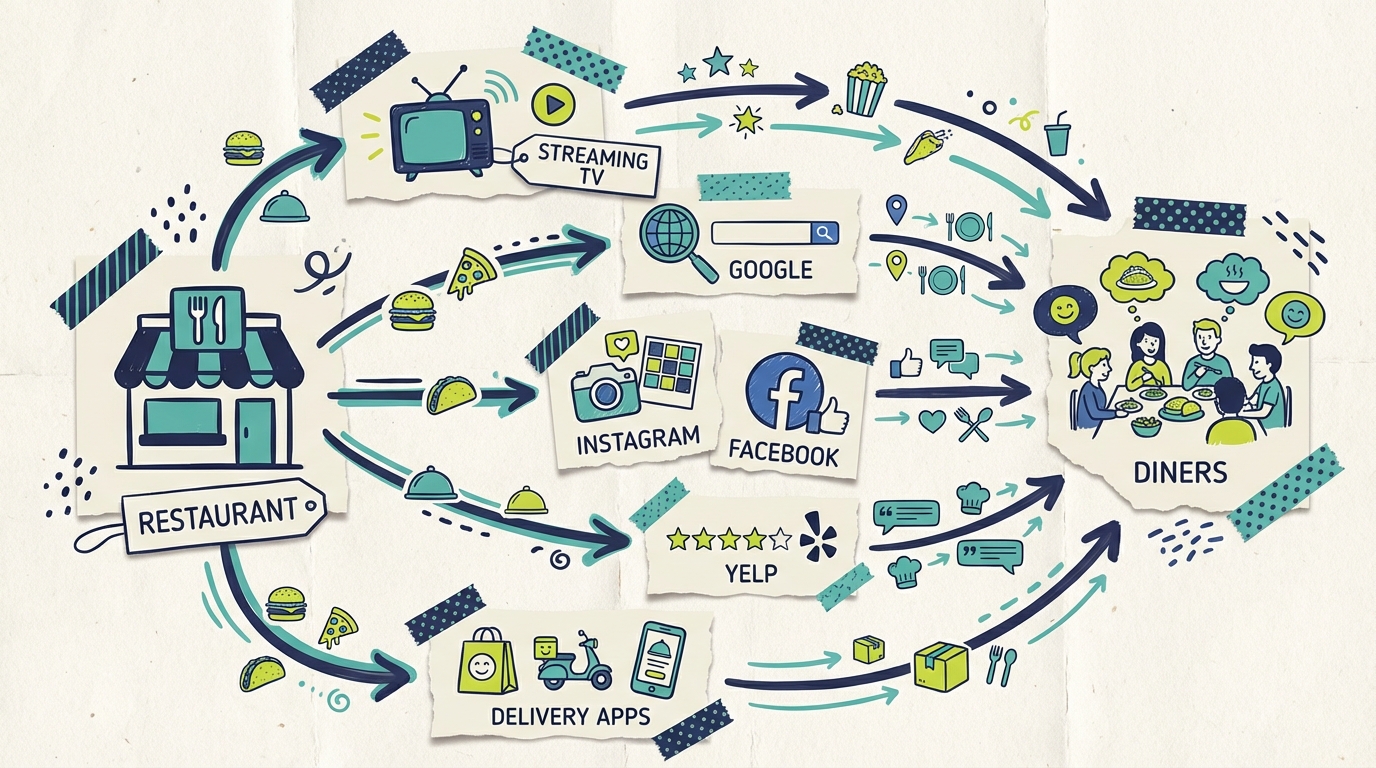
Restaurant advertising has more options than ever. From social media to streaming TV, from influencer partnerships to loyalty apps, the choices can feel overwhelming. Which channels actually fill seats? Which waste money? Where should your marketing budget go?
This guide compares the most effective advertising channels for restaurants in 2026, with honest assessments of costs, effort, and results for each.
How to Think About Restaurant Advertising
Before comparing channels, it's worth understanding what makes restaurant advertising unique.
Restaurants serve a limited area. Your customers drive from a certain radius, typically 15-20 minutes. Unlike businesses that can ship nationwide, you need to reach people close enough to actually visit. This makes hyper-local targeting valuable and broad reach wasteful.
Frequency matters. A single impression rarely drives a restaurant visit. People need to see your restaurant multiple times, building familiarity until they're ready to try it. Advertising channels that build frequency over time often outperform one-time placements.
Timing affects response. When someone sees your ad matters. An ad at 4pm when they're thinking about dinner plans performs differently than one at 8am. Some channels allow time-based targeting; others don't.
Visual appeal is everything. Restaurants sell food, and food photography drives cravings. Channels that showcase visual content well tend to outperform text-only formats.
Reviews and reputation amplify everything. Great advertising driving people to a poorly-reviewed restaurant wastes money. Mediocre advertising for a beloved local spot can still fill seats. Advertising amplifies reality; it doesn't change it.
Streaming TV Advertising
Connected TV advertising has emerged as one of the most effective channels for restaurant advertising, offering premium placement at prices that weren't possible just a few years ago.
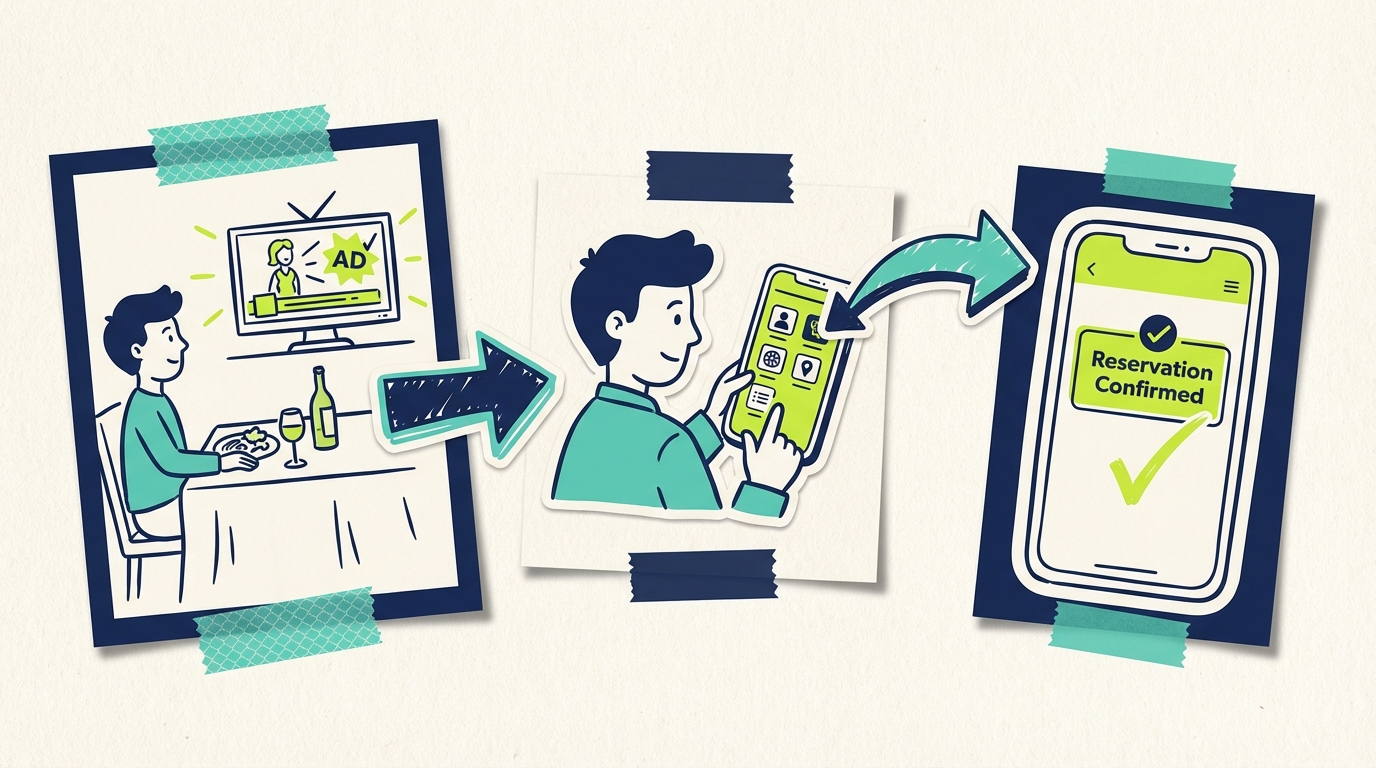
How it works: Your commercial runs on streaming platforms like Hulu, Peacock, Tubi, and others. Viewers see full-screen, sound-on ads that look exactly like traditional TV commercials. Geographic targeting ensures your ads reach only viewers in your trade area.
Costs: CPMs (cost per thousand impressions) range from $15-35, with average around $25. Entry points have dropped dramatically. With Adwave, you can create a commercial and launch a campaign starting at just $50.
Best for: Building broad awareness, establishing credibility, reaching households during dinner decision time, grand openings, and seasonal promotions.
Strengths:
- Full-screen, sound-on format captures attention
- Premium positioning builds trust and credibility
- Geographic targeting prevents wasted reach
- Viewers watch complete ads (unlike skippable formats)
- Can target evening hours when dinner decisions happen
Limitations:
- Not direct response like search ads
- Requires decent visual content (food photos or video)
- Impact compounds over time rather than immediately
Verdict: Streaming TV offers the credibility of traditional television at accessible prices. For restaurants trying to build awareness or establish themselves as a destination, it's increasingly the best option. TV advertising for restaurants has become a legitimate channel for independents and chains alike.
Google Advertising
Google captures people actively looking for restaurants, making it valuable for immediate demand capture.
Google Business Profile: Free but essential. Your listing appears in Google Maps and local search results. Optimize it with photos, accurate hours, menu links, and respond to reviews. This is table stakes for any restaurant.
Local Search Ads: Pay to appear at the top when someone searches "Italian restaurant near me" or "best brunch downtown." You pay per click, typically $1-5 depending on competition.
Local Inventory Ads / Reserve with Google: For restaurants with online ordering or reservations, Google can surface these options directly in search results.
Costs: Free for Business Profile. Search ads typically cost $200-1,000+/month for meaningful presence depending on your market's competition.
Best for: Capturing people actively searching for restaurants like yours, new customer acquisition, competing with nearby options.
Strengths:
- Captures high-intent searchers
- Only pay when someone engages
- Direct path to reservations or orders
- Measurable results
Limitations:
- Competes purely on price in some cases
- Doesn't build brand preference
- Only reaches people already searching
- Can get expensive in competitive markets
Verdict: Every restaurant needs an optimized Google Business Profile. Paid search ads make sense for competitive markets where you need to appear above competitors. It's a demand-capture channel, not a demand-creation one.
Instagram Advertising
Instagram's visual nature makes it naturally suited for restaurant marketing.
How it works: You create posts, stories, reels, or ads that appear in users' feeds and stories. Organic content can reach followers and (sometimes) new audiences. Paid ads target specific demographics, interests, and locations.
Costs: Organic is free but time-intensive. Paid ads typically run $5-15 CPM, with monthly budgets often $300-2,000 for meaningful reach.
Best for: Building a following, showcasing food and ambiance, announcing specials, reaching younger demographics (under 45), influencer partnerships.
Strengths:
- Visual format perfect for food
- Strong targeting capabilities
- Both organic and paid options
- Reels can reach beyond followers
- Direct path to profile, reservations
Limitations:
- Algorithm makes organic reach unreliable
- Requires constant content creation
- Primarily mobile viewing (smaller screens)
- Older demographics less engaged
Verdict: Instagram is essential for restaurants targeting younger diners. The visual format showcases food beautifully. But organic reach has declined, making paid amplification increasingly necessary. It's a strong support channel but rarely sufficient alone.
Facebook Advertising
Facebook remains powerful for local restaurant advertising despite declining among younger users.
How it works: Similar to Instagram (same ad platform), but reaches an older, broader demographic. Local awareness ads specifically optimize for reaching nearby users.
Costs: Similar to Instagram. $5-15 CPM. Monthly budgets often $300-1,500 for local campaigns.
Best for: Reaching 35+ demographics, event promotion, community engagement, local targeting.
Strengths:
- Excellent local targeting
- Events feature drives RSVPs
- Groups and pages build community
- Strong among older demographics
- Detailed targeting options
Limitations:
- Younger users have migrated elsewhere
- Content feels less "premium" than Instagram
- Declining organic reach
- Platform losing cultural relevance
Verdict: Facebook remains effective for restaurants targeting families and older diners. The local awareness and event features are particularly useful. It's less exciting than newer platforms but still delivers results for the right audiences.
TikTok
TikTok has disrupted restaurant discovery, with viral videos driving massive foot traffic to some restaurants.
How it works: Short-form video content that can reach massive audiences through the algorithm. Organic content can go viral without followers. Paid ads target specific demographics.
Costs: Organic is free but requires video creation skills. Paid ads start around $10 CPM with minimum daily budgets.
Best for: Reaching younger demographics (under 35), viral moments, showcasing unique dishes or experiences, trend participation.
Strengths:
- Organic reach still possible
- Viral potential unlike other platforms
- Authentic content outperforms polished ads
- Strong food discovery culture
- Younger audience engagement
Limitations:
- Unpredictable results
- Requires video content skills
- Primarily very young demographics
- Trends move fast
Verdict: TikTok can create explosive moments of awareness but isn't reliable or consistent. Restaurants with unique visual appeal, young target customers, and content creation capacity should experiment. It's not a primary advertising channel but can supplement others dramatically when content hits.
Yelp and Review Platforms
Yelp remains influential for restaurant discovery, particularly in certain markets.
How it works: Claim and optimize your free listing. Paid options include enhanced profiles, ads in search results, and "call to action" buttons.
Costs: Free for basic listing. Paid options range from $1-10 per lead depending on market and options selected.
Best for: Appearing in consideration sets, managing reputation, capturing searchers using Yelp specifically.
Strengths:
- High-intent users looking for restaurants
- Reviews influence decisions strongly
- Self-service ad options
- Direct path to reservations/orders
Limitations:
- Controversial reputation among restaurant owners
- Expensive cost-per-lead in some markets
- Limited control over reviews
- Declining relevance among younger users
Verdict: Optimizing your Yelp presence (free) is important. Paid advertising depends on your market and Yelp's relevance there. In cities where Yelp drives discovery, it's worth investment. In markets where Google and Instagram dominate, it's less essential.
Food Delivery Apps
DoorDash, Uber Eats, and Grubhub have become advertising platforms in addition to delivery services.
How it works: Restaurants pay for prominent placement in app searches and categories. "Sponsored" listings appear at the top. Some platforms offer external advertising that drives to in-app orders.
Costs: Typically percentage of orders (15-30%) plus promotional spend. Ad costs vary by market and competition.
Best for: Delivery-focused restaurants, reaching convenience-motivated customers, new customer acquisition.
Strengths:
- High-intent users ready to order
- Direct path to transaction
- Exposure to non-loyal customers
- Detailed performance data
Limitations:
- High fees eat into margins
- Builds platform loyalty, not restaurant loyalty
- Limited branding opportunity
- Customer relationship controlled by platform
Verdict: If delivery is a significant revenue stream, some investment in delivery app visibility makes sense. But the economics are challenging, and these platforms build their brand more than yours. Consider them a necessary expense rather than true advertising.
Email Marketing
Email remains one of the most cost-effective channels for restaurants, though it requires building a list first.
How it works: Collect customer emails through reservations, orders, WiFi logins, or loyalty programs. Send regular communications about specials, events, and promotions.
Costs: Email platforms cost $0-100+/month depending on list size and features. The main investment is time to create content.
Best for: Driving repeat visits, announcing specials and events, building loyalty, filling slow periods.
Strengths:
- Extremely low cost per message
- Direct communication with existing customers
- High engagement rates
- Full control over timing and message
- Drives repeat business
Limitations:
- Only reaches existing customers/subscribers
- Requires list building first
- Needs regular content creation
- Can annoy if overdone
Verdict: Every restaurant should collect emails and send regular communications. It's the cheapest way to drive repeat visits from people who already know you. Not a discovery channel, but excellent for retention.
Local Partnerships and Events
Community involvement creates awareness that paid advertising can't replicate.
How it works: Partner with complementary businesses, sponsor local events, participate in community activities, host events at your restaurant.
Costs: Varies enormously. Some partnerships cost nothing but effort. Sponsorships range from hundreds to thousands.
Best for: Building community presence, reaching specific local audiences, generating word-of-mouth, establishing goodwill.
Strengths:
- Authentic community connection
- Can reach niche audiences precisely
- Generates word-of-mouth
- Builds long-term relationships
- Often includes physical presence
Limitations:
- Time-intensive
- Hard to measure directly
- Results compound slowly
- Requires relationship building
Verdict: Community involvement complements paid advertising. The relationships and goodwill built through local partnerships create a foundation that makes advertising more effective.
Comparing Channel Effectiveness
Here's how the major channels compare across key factors:
For building awareness:
- Streaming TV (broad reach, credibility)
- Instagram (visual appeal, shareability)
- Community involvement (authentic presence)
For capturing immediate demand:
- Google Search (high intent)
- Delivery apps (ready to order)
- Yelp (research phase)
For driving repeat visits:
- Email marketing (direct, cheap)
- Loyalty programs (incentivized)
- Social media (ongoing engagement)
For reaching younger diners:
- TikTok (authentic discovery)
- Instagram (visual appeal)
- Google (universal reach)
For reaching older diners:
- Streaming TV (premium placement)
- Facebook (demographic strength)
- Email (direct communication)
Building a Multi-Channel Strategy
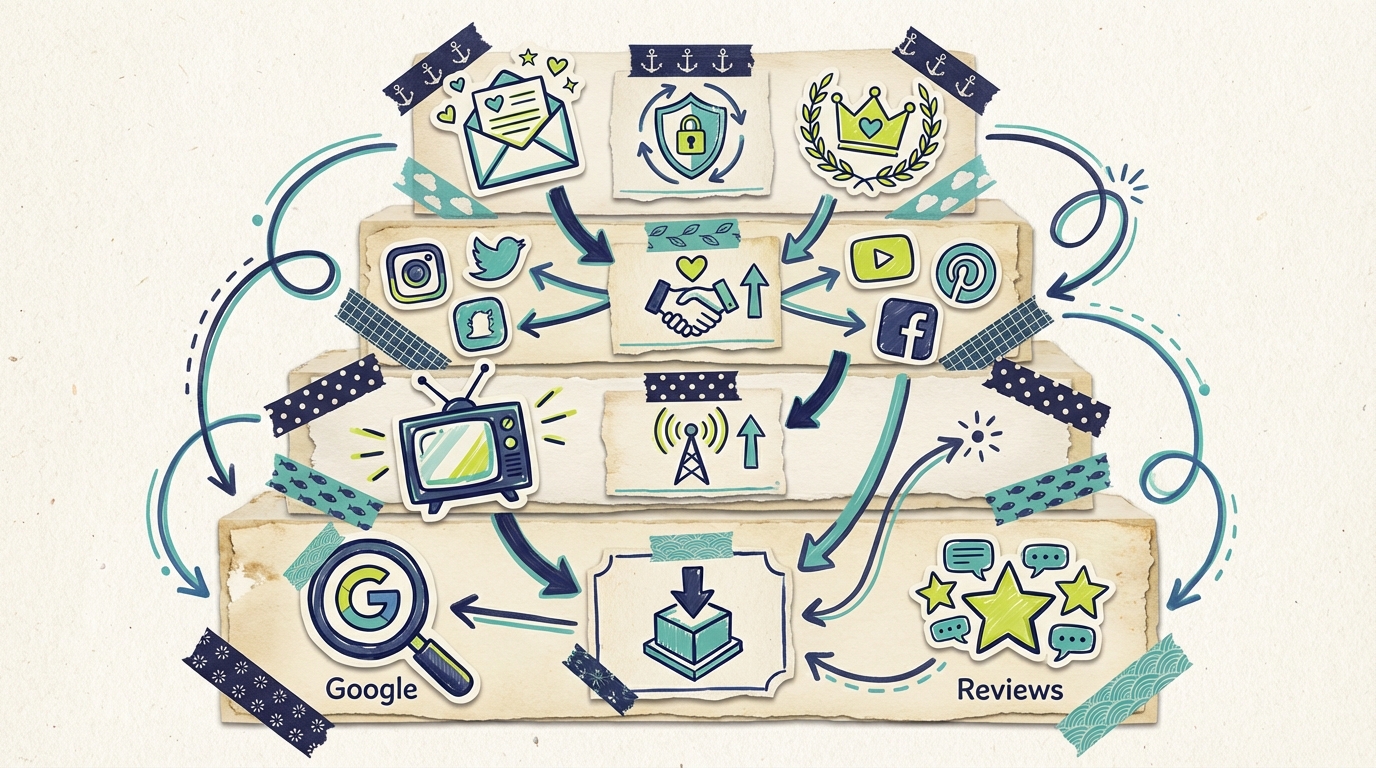
The most effective restaurant marketing combines channels that work together.
Foundation layer: Google Business Profile, claimed review profiles, email collection. These are free or nearly free and provide ongoing value.
Awareness layer: Streaming TV advertising builds credibility and reaches people who don't know you exist. Even modest budgets compound over time.
Engagement layer: Social media maintains connection with customers between visits. Regular posting and strategic paid promotion keep you top of mind.
Demand capture layer: Google ads and optimized review profiles capture people actively searching for restaurants.
Retention layer: Email marketing and loyalty programs drive repeat visits from existing customers.
Measurement layer: Track which channels drive results. Ask new customers how they found you. Monitor reservation and order sources. Adjust your mix based on what's actually working.
The exact allocation depends on your restaurant's situation. A new opening needs heavy awareness investment. An established restaurant with declining traffic might focus on awareness and reactivation. A restaurant with strong traffic but low repeat visits should invest in retention. Match your strategy to your actual business challenge.
Common Questions Answered
How much should restaurants spend on advertising? Industry benchmarks suggest 3-6% of revenue for established restaurants, potentially higher for new openings. Start with what you can afford to test, learn what works, then scale.
Which single channel works best for restaurants? No single channel is best for all restaurants. Streaming TV builds awareness. Google captures searchers. Instagram engages followers. Email drives repeats. The best approach combines channels for different purposes.
Should I focus on acquiring new customers or retaining existing ones? Both matter, but retention is usually more cost-effective. A customer who visits monthly is worth far more than one who visits once. Balance acquisition advertising with retention efforts.
How long does restaurant advertising take to work? Some channels (Google, delivery apps) show immediate results. Others (TV, Instagram) build over weeks and months. Expect 8-12 weeks to see meaningful patterns from awareness campaigns.
Do I need professional photos and videos? Quality matters, but authenticity often beats polish. Smartphone photos with good lighting outperform mediocre professional shots. For TV, Adwave creates broadcast-quality commercials from your existing content.
How do I advertise a new restaurant opening? Grand openings require concentrated awareness building. Start TV and social advertising 4-6 weeks before opening to build anticipation. Use email if you have any existing customer relationships. Partner with local businesses and influencers for broader reach. Create urgency with opening-week specials or limited reservations. Consider a soft opening for friends and family to generate initial reviews and word-of-mouth before the public launch.
Should I advertise during slow periods or busy ones? Both strategies have merit. Advertising during slow periods (Tuesday dinner, January in general) helps fill otherwise empty seats at low incremental cost. Advertising before busy periods (Valentine's Day, Mother's Day, holiday season) captures high-intent customers who are already planning to dine out. Many restaurants find that consistent year-round presence outperforms seasonal bursts because it builds ongoing awareness.
How important is my online ordering and reservation system? Increasingly critical. Advertising drives interest, but friction kills conversion. If someone sees your ad and can't easily book a table or place an order, you've wasted that impression. Make sure your website loads quickly, your reservation system works smoothly, and your menu is up to date. The easier you make it to take action, the better your advertising performs.
The Bottom Line
Restaurant advertising in 2026 offers more options than ever, but the fundamentals haven't changed. You need to reach potential customers, build familiarity and trust, and give them reasons to visit.
Streaming TV has emerged as a powerful channel that was once reserved for chains with massive budgets. Combined with Google for search capture, social media for engagement, and email for retention, restaurants of any size can build effective marketing programs.
Start with the channels that match your budget and goals. Test what works for your specific restaurant and market. Build a presence across multiple touchpoints that reinforces your message wherever customers encounter you.
Ready to put your restaurant on the big screen? Create your first TV ad in minutes and reach diners on streaming platforms, starting at just $50.
Version history
| Version | When | Summary |
|---|---|---|
| v1 | 6/20/2026, 3:11:54 AM | migration import |